🏛️ Transparency Notice & Update
The Debate live Video from the UK Parliament YouTube channel is live again. to watch it on YouTube.
🏛️ Transparency Mission
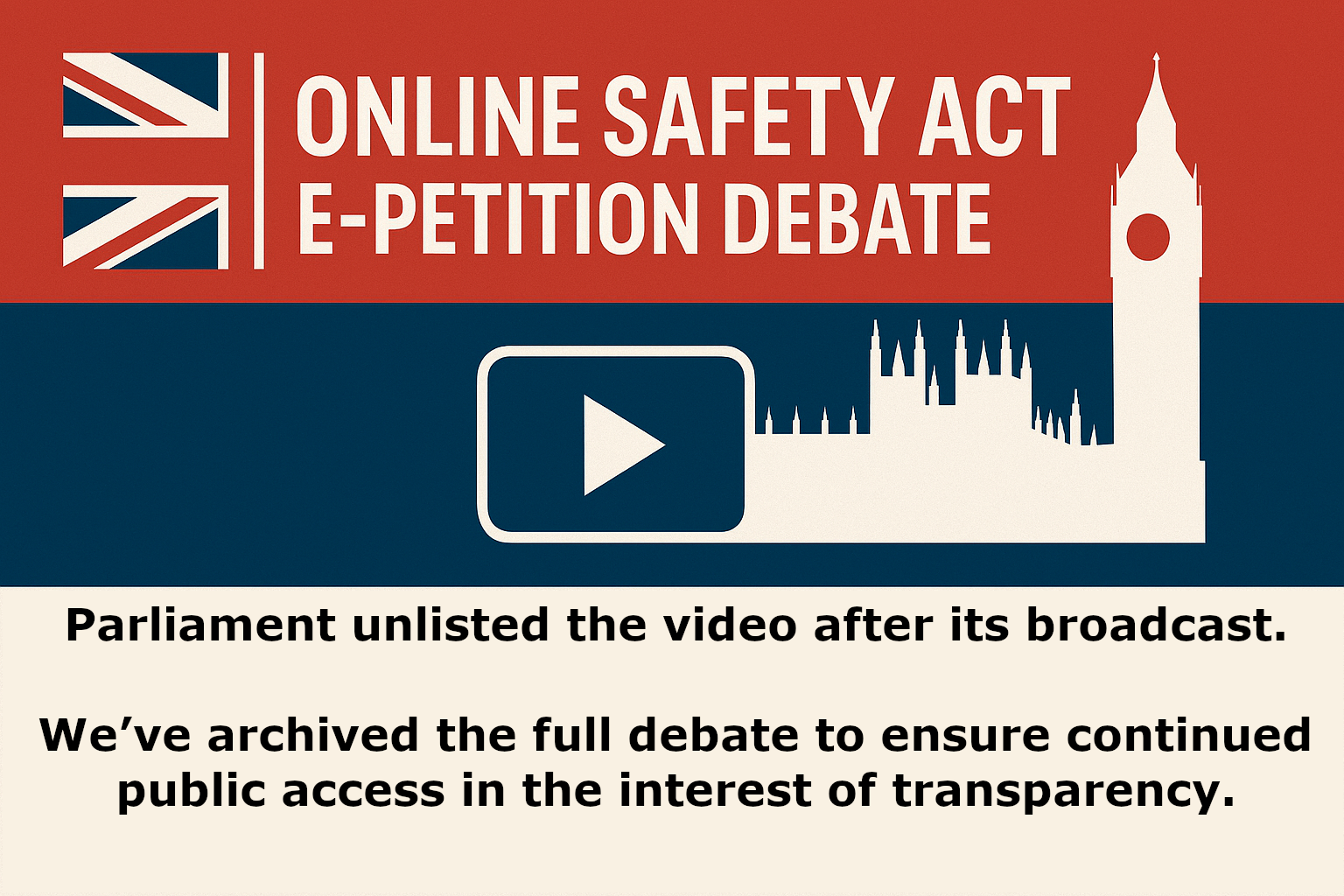
Following Parliament's decision to unlist the Online Safety Act petition debate video, we have archived the full debate to ensure continued public access to this democratic record. Citizens who signed the petition deserve to see how their concerns were addressed by elected representatives.
The E-petition debate relating to the Online Safety Act, held in Parliament on Monday 15 December 2025, was streamed live on the UK Parliament YouTube channel. This debate was triggered by a petition that gathered over half a million signatures from concerned citizens.
Following the debate, the official upload was unlisted, meaning it was no longer easily accessible to the public through normal search or browsing. This decision prompted widespread dissatisfaction and outrage across social media, with many citizens questioning why a debate triggered by such significant public engagement was effectively hidden from view.
🎯 Key Issues
- 500,000+ petition signatures triggered the parliamentary debate
- Debate video unlisted after public broadcast
- Public outrage over reduced accessibility
- Democratic accountability concerns raised
- Archive preservation ensures continued access
🎥 Archived Debate Video
In line with our commitment to transparency and democratic accountability, we have obtained and archived a copy of the full debate video. Our aim is twofold:
- To ensure citizens retain open access to the full parliamentary record
- To safeguard the footage in case it is made unavailable or deleted in the future
📄 Official Transcript Available
For the full official transcript of the debate, please visit:
📥 Download for Preservation
To support widespread preservation and ensure this democratic record remains accessible, you can download the full debate video:
💾 Download Full Debate
High-quality video file for local storage and sharing
⬇️ Download Video (MP4)🗳️ Why This Matters
Public debates in Parliament are fundamental components of the democratic record. Citizens who sign petitions deserve to see how their concerns are discussed by elected representatives. When over half a million people engage with the democratic process through an e-petition, the resulting parliamentary debate becomes a matter of significant public interest.
Democratic Accountability at Stake
The decision to unlist the debate video raises serious questions about parliamentary transparency:
🏛️ Transparency Concerns
- Public Engagement: Over 500,000 citizens signed the petition triggering this debate
- Democratic Process: Parliamentary debates are public proceedings funded by taxpayers
- Accessibility Barrier: Unlisting videos makes them harder for citizens to find and share
- Accountability Gap: Reduced visibility undermines scrutiny of representatives' responses
- Precedent Setting: Risk of future debates being similarly restricted
The Public Interest Test
Parliamentary debates triggered by significant petition signatures clearly meet the public interest test for full accessibility:
- Citizen Participation: Half a million signatures represent substantial public concern
- Policy Impact: The Online Safety Act affects millions of internet users
- Democratic Engagement: E-petitions are official channels for citizen involvement
- Representative Response: How MPs address constituent concerns is fundamentally public business
- Historical Record: Future researchers and citizens need access to complete parliamentary records
📊 Context: Online Safety Act Concerns
The petition that triggered this debate reflected widespread public concerns about the Online Safety Act's implementation and impact on digital rights. The high signature count demonstrates that these issues resonate with a significant portion of the UK population.
Public Concerns Raised
The petition and subsequent debate addressed several key areas of concern:
🚨 Key Areas of Public Concern
- Freedom of Expression: Concerns about content removal and censorship
- Privacy Rights: Impact of age verification and monitoring systems
- Platform Responsibility: Questions about tech company compliance burdens
- Implementation Effects: Real-world impacts on users and services
- Regulatory Oversight: OFCOM's enforcement approach and transparency
Parliamentary Response
The debate provided an opportunity for MPs to address these concerns directly and explain government policy. By preserving this video, we ensure that citizens can evaluate whether their representatives adequately addressed the issues raised in the petition.
🔍 Our Transparency Commitment
UK Politics Decoded exists to cut through political spin and ensure citizens have access to the information they need for democratic participation. This video archive exemplifies our core mission:
Why We Archive Parliamentary Content
🎯 Our Transparency Mission
- Democratic Accountability: Ensuring citizens can hold representatives accountable
- Historical Preservation: Maintaining complete records of democratic processes
- Public Access: Removing barriers to civic engagement and political scrutiny
- Educational Value: Supporting research, journalism, and informed public debate
- Future Reference: Enabling longitudinal analysis of policy development and implementation
Continuing Coverage
This video archive represents part of our ongoing coverage of the Online Safety Act and its implementation. We continue to monitor:
- Policy development and regulatory guidance
- Impact assessments and real-world effects
- Parliamentary scrutiny and oversight activities
- Public consultation processes and citizen engagement
- International comparisons and best practice examples
Conclusion: Preserving Democratic Records
By re-publishing this debate, we are ensuring that accountability and transparency remain intact. Parliamentary debates belong to the public, particularly when they result from significant citizen engagement through the e-petition system.
The decision to unlist this video may have been administrative rather than deliberately restrictive, but the effect is the same: reduced public access to democratic proceedings. Our archive ensures that this gap is filled and that future citizens, researchers, and journalists can access the complete record.
We encourage others to download, share, and preserve this content. Democratic accountability thrives when information flows freely and citizens can easily access the records of how their representatives respond to their concerns.
This is what transparency in action looks like: not just demanding accountability, but taking concrete steps to preserve and share the democratic record when institutions fail to maintain adequate public access.
🎯 Key Takeaways
- Parliament unlisted a debate triggered by 500,000+ petition signatures
- We've archived the full video to ensure continued public access
- Parliamentary debates are public property and should remain easily accessible
- Democratic accountability requires transparent access to representative responses
- Citizen preservation efforts complement official parliamentary records