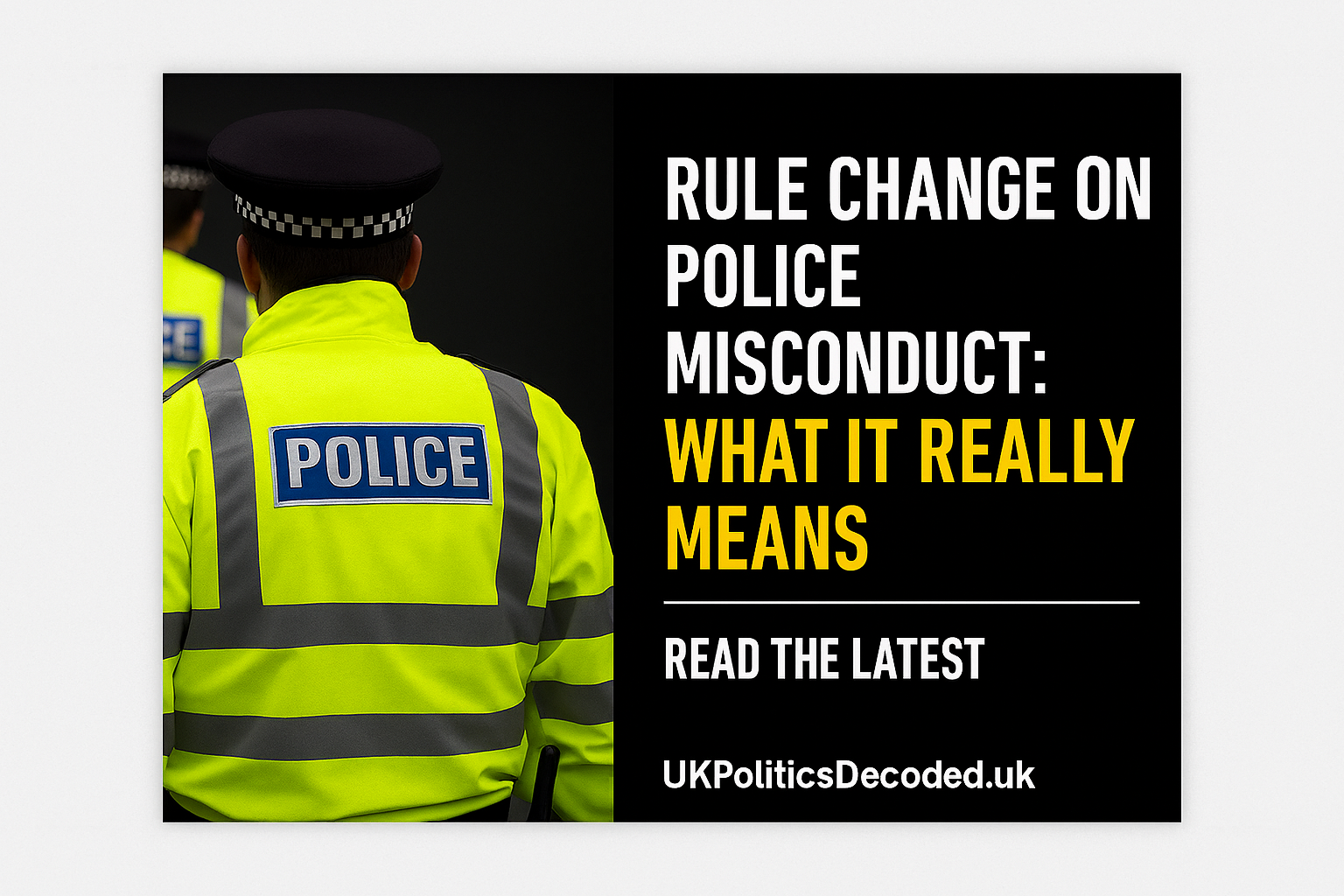
The Home Office has announced a major shift in how police officers will be judged when accused of using excessive force. On the surface, this looks like a technical legal tweak. In practice, it reshapes the balance between accountability and operational freedom in UK policing and it comes at a time when public trust in the police is already at historic lows.
This change represents a fundamental shift in how we understand police accountability, moving from objective standards to subjective interpretation. While ministers frame it as supporting officers in dangerous situations, critics warn it could effectively provide legal cover for misconduct while public confidence in policing continues its steep decline.
⚖️ What's Actually Changing
- Legal test in misconduct cases moves from civil law standard back to criminal law test
- Officers judged on their honest belief at the time, even if mistaken, rather than objective reasonableness
- Higher burden of proof required to establish misconduct - bad faith or dishonesty must be shown
- Ministers argue this gives clarity and confidence for split-second decisions
- Change comes amid falling public trust and ongoing cultural crises in policing
- Risk of perceived impunity for aggressive policing tactics
Understanding the Legal Shift
To understand why this change matters, we need to examine the difference between civil and criminal standards of proof and how they apply to police conduct.
The Previous Standard: Civil Law Test
Under the civil law standard that has been in place, misconduct was evaluated based on:
- Objective Reasonableness: Would a reasonable officer in the same situation have acted differently?
- Balance of Probabilities: More likely than not that misconduct occurred
- Hindsight Analysis: Actions judged against what later proved to be the actual facts
- Professional Standards: Behavior measured against expected police competence
- Lower Threshold: Easier to establish that excessive force was used
The New Standard: Criminal Law Test
The criminal law test that's being reintroduced focuses on:
- Honest Belief: Did the officer genuinely believe their actions were necessary?
- Subjective Assessment: Officer's state of mind at the time becomes crucial
- Bad Faith Requirement: Misconduct must involve dishonesty or malicious intent
- Higher Burden: Much harder to prove misconduct occurred
- Mistake Protection: Honest mistakes, even significant ones, may not constitute misconduct
Practical Impact of the Change
This shift fundamentally alters what constitutes police misconduct:
- Force Justification: Officers can justify force based on their belief at the time, even if later proven wrong
- Evidence Requirements: Proving misconduct now requires showing deliberate wrongdoing or dishonesty
- Professional Competence: Poor judgment or lack of training no longer automatically constitute misconduct
- Victim Justice: Harder for victims of police violence to achieve accountability through misconduct processes
- Deterrent Effect: Reduced risk of misconduct findings may affect officer behavior
The Context of Declining Trust
This rule change doesn't happen in a vacuum it comes amid a sustained crisis of confidence in UK policing that makes the timing particularly significant.
Public Confidence Statistics
Recent polling reveals the extent of the trust deficit:
- Overall Trust: Only around 50% of UK adults now say they trust police to tackle local crime
- Young People: Trust levels among 16-24 year olds have fallen to just 35%
- Ethnic Minorities: Trust is significantly lower among Black and Asian communities
- Women: Female confidence in police handling of violence against women has plummeted
- Rural Areas: Even traditionally police supporting rural communities show declining confidence
- Trend Direction: Trust has been falling steadily for over a decade
Recent Scandals and Systemic Issues
The context for this rule change includes a series of high profile failures:
- Metropolitan Police Scandals: Sarah Everard murder, strip search of children, institutional racism findings
- Cultural Reviews: Multiple reports identifying arrogance, defensiveness, and poor accountability
- Use of Force Cases: Controversial incidents involving restraint techniques and excessive force
- Discrimination: Ongoing issues with bias in stop and search and general policing
- Cover-up Culture: Evidence of officers protecting colleagues from accountability
- Leadership Failures: Multiple chief constable resignations over misconduct issues
Community Impact
The trust deficit has real world consequences for policing effectiveness:
- Reduced Cooperation: Fewer people willing to report crimes or act as witnesses
- Community Relations: Deteriorating relationships between police and marginalized communities
- Legitimacy Crisis: Growing questions about police authority and right to use force
- Recruitment Problems: Difficulty attracting diverse, high quality candidates
- Public Order: Reduced respect for police during protests and public events
Government Justification vs. Public Concerns
The way this change is being presented reveals a disconnect between official rhetoric and public perception.
The Official Narrative
Ministers and police leaders frame the change as:
- Officer Support: Providing confidence for officers making difficult decisions
- Clarity: Creating clearer standards for what constitutes misconduct
- Fairness: Ensuring officers aren't judged unfairly with hindsight
- Operational Effectiveness: Preventing hesitation that could endanger officers or public
- Legal Consistency: Aligning misconduct standards with criminal law principles
- Dangerous Situations: Recognition of split second decision making pressures
Public and Expert Concerns
Critics raise fundamentally different concerns:
- Accountability Erosion: Making it much harder to hold officers responsible for excessive force
- Impunity Perception: Appearing to give officers "more rope" to justify aggressive behavior
- Victim Justice: Reducing avenues for victims of police misconduct to achieve accountability
- Professional Standards: Lowering expectations of police competence and training
- Trust Damage: Further eroding public confidence when it's already critically low
- Systemic Issues: Failing to address underlying cultural problems in policing
The Perception Gap
The fundamental disconnect lies in how different groups view the purpose of accountability:
- Police Perspective: Accountability should protect officers from unfair criticism while allowing them to do their job
- Public Perspective: Accountability should ensure officers can't abuse their power and face consequences when they do
- Government View: Balance between supporting officers and maintaining public confidence
- Victim Advocacy: Accountability should prioritize justice for those harmed by police misconduct
- Legal Profession: Standards should be clear, consistent, and applied fairly to all
Real World Implications
To understand what this change means in practice, we need to examine how it might affect actual cases of alleged police misconduct.
Case Study Scenarios
Consider how these common situations might be handled differently:
Scenario 1: Excessive Force During Arrest
Situation: Officer uses significant force to restrain someone who later turns out to be unarmed and compliant
Under Civil Standard: Focus on whether force was objectively reasonable given actual threat level
Under Criminal Standard: Focus on officer's honest belief about threat, even if mistaken
Impact: Much harder to establish misconduct if officer claims they believed force was necessary
Scenario 2: Poor Tactical Decision-Making
Situation: Officer escalates situation through poor communication or tactics, leading to violence
Under Civil Standard: Officer's competence and adherence to training evaluated objectively
Under Criminal Standard: Must prove officer acted dishonestly or in bad faith
Impact: Poor policing may not constitute misconduct unless deliberate
Scenario 3: Discriminatory Treatment
Situation: Officer treats suspect more harshly due to racial bias
Under Civil Standard: Comparison with how similar suspects of different races are treated
Under Criminal Standard: Must prove conscious racist intent, not unconscious bias
Impact: Systemic discrimination harder to address through misconduct processes
Professional Development Implications
The change also affects how police forces approach training and professional development:
- Training Standards: Less pressure to ensure officers meet objective competence standards
- Performance Management: Harder to address poor performance through misconduct processes
- Cultural Change: Reduced external pressure for cultural reform within police forces
- Continuous Improvement: Fewer incentives to learn from mistakes and improve practices
- Public Accountability: Less transparency about police performance and standards
International Comparisons
Looking at how other countries handle police accountability provides context for understanding this change.
Different Approaches to Police Oversight
- United States: Qualified immunity doctrine provides similar protections, widely criticized for enabling misconduct
- Germany: Strong objective standards with independent investigation of police misconduct
- Norway: External oversight body with power to investigate and prosecute police
- Canada: Provincial oversight bodies with civilian investigation of serious incidents
- Netherlands: Independent investigation of all police use of force incidents
- New Zealand: Independent Police Conduct Authority with broad investigative powers
Lessons from Other Systems
International experience suggests several key factors for effective police accountability:
- Independent Oversight: External bodies provide more credible accountability than internal processes
- Clear Standards: Objective, published standards for police conduct and use of force
- Transparency: Public reporting on misconduct cases and their outcomes
- Cultural Change: Accountability systems that promote learning and improvement rather than just punishment
- Public Confidence: Systems designed to maintain rather than restore public trust
The Policy Theatre Analysis
This rule change represents a classic example of policy theatre reforms that appear to address problems while potentially making them worse.
The Performance Aspects
- Supportive Rhetoric: Government frames change as "supporting officers" rather than "reducing accountability"
- Technical Language: Complex legal distinctions obscure the practical impact
- Timing: Announced during a period of police reform pressure to appear responsive
- Stakeholder Management: Satisfies police unions while potentially alienating community groups
- Problem Deflection: Focuses on legal standards rather than cultural issues
What's Not Being Addressed
The real problems with police accountability aren't primarily about legal standards:
- Cultural Issues: Blue wall of silence protecting misconduct from investigation
- Training Gaps: Inadequate preparation for de-escalation and bias recognition
- Leadership Failures: Senior officers failing to promote accountability culture
- Resource Constraints: Insufficient investment in professional development and oversight
- Systemic Discrimination: Institutional biases that affect policing decisions
- Community Relations: Breakdown in trust requiring proactive repair efforts
🎭 Decoded: The Real Message
This reform sends several messages:
- To Police: "We've got your back - accountability standards are being relaxed"
- To Public: "We're making technical improvements to support effective policing"
- To Critics: "We're addressing police concerns while maintaining oversight"
- Actual Effect: Reduced accountability without addressing underlying cultural problems
Alternative Approaches to Police Reform
Rather than reducing accountability standards, evidence suggests more effective approaches to supporting both officers and public confidence.
Proactive Support for Officers
- Enhanced Training: Better preparation for complex situations reduces need for misconduct proceedings
- Mental Health Support: Addressing trauma and stress that can contribute to poor decision-making
- Clear Policies: Detailed guidance on use of force and de-escalation techniques
- Equipment and Resources: Proper tools and staffing to handle situations safely
- Supervision and Mentoring: Active support for officers in challenging roles
Accountability That Builds Trust
- Transparent Processes: Open investigation and disciplinary procedures
- Community Involvement: Civilian oversight and community input on police practices
- Learning-Focused: Systems that prioritize improvement over punishment
- Independent Investigation: External oversight of serious misconduct allegations
- Restorative Justice: Approaches that repair harm and build understanding
Cultural Change Strategies
- Leadership Development: Training senior officers in accountability and cultural change
- Recruitment Reform: Attracting diverse candidates committed to public service
- Performance Incentives: Rewarding officers for community engagement and de-escalation
- Peer Support: Encouraging officers to report misconduct and support colleagues
- Community Partnership: Building ongoing relationships between police and communities
The Long-Term Implications
The effects of this rule change will extend far beyond individual misconduct cases.
Impact on Police Culture
- Risk Perception: Officers may feel more protected from accountability, potentially affecting behavior
- Professional Standards: Reduced external pressure for high performance and conduct standards
- Training Emphasis: Less focus on objective competence, more on subjective intent
- Leadership Messages: Signals that government prioritizes officer protection over public accountability
- Reform Resistance: Reduces pressure for cultural change within police forces
Impact on Public Trust
- Perception of Impunity: Communities may see this as evidence that police can't be held accountable
- Cooperation Levels: Reduced willingness to report crimes or assist police investigations
- Legitimacy Questions: Growing doubt about police authority and right to use force
- Community Relations: Further deterioration in police-community relationships
- Political Consequences: Potential electoral backlash from communities affected by police misconduct
Impact on Justice and Victims
- Reduced Recourse: Fewer options for victims of police misconduct to achieve accountability
- Systemic Issues: Harder to address patterns of discriminatory or excessive policing
- Civil Litigation: Possible increase in civil lawsuits as alternative to misconduct processes
- Criminal Prosecution: Higher burden may push more cases toward criminal courts
- Deterrent Effect: Reduced deterrent against police misconduct
Conclusion: Accountability in Crisis
The Home Office's rule change on police misconduct represents a fundamental shift in the balance between officer protection and public accountability. While presented as a technical legal adjustment to support officers in dangerous situations, it effectively raises the bar for establishing misconduct at precisely the moment when public trust in policing is at historic lows.
This change moves accountability from objective standards to subjective interpretation, making it significantly harder to hold officers responsible for excessive force or poor decision making. The shift from "Was this reasonable?" to "Did the officer believe it was reasonable?" may seem subtle, but it could determine whether serious incidents result in accountability or impunity.
The timing is particularly problematic. With public confidence in police already severely damaged by scandals, cultural reviews revealing systemic problems, and communities increasingly skeptical of police motives, a rule change that appears to weaken oversight sends exactly the wrong message.
This represents classic policy theatre: a reform framed as supporting officers but carrying deeper implications for accountability. The government's narrative focuses on clarity and fairness for police, while public concerns center on trust and impunity. These competing narratives reveal fundamentally different views of what police accountability should achieve.
The evidence from other countries suggests that effective police accountability requires clear objective standards, independent oversight, and systems designed to build rather than restore public trust. The UK's approach moves in the opposite direction, reducing standards and increasing the burden of proof for misconduct.
Rather than addressing the real problems with police culture, training, and leadership that drive misconduct, this change simply makes it harder to identify and address when misconduct occurs. It protects officers from consequences without addressing the root causes of problematic policing.
The long term implications extend far beyond individual misconduct cases. This change signals to police that the government prioritizes their protection over public accountability, potentially affecting behavior and professional standards. It tells communities that their concerns about police conduct are secondary to officer comfort and confidence.
Most troubling, it represents a missed opportunity for meaningful reform. At a time when policing needs to rebuild trust through transparency, accountability, and cultural change, this rule change moves in the opposite direction toward opacity, reduced accountability, and protection of the status quo.
When the rules of accountability shift, the balance of power shifts with them. This change tips that balance away from public oversight and toward police protection, at exactly the moment when the opposite is needed to restore public confidence in policing.
The question facing the UK is whether it wants police accountability systems designed to protect officers from scrutiny or to protect the public from misconduct. This rule change suggests the government has chosen the former, despite overwhelming evidence that the latter is what's needed to rebuild trust and legitimacy in UK policing.