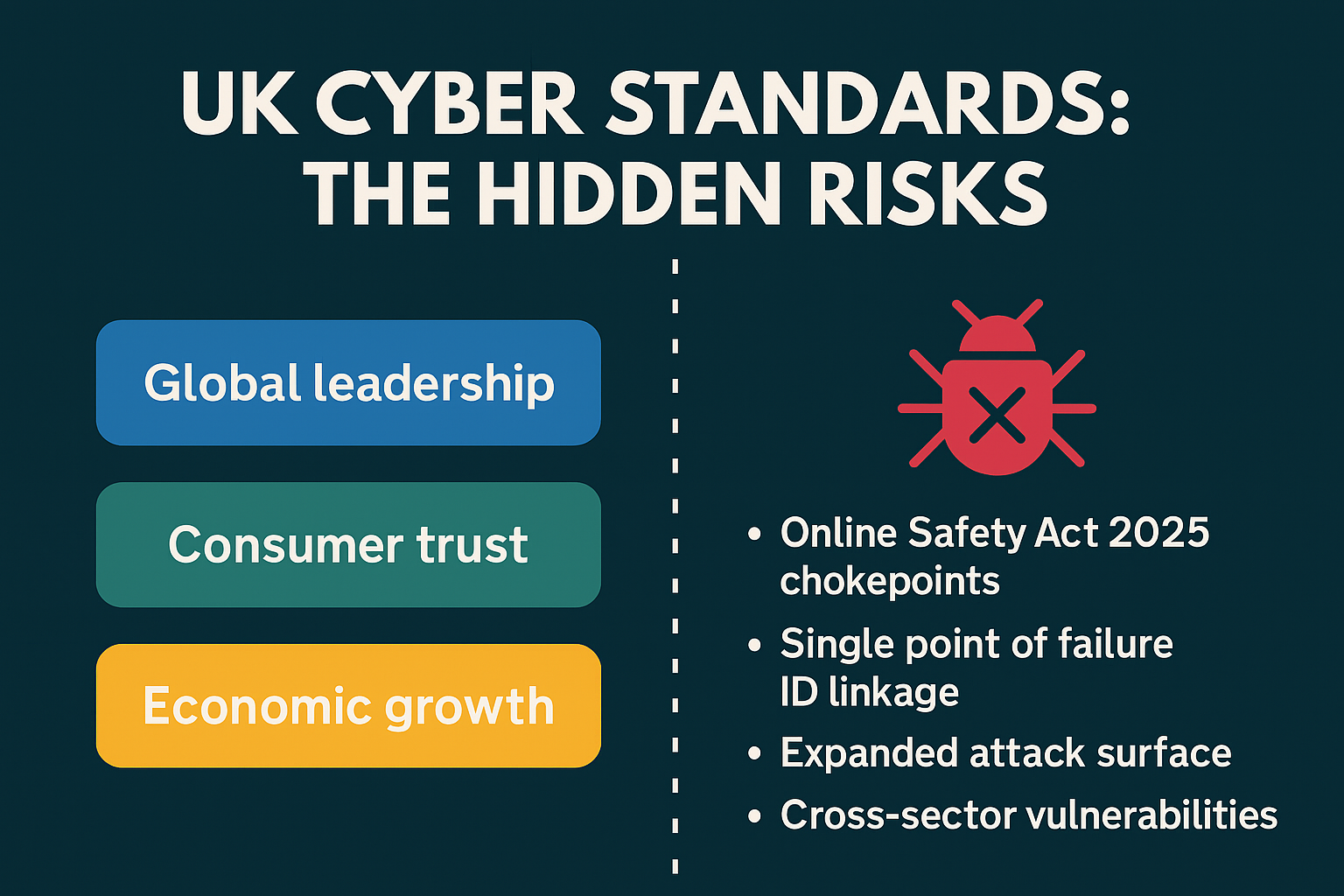
The government's latest press release hails the UK as "setting a global benchmark" on cyber standards, promising growth, innovation, and consumer protection. Ministers speak of world leading cybersecurity frameworks that will boost economic competitiveness while keeping citizens safe from digital threats.
But behind the polished language lies a glaring omission: the very policies being rolled out, the Online Safety Act 2025 and the Digital ID system will massively expand the UK's cyber attack surface, creating new vulnerabilities while centralizing critical data in ways that make breaches more catastrophic, not less.
🚨 The Hidden Reality Behind "Global Leadership"
- Online Safety Act 2025 creates new compliance infrastructures with multiple attack vectors
- Digital ID system introduces single points of failure across multiple sectors
- Centralized data flows create chokepoints attractive to nation-state attackers
- Expanded monitoring systems increase the number of vulnerable entry points
- Cross-sector integration multiplies trust relationships and potential breach paths
- Third-party provider requirements create supply chain vulnerabilities
The Official Narrative: World-Leading Protection
The government's announcement presents a compelling vision of UK cybersecurity leadership. Ministers frame Britain as a standard-setter, shaping international norms while protecting citizens and enabling economic growth.
The Promised Benefits
According to the official narrative, the UK's cyber standards initiative delivers:
- Global Leadership: Positioning the UK as the international standard-setter for cybersecurity practices
- Consumer Trust: Stronger security standards presented as a shield protecting citizens from cyber threats
- Economic Growth: Cybersecurity framed as an enabler of digital innovation and international competitiveness
- Business Confidence: Regulatory clarity encouraging investment in UK digital infrastructure
- International Cooperation: UK standards influencing global cybersecurity frameworks
This is the language of reassurance, designed to project confidence and competence. But it's also the language of omission carefully avoiding the inconvenient truth about what these policies actually do to the UK's cybersecurity posture.
The Policy Theatre
The announcement represents classic policy theatre:
- Stage Lights: "Global benchmark" language designed to dazzle and reassure
- Backdrop: A quietly expanding attack surface created by new surveillance laws
- Script: Technical competence and international leadership
- Audience Takeaway: Citizens told they're safer while risks actually multiply
The Hidden Risks: What They Won't Tell You
While ministers celebrate global leadership, they carefully avoid mentioning how their flagship digital policies are systematically undermining the cybersecurity they claim to champion.
Online Safety Act 2025: Creating New Attack Vectors
The Online Safety Act doesn't just regulate content it fundamentally reshapes the UK's digital infrastructure in ways that create new cybersecurity vulnerabilities:
- Compliance Infrastructure: New monitoring, reporting, and scanning systems create additional attack surfaces
- Centralized Data Flows: Content moderation requirements concentrate sensitive data in vulnerable chokepoints
- Expanded System Connections: More systems that must be secured, each representing a potential breach vector
- Third-Party Dependencies: Age verification and content filtering services introduce supply chain risks
- Government Integration: Direct connections between private platforms and government systems create high-value targets
Digital ID System: Single Point of Catastrophic Failure
The planned Digital ID system represents perhaps the most dangerous expansion of cyber risk in UK history:
- Single Point of Failure: Compromise the ID system, and multiple linked services across sectors fall simultaneously
- Cross-Sector Integration: Banking, healthcare, employment, and housing systems all connected through one vulnerable infrastructure
- Multiple Interfaces: Every integration point represents a potential attack vector
- Third-Party Providers: Private companies handling identity verification create additional supply chain vulnerabilities
- Government Backdoors: Law enforcement access requirements weaken overall system security
- Data Concentration: Massive databases of citizen information create high-value targets for nation-state actors
The Centralization Trap
The fundamental flaw in the government's approach is the assumption that centralization enhances security. In reality, it creates systemic vulnerabilities that make breaches more catastrophic.
Why Centralization Increases Risk
Cybersecurity experts have long understood that centralized systems create unique vulnerabilities:
- High-Value Targets: Centralized databases attract more sophisticated attackers
- Cascade Failures: Single breaches affect multiple services simultaneously
- Attack Surface Expansion: More integration points mean more ways in for attackers
- Trust Relationship Multiplication: Every connection between systems creates potential compromise paths
- Complexity Vulnerabilities: Complex systems have more failure modes and security gaps
Historical Precedents: Learning From Failure
The UK government has a concerning track record with large-scale digital infrastructure projects:
- NHS IT Program: £12.7 billion failure that compromised patient data security
- Universal Credit: Years of security vulnerabilities and system failures
- HMRC Digital Services: Multiple data breaches affecting millions of taxpayers
- Test and Trace: Privacy violations and data mismanagement during COVID-19
- Brexit IT Systems: Rushed implementation creating multiple security gaps
Each failure follows the same pattern: ambitious centralization promises followed by security compromises, cost overruns, and systemic vulnerabilities. Yet the government continues to pursue the same approach with Digital ID and the Online Safety Act.
The Attack Surface Analysis
Understanding the true cybersecurity impact requires examining how these policies expand the UK's attack surface the total number of ways an attacker can potentially breach critical systems.
Online Safety Act Attack Vectors
The Act creates multiple new pathways for cyber attacks:
- Content Scanning Infrastructure: Automated systems analyzing all user content create new targets for malware injection
- Age Verification Systems: Third-party identity verification services handling sensitive personal data
- Government Reporting Portals: New systems for platforms to report user data to authorities
- Compliance Monitoring: Automated systems tracking platform behavior and user interactions
- Appeal Mechanisms: New bureaucratic systems handling content disputes and user complaints
- Cross-Platform Integration: Systems designed to track users across multiple platforms and services
Digital ID Vulnerability Multiplication
The Digital ID system doesn't just create one new target, it multiplies vulnerabilities across every connected service:
- Identity Verification Points: Every business and service requiring ID verification becomes an attack vector
- Government Database Connections: Links to HMRC, DWP, DVLA, and other departments create multiple breach pathways
- Private Sector Integration: Banks, employers, landlords, and service providers all become part of the attack surface
- Mobile Application Vulnerabilities: Digital ID apps on millions of devices create distributed attack opportunities
- Backup and Recovery Systems: Redundant systems and backups double the number of potential targets
Nation-State Threat Assessment
The expanded attack surface created by these policies makes the UK particularly vulnerable to sophisticated nation-state actors who have both the resources and motivation to target centralized infrastructure.
High-Value Targets for Foreign Intelligence
The centralized systems being created represent exactly the kind of targets that foreign intelligence services prioritize:
- Comprehensive Citizen Data: Digital ID systems provide complete profiles of UK citizens
- Communication Monitoring: Online Safety Act infrastructure enables surveillance of all digital communications
- Economic Intelligence: Financial and employment data accessible through identity systems
- Social Mapping: Platform data revealing relationships, opinions, and social networks
- Critical Infrastructure Access: Identity systems connected to energy, transport, and healthcare networks
Attack Methodology
Sophisticated attackers will likely focus on:
- Supply Chain Infiltration: Compromising third-party providers before they integrate with government systems
- Insider Threats: Recruiting personnel with access to centralized systems
- Zero-Day Exploitation: Using unknown vulnerabilities in complex, integrated systems
- Social Engineering: Targeting administrators and developers of critical infrastructure
- Long-Term Persistence: Establishing permanent access to monitor UK citizens and infrastructure
The Security Theatre Problem
The government's cyber standards announcement represents classic security theatre measures that appear to enhance security while actually increasing vulnerability.
Appearance vs. Reality
Security theatre creates the illusion of protection while undermining actual security:
- Visible Measures: High-profile announcements about cyber standards and global leadership
- Hidden Vulnerabilities: Actual policies that expand attack surfaces and create new risks
- Misplaced Confidence: Citizens and businesses believing they're more secure when they're actually more vulnerable
- Resource Misallocation: Focus on compliance and monitoring rather than fundamental security improvements
- False Trade-offs: Presenting surveillance infrastructure as necessary for security
The Compliance Distraction
Focusing on standards and compliance diverts attention from real security improvements:
- Bureaucratic Overhead: Resources spent on regulatory compliance rather than security engineering
- Checkbox Mentality: Meeting regulatory requirements rather than addressing actual threats
- Innovation Stifling: Security measures that hinder rather than help genuine cybersecurity innovation
- Vendor Lock-In: Compliance requirements favoring large contractors over innovative security solutions
- Audit Culture: Focus on documentation and processes rather than actual security outcomes
What Citizens Should Demand
Rather than accepting government assurances about "global benchmarks," citizens should demand transparency about the real cybersecurity implications of current policies.
Critical Questions for Government
Ministers should be required to answer these fundamental questions:
- Attack Surface Analysis: How many new attack vectors do the Online Safety Act and Digital ID system create?
- Resilience Planning: What contingency plans exist if these centralized systems are compromised?
- Independent Auditing: Who audits the security of Digital ID and Online Safety infrastructures, and will these audits be public?
- Breach Impact Assessment: What would be the consequences of a successful attack on centralized identity or content monitoring systems?
- Alternative Approaches: Why choose centralization over distributed, more resilient architectures?
- Foreign Interference: How will these systems resist nation-state attacks from China, Russia, and other adversaries?
Transparency Requirements
True cybersecurity accountability requires:
- Public Security Assessments: Independent evaluation of attack surface expansion
- Breach Notification: Immediate public disclosure of any successful attacks on government systems
- Architectural Reviews: Public examination of system designs and security assumptions
- Parliamentary Oversight: Regular scrutiny of cybersecurity implications by elected representatives
- Expert Input: Consultation with independent cybersecurity researchers and privacy advocates
Alternative Approaches: Learning From Success
Other countries have achieved better cybersecurity outcomes through different approaches that prioritize distributed resilience over centralized control.
Distributed Security Models
Rather than centralization, successful cybersecurity strategies emphasize:
- Decentralized Architecture: Multiple independent systems that can function even if others are compromised
- Zero Trust Design: Assuming breach and designing systems to limit damage when attacks succeed
- Privacy by Design: Building systems that protect user data rather than centralizing it
- Open Standards: Transparent, auditable security protocols rather than proprietary government systems
- User Control: Individuals maintaining control over their data rather than surrendering it to centralized databases
International Best Practices
Countries with better cybersecurity outcomes focus on:
- Estonia: Distributed digital infrastructure with strong encryption and user control
- Switzerland: Privacy-focused identity systems with minimal data collection
- Denmark: Transparent government systems with strong parliamentary oversight
- Finland: Education-focused cybersecurity with distributed resilience
- Singapore: High security standards without sacrificing privacy or distributed architecture
The Real Global Benchmark
If the UK truly wants to set a global benchmark for cybersecurity, it should abandon centralized surveillance infrastructure in favor of distributed, privacy preserving approaches that actually enhance security.
Principles for Genuine Security Leadership
Real cybersecurity leadership would focus on:
- Resilience Over Control: Building systems that can survive and recover from attacks
- Privacy Enhancement: Protecting citizen data rather than collecting and centralizing it
- Distributed Architecture: Multiple independent systems rather than single points of failure
- Transparency: Open source, auditable systems rather than proprietary government infrastructure
- User Sovereignty: Citizens controlling their own data and digital identity
- Democratic Oversight: Parliamentary control over cybersecurity policy rather than executive secrecy
Economic Benefits of True Security
Genuine cybersecurity leadership would deliver better economic outcomes:
- Innovation Attraction: Privacy-respecting infrastructure attracting global tech investment
- Trust Premium: UK services commanding higher prices due to superior security and privacy
- Reduced Breach Costs: Distributed systems limiting the impact of successful attacks
- Competitive Advantage: British companies leading global markets in privacy-preserving technology
- Brain Gain: Top cybersecurity talent choosing the UK over surveillance-heavy alternatives
Conclusion: A Benchmark for Fragility
The UK may indeed set a global benchmark with its current approach to cybersecurity but unless it acknowledges the risks of centralization and surveillance, that benchmark will be one of fragility, not resilience.
Behind the polished rhetoric about "world-leading standards" lies a dangerous reality: the Online Safety Act and Digital ID system are systematically expanding the UK's cyber attack surface while creating single points of catastrophic failure. This isn't cybersecurity leadership it's security theatre that makes the country more vulnerable while claiming to provide protection.
The government's announcement carefully omits the inconvenient truth that its flagship digital policies undermine the very security they claim to enhance. Centralized surveillance infrastructure creates high-value targets for sophisticated attackers while making breaches more catastrophic when they inevitably occur.
Citizens deserve transparency about the real cybersecurity implications of current policies. Instead of accepting government assurances about global leadership, we should demand answers about attack surface expansion, resilience planning, and the fundamental architecture choices that determine whether our digital infrastructure can survive sophisticated attacks.
True cybersecurity leadership would focus on distributed resilience, privacy protection, and user sovereignty rather than centralized surveillance and control. The UK has an opportunity to lead the world by demonstrating that security and privacy are complementary, not competing values.
But that would require abandoning the current path of centralization and surveillance in favor of approaches that actually enhance security rather than merely appearing to do so. Until that happens, the UK's "global benchmark" will be a cautionary tale about the dangers of confusing surveillance with security and control with protection.
The choice is clear: continue down the path of centralized fragility or choose distributed resilience. The government's current trajectory suggests it has chosen poorly, putting political control ahead of genuine cybersecurity. Citizens and businesses will pay the price when these vulnerable systems inevitably face sophisticated attacks they were never designed to resist.