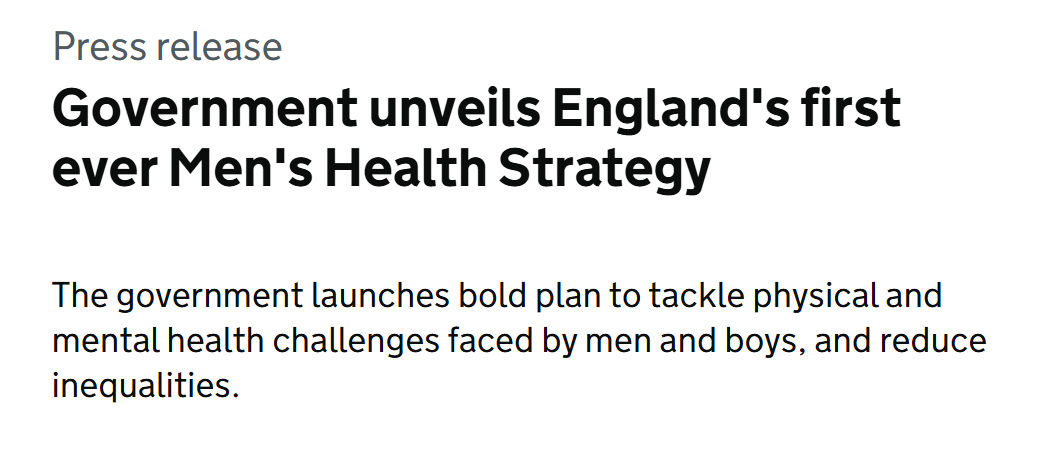
The government has announced England's first dedicated men's health strategy, a comprehensive approach to addressing gender health disparities that affect millions of men across England. According to the official government announcement, the strategy includes specific funding commitments and targeted interventions designed to tackle the leading causes of male mortality and poor health outcomes.
The strategy represents recognition that men face distinct health challenges requiring targeted interventions, with the government committing significant resources to address issues from prostate cancer care to suicide prevention among middle-aged men.
🔍 Strategy Key Components
- £3.6 million investment in suicide prevention projects targeting middle-aged men
- £3 million for community-based men's health programmes reaching high-risk groups
- Improved prostate cancer care through enhanced treatment pathways
- Men's health training for healthcare professionals via new e-learning modules
- Workplace health pilots with major employers like EDF Energy
- Enhanced lung disease support for former miners with dedicated funding
- Research funding to tackle major male health conditions
- £200,000 trial for cocaine and alcohol-related cardiovascular disease interventions
Specific Funding Commitments
The government has announced several targeted funding streams to address key areas of male health concern:
Suicide Prevention Investment
A significant £3.6 million will be invested in suicide prevention projects specifically targeting middle-aged men, who face disproportionately high suicide rates:
- Target Demographics: Focus on middle-aged men who face peak suicide risk
- Evidence-Based Interventions: Projects designed around proven suicide prevention approaches
- Community Integration: Working with local organizations and support networks
- Crisis Support: Enhanced access to immediate help during mental health crises
- Long-term Support: Sustained intervention programs rather than one-off initiatives
Community-Based Health Programmes
£3 million has been allocated for community-based men's health programmes designed to reach those most at risk and least likely to engage with traditional healthcare services:
- Hard-to-Reach Groups: Targeting men who typically avoid healthcare settings
- Community Venues: Delivering services in familiar, non-clinical environments
- Peer Support: Using male role models and community leaders
- Preventive Focus: Early intervention before problems become severe
- Local Partnerships: Working with existing community organizations and networks
Prostate Cancer Care Improvements
Men with prostate cancer will benefit from improved care through the strategy, addressing one of the most common cancers affecting men:
- Enhanced Treatment Pathways: Improved coordination of care from diagnosis through treatment
- Earlier Detection: Better screening and diagnostic services
- Treatment Options: Access to latest treatment technologies and approaches
- Support Services: Psychological and social support throughout treatment journey
- Follow-up Care: Long-term monitoring and support for survivors
Healthcare Professional Training
The strategy includes comprehensive training for healthcare professionals to better understand and address male health needs:
E-Learning Modules
- Gender-Specific Training: Understanding how health conditions affect men differently
- Communication Skills: Engaging effectively with male patients who may be reluctant to seek help
- Risk Recognition: Identifying early warning signs of male health problems
- Treatment Approaches: Evidence-based interventions specifically effective for men
- Cultural Competency: Understanding diverse male communities and their specific health needs
Professional Resources
- Clinical Guidelines: Updated guidance on male-specific health issues
- Assessment Tools: Screening instruments designed for male patients
- Referral Pathways: Clear routes to specialist male health services
- Best Practice Sharing: Networks for healthcare professionals to share effective approaches
- Continuous Learning: Ongoing professional development opportunities
Workplace Health Initiatives
The strategy includes workplace health pilots, starting with EDF Energy through the Keep Britain Working Vanguard Programme, targeting male workers in male-dominated industries:
Industrial Health Focus
- Male-Dominated Sectors: Targeting industries where men face specific occupational health risks
- EDF Energy Partnership: Pilot programme with major energy company to test workplace interventions
- Keep Britain Working Programme: Integration with existing government employment and health initiatives
- Occupational Health: Addressing work-related health risks and injuries
- Mental Health at Work: Workplace mental health support tailored for male employees
Workplace Intervention Models
- On-Site Health Checks: Bringing healthcare services directly to workplaces
- Peer Support Networks: Training male employees to support colleagues' health
- Health Education: Workplace-based health education programmes
- Flexible Services: Healthcare access that doesn't require time off work
- Management Training: Helping supervisors recognize and respond to male health issues
Former Miners' Lung Disease Support
The strategy includes enhanced lung disease support for former miners, with increased investment in the Respiratory Pathways Transformation Fund targeting areas with significant former mining communities:
Mining Community Health Legacy
- Occupational Lung Disease: Addressing long-term health consequences of mining work
- Geographic Targeting: Focus on former mining communities across England
- Respiratory Pathways Fund: Enhanced funding for specialized lung disease services
- Diagnostic Services: Improved access to respiratory health assessments
- Treatment Access: Better availability of specialized treatments for occupational lung conditions
Community-Specific Interventions
- Outreach Services: Mobile health units visiting former mining communities
- Local Partnerships: Working with community organizations in mining areas
- Family Support: Services for families affected by occupational lung disease
- Compensation Assistance: Help accessing appropriate compensation and support services
- Preventive Care: Health monitoring for men at risk of developing lung conditions
Research and Innovation Investment
The strategy includes dedicated funding for research to help prevent, diagnose, treat and manage the major male health conditions and causes of poor health outcomes:
Research Priorities
- Major Male Killers: Research into leading causes of male mortality
- Preventive Approaches: Developing effective prevention strategies for male health conditions
- Diagnostic Innovation: Improving early detection of male health problems
- Treatment Development: Advancing therapeutic options for male-specific conditions
- Management Strategies: Better approaches to managing chronic conditions in men
Substance Abuse and Cardiovascular Disease Trial
A specific £200,000 trial will test new brief interventions to target the rise in cocaine and alcohol-related cardiovascular disease deaths, particularly among older men:
- Target Population: Older men at risk of substance-related cardiovascular disease
- Brief Interventions: Short, focused interventions that can be delivered in various settings
- Cocaine and Alcohol Focus: Addressing specific substances linked to cardiovascular deaths
- Emergency Department Integration: Interventions delivered when men present to healthcare services
- Outcome Measurement: Rigorous evaluation of intervention effectiveness
Conclusion: Comprehensive Approach to Male Health
England's first men's health strategy represents a comprehensive and well-funded approach to addressing documented male health inequalities. With specific financial commitments totaling millions of pounds and targeted interventions across multiple health areas, the strategy demonstrates serious government commitment to improving male health outcomes.
The strategy's strength lies in its multi-faceted approach, addressing everything from suicide prevention and prostate cancer care to workplace health and substance abuse interventions. The inclusion of specific funding amounts and pilot programmes with named partners like EDF Energy suggests concrete implementation plans rather than merely aspirational policy statements.
Particularly notable is the focus on reaching men who typically avoid healthcare services, through community-based programmes and workplace initiatives. The recognition that traditional healthcare delivery may not effectively serve male patients represents an important shift toward more targeted, accessible health services.
The strategy also acknowledges the complex relationship between male health and occupational factors, with specific provisions for former miners and workplace health pilots in male-dominated industries. This recognition of how work and social factors affect health outcomes suggests a more sophisticated understanding of male health determinants.
However, the ultimate success of the strategy will depend on effective implementation, adequate long-term funding, and the ability to overcome cultural barriers that prevent men from engaging with health services. The strategy's evaluation framework will be crucial in demonstrating whether these interventions can deliver measurable improvements in male health outcomes.
For men across England, this strategy offers the prospect of more accessible, relevant healthcare services designed specifically to address their health needs. If successfully implemented, it could serve as a model for other countries seeking to address similar male health inequalities while strengthening the overall effectiveness and equity of the healthcare system.