AI Use: AI tools were used to support source discovery and to structure the article for clarity. All research, verification, drafting, and final editorial decisions are fully human led. Learn about our AI policy.
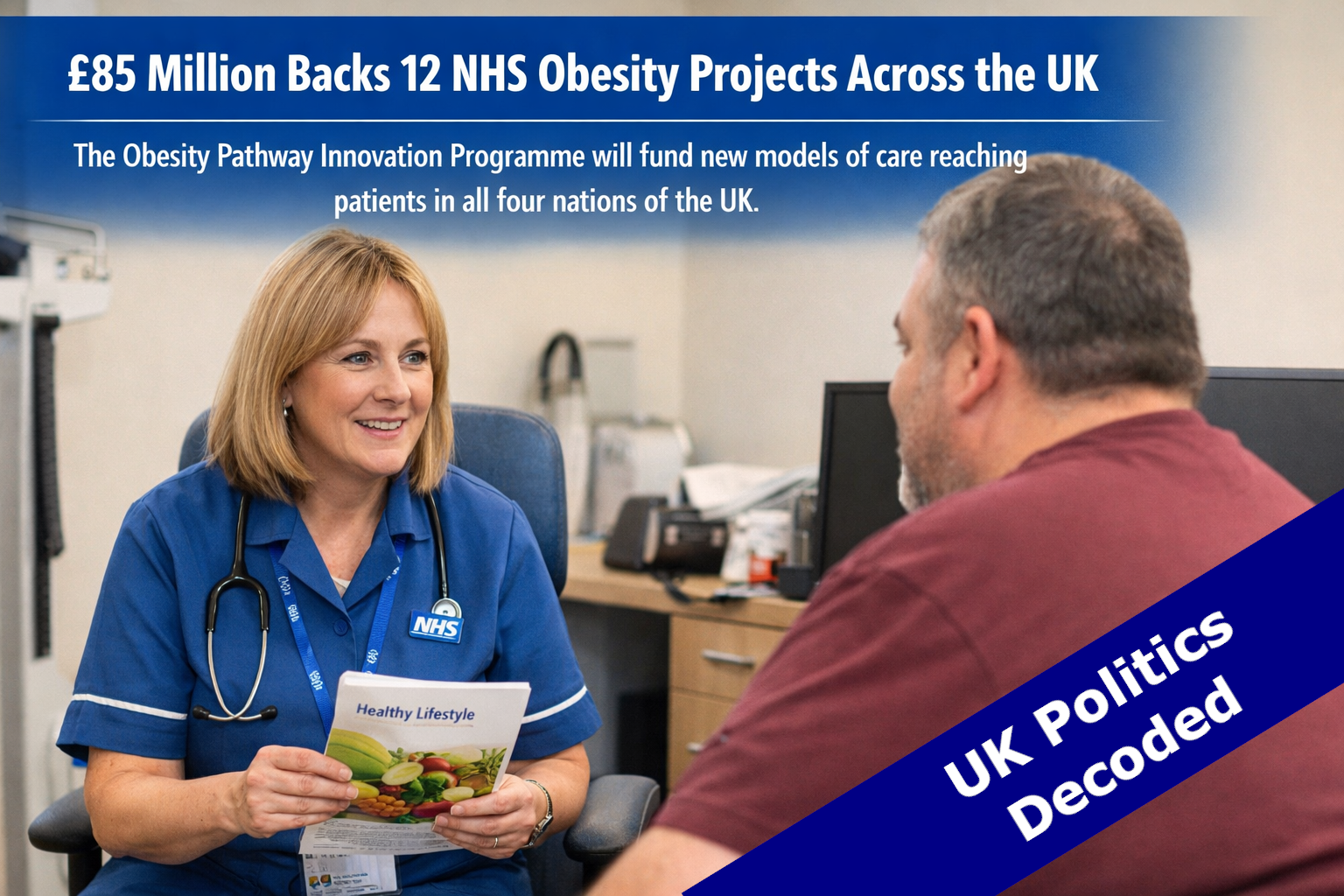
Twelve NHS led projects will receive up to £85 million in combined government and industry funding to test new approaches to obesity care across all four nations of the UK. The announcement, made on 27 June 2026, covers everything from AI powered triage tools to neighbourhood hubs in community pharmacies, and is designed to widen access to weight management support for groups who currently struggle to get it.
The money comes from two sources, up to £50 million from the government and up to £35 million from pharmaceutical company Eli Lilly and Company (Lilly). The programme is delivered by Innovate UK and runs until March 2029. Projects are led by NHS Integrated Care Boards or devolved NHS boards, with many working alongside partners including the British Heart Foundation and Obesity UK.
At a glance
- Funding: Up to £85 million, £50 million from government, £35 million from Eli Lilly
- Programme: Obesity Pathway Innovation Programme (OPIP), delivered by Innovate UK
- Scale: 12 projects across England, Scotland, Wales, and Northern Ireland
- Duration: Projects will run until March 2029
- Focus: Reaching deprived, rural, coastal, minority ethnic communities and early years families
Each project takes a different approach to broadening access to obesity support, though several share common elements, digital entry points, AI powered tools, and links to existing NHS services. Patients will be able to access support imminently, the government said.
Selected projects by region
A snapshot of what each area is offering:
- Kent and Medway: 3,300 families supported from pregnancy through early years via a 24/7 AI powered WhatsApp service, responding in more than 20 languages and by voice note for those who find reading difficult
- Norfolk, north east Essex, and Suffolk: Up to 85,270 patients matched to the right care through a single AI assisted service covering dietary advice, behavioural support, or specialist referral alongside new neighbourhood hubs near community pharmacies
- Leicester, Leicestershire and Rutland: Six new neighbourhood hubs in pharmacies, gyms, and similar facilities, with referral routes via GPs, schools, and councils, and an extra focus on deprived, Black, South Asian, and rural communities
- Northern Ireland: A self referral option so people can access support without waiting for a GP appointment, with personalised goals agreed between patient and clinician
- Wales: The country's first fully integrated national obesity care pathway, with a bilingual digital entry point accessible in English or Welsh
- Midlothian (LIMITLESS STRIDE): Support for up to 10,000 people via NHS Lothian, with a dedicated pathway for serving armed forces personnel and veterans delivered in partnership with Defence Medical Command, designed to flex around geographic moves and deployment
Types of support available
What the interventions include across the programme:
Range of support
- Lifestyle advice: Dietary guidance, physical activity information, and behavioural change programmes
- Digital tools: Apps, online referral portals, and AI powered triage platforms
- Community access: Neighbourhood hubs in pharmacies, gyms, and community spaces
- Clinical support: Access to weight loss medication where clinically appropriate
Almost one in three adults in England, Scotland, and Northern Ireland are living with obesity, according to NHS England Digital and the Scottish Health Survey. In Wales, the figure is closer to one in four. The government estimates obesity costs UK society up to £107 billion a year, with the NHS bill alone running to more than £9 billion annually. Limited access to specialist advice, guided physical activity, or weight loss medicines remains one of the main barriers for patients who need help.
Who OPIP is designed to reach
The programme targets groups identified as currently missing out most:
Priority groups
- Deprived communities: Hubs placed in pharmacies, gyms, and community facilities in areas of high deprivation
- Rural and coastal communities: Digital first access so patients no longer need to travel for in person care, Lincolnshire for instance is getting its first specialist weight management service through OPIP
- Minority ethnic communities: Multilingual tools and culturally specific outreach, including services available in more than 18 languages in Birmingham, Solihull, and the Black Country
- Early years families: Pregnancy to early years support in Kent and Medway
- Armed forces personnel: A flexible digital pathway in Midlothian tailored to the realities of deployment and relocation
The partnership between the government and Eli Lilly stems from a memorandum of understanding signed at the International Investment Summit in October 2024. Lilly is contributing up to £35 million in grant funding but was not involved in assessing, ranking, or selecting the projects, the government says Lilly only screened applications to confirm eligibility for receiving its arms length funding. Innovate UK ran the full application and assessment process.
Ministerial statements
Both departments involved commented on the announcement:
- Science Secretary Liz Kendall: Said the projects would "meet people where they are whether that is through a pharmacy round the corner, an app on their phone, or support in their own language"
- Secretary of State for Health and Social Care James Murray: Called obesity "an epidemic" and said the projects would test new delivery models "closer to people's homes", informing the government's Ten Year Health Plan
Wider policy context
OPIP sits alongside a broader package of government action on obesity. The government has already moved to restrict junk food advertising on television before 9pm and at all times online, a measure it says is expected to remove up to 7.2 billion calories a year from children's diets. Local authorities are also being given new powers to block fast food shops opening near schools.
Other measures already announced
The wider government package on obesity includes:
- Energy drinks: A consultation on banning the sale of high caffeine energy drinks to under 16s
- School food: Revised School Food Standards and the extension of free school meals to every child in a Universal Credit household
- Healthy Start: The value of Healthy Start payments uplifted by 10% to help parents on low incomes afford nutritious food
- Soft Drinks Industry Levy: From January 2028, the levy will expand to cover pre packed milk based and milk substitute drinks, building on a policy that cut average sugar content of drinks in scope by 47% between 2015 and 2024
- Food business reporting: Large food businesses will be required to report against standardised metrics on healthier food sales before the end of this Parliament
The 12 OPIP projects are explicitly framed as a learning exercise. The government says findings from the programme will inform how obesity care is delivered across the country, not just in the areas receiving funding now.
Each project is required to evaluate what it does, and the Health Innovation Network will lead a Communities of Practice process to share findings across the NHS. Professor Naveed Sattar, Chair of the Obesity Healthcare Goals, said the most successful approaches from OPIP are "likely to shape future obesity services across the UK."
Whether the models trialled here prove scalable and how many patients ultimately reach effective care will become clearer as the programme runs to its March 2029 endpoint.
Key Takeaways
- Up to £85 million in government and Eli Lilly funding will support 12 NHS obesity projects across England, Scotland, Wales, and Northern Ireland
- The Obesity Pathway Innovation Programme is delivered by Innovate UK projects run until March 2029
- Approaches range from 24/7 AI powered WhatsApp advice in Kent to the first specialist weight management service in Lincolnshire
- OPIP prioritises groups who currently face the greatest barriers to care, including rural communities, minority ethnic populations, and early years families
- Findings from the 12 projects are intended to shape how obesity care is delivered nationally beyond the programme's end date
Sources & Further Reading
- GOV.UK - Pioneering projects to transform obesity care, backed by £85 million from government and industry (DSIT, DHSC, Innovate UK, 27 June 2026) Archived copy (OGL): archived page
- Innovate UK - GOV.UK Archived internally for verification (27 June 2026)
- NHS England Digital - Health Survey for England (overweight and obesity statistics) Archived copy (OGL): archived page