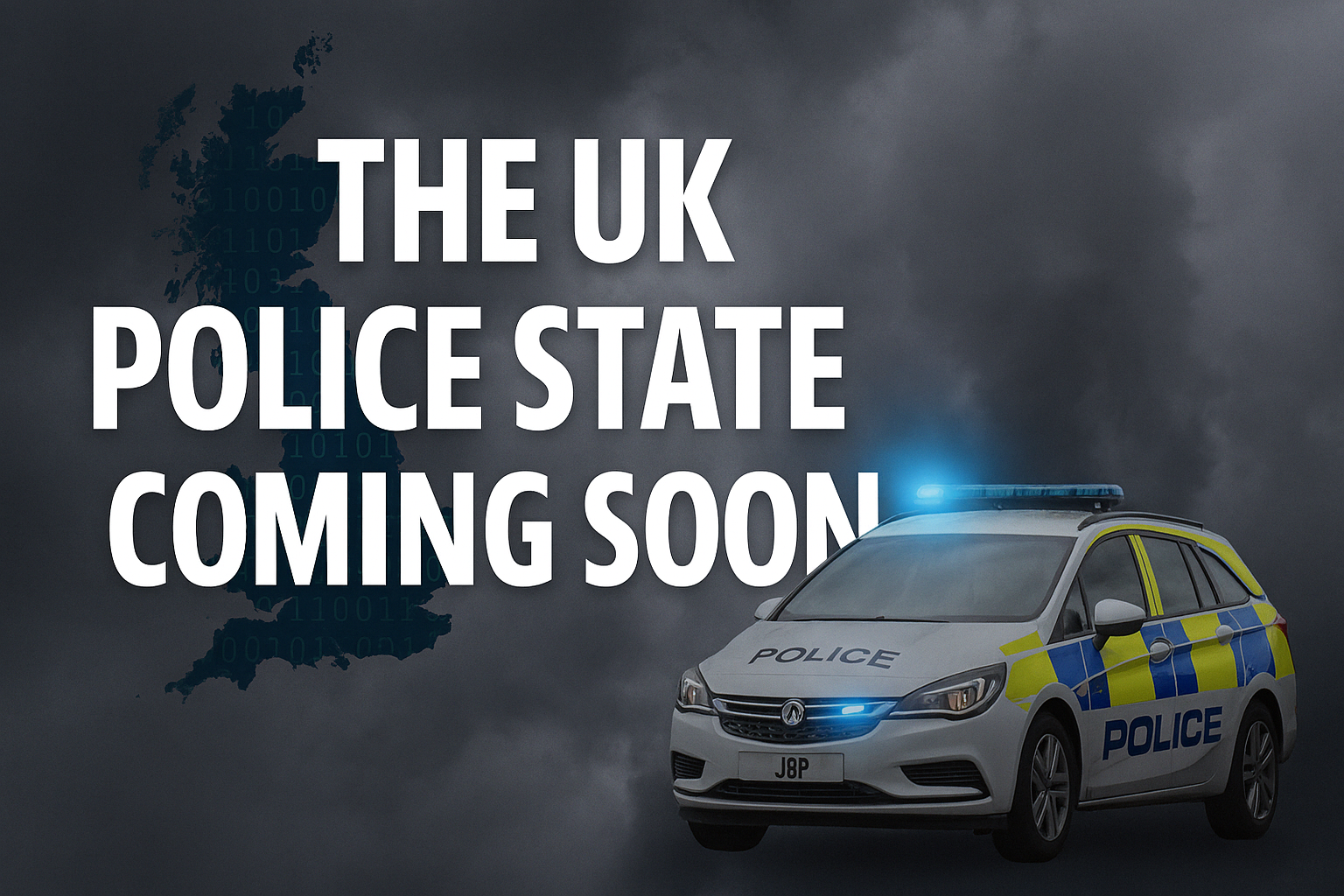
London, 4 December 2025 Britain is on the brink of a surveillance revolution. The Home Office has launched a consultation on plans to give police forces access to millions of passport and driver licence photos, enabling facial recognition cameras to scan town centres, shopping streets, and even small villages across the UK.
This represents the most significant expansion of state surveillance powers in British history, transforming routine identity documents into tools for mass population monitoring. The consultation, quietly published alongside parliamentary statements, would fundamentally alter the relationship between citizen and state, creating a digital panopticon where every face becomes a potential suspect.
🚨 Surveillance State Expansion
- Mass Database Access: Police given access to millions of passport and driving licence photos
- Widespread Deployment: Facial recognition cameras planned for town centres and villages
- Purpose Creep: Identity documents repurposed for mass surveillance, Data Protection Act 2018 and the principle of purpose limitation under UK GDPR, which campaigners argue is being undermined.
- Minimal Oversight: Courts apply low "rationality test" to government surveillance powers
- Privacy Erosion: No consent required for scanning and identification
- Legal Challenges Expected: Privacy campaigners preparing court action
📋 The Government's Surveillance Vision
The Home Office consultation outlines a comprehensive framework for deploying facial recognition technology across UK policing, using existing identity document databases as the foundation for a nationwide surveillance network.
Database Integration Plans
The proposal would grant police forces unprecedented access to civilian identity databases:
- Passport Photos: Access to millions of HMPO (HM Passport Office) identity images
- Driving Licences: Integration with DVLA photo database covering most adults
- Real-Time Matching: Instant identification of individuals captured on surveillance cameras
- Historical Tracking: Ability to trace movements through archived footage
- Cross Force Sharing: National database accessible to all police forces
Deployment Strategy
Facial recognition technology would be rolled out systematically across different environments:
- Urban Centers: Fixed cameras in shopping centers and business areas
- Transport Hubs: Stations, airports, and major transport connections
- Events and Gatherings: Temporary deployment for festivals and protests
- Rural Areas: Coverage extended to villages and smaller communities
- Mobile Units: Vehicle mounted systems for flexible deployment
Coordinated Authoritarian Expansion
The facial recognition consultation represents just one component of a broader governmental shift toward authoritarian control mechanisms that mirror tactics used in China and Russia:
Online Safety Act 2025: Speech Restriction by Age
The government's approach to online content reveals contradictory policies that prioritize control over coherence:
- Voting Paradox: 16 year olds can vote for MPs who decide war and peace but cannot access media coverage of riots deemed "dangerous to children"
- Content Censorship: Broad powers to restrict information access based on subjective safety assessments
- Age Based Rights Erosion: Creating separate tiers of information access undermining universal freedom of expression
- Political Manipulation: Selective content restrictions that could influence young voters' understanding of current events
- Precedent Setting: Establishing government authority to determine what information citizens can access
Digital ID: The Final Piece of the Surveillance Puzzle
Alongside facial recognition, the government's Digital ID program could complete a comprehensive tracking system (speculation):
- Identity Verification: Mandatory digital credentials linking all online and offline activity to individuals
- Transaction Monitoring: Complete tracking of digital payments and financial activity (when CBDC comes in effect)
- Access Control: Government power to restrict digital services for "undesirable" individuals
- Behavior Modification: Social credit style system where access depends on compliance
- Data Integration: Combining facial recognition, digital ID, and online monitoring for total surveillance
Authoritarian Alignment
The UK's surveillance expansion deliberately adopts methods pioneered by authoritarian regimes:
- Chinese Model: Facial recognition networks integrated with social credit systems
- Russian Tactics: Information control and surveillance to monitor political dissent
- Digital Authoritarianism: Technology enabled population control disguised as public safety
- Speech Policing: Content restrictions that mirror authoritarian information control
- Democratic Erosion: Gradual removal of freedoms through incremental policy changes
🎯 Government Justifications
Ministers frame the facial recognition expansion as essential for modern policing and public safety, drawing comparisons to established forensic techniques while emphasizing crime fighting benefits.
The DNA Analogy
Government supporters describe facial recognition as the next logical step in forensic technology:
"This represents the biggest breakthrough in policing since DNA matching. Just as genetic evidence revolutionized criminal investigations, facial recognition will transform how we identify suspects and solve crimes."Home Office briefing to parliamentary committees
This comparison deliberately seeks to normalize mass biometric surveillance by linking it to accepted forensic practices, though critics note crucial differences in scope and application.
Crime Fighting Claims
The Metropolitan Police has promoted early results from London trials:
- Arrest Numbers: Claims of "hundreds of arrests" from live facial recognition deployments
- Wanted Persons: Identification of individuals sought for existing warrants
- Missing Persons: Location of vulnerable individuals reported missing
- Event Security: Enhanced protection for large public gatherings
- Counter Terrorism: Potential identification of security threats
National Security Narrative
Ministers argue that facial recognition is essential for protecting national security in an era of evolving threats:
- Border Security: Enhanced identification of individuals entering or leaving the UK
- Terrorism Prevention: Rapid identification of known or suspected terrorists
- Organized Crime: Tracking criminal networks and their movements
- International Cooperation: Sharing capabilities with allied law enforcement agencies
- Digital Age Policing: Modernizing capabilities to match technological advances
⚠️ The Police State Warning
Civil liberties organizations and privacy campaigners have issued stark warnings about the implications of mass facial recognition, describing it as the infrastructure of authoritarianism disguised as crime prevention.
Purpose Creep and Data Misuse
The fundamental concern centers on the repurposing of data collected for legitimate administrative functions:
- Original Purpose: Passport and licence photos were provided for identity verification
- Surveillance Repurposing: Same images now used for mass population monitoring
- Consent Violation: No agreement to surveillance when documents were issued
- Scope Expansion: What begins as targeted policing becomes universal surveillance
- Mission Creep: Powers granted for serious crime inevitably extended to minor offenses
Erosion of Privacy Principles
Privacy advocates highlight the destruction of fundamental data protection principles:
- Purpose Limitation: Data should only be used for its original stated purpose
- Proportionality: Surveillance measures should match the seriousness of suspected crimes
- Data Minimization: Only necessary personal data should be collected and processed
- Consent Requirements: Individuals should agree to how their personal data is used
- Transparency: People should know when and how they are being monitored
The Surveillance Society Vision
Critics paint a dystopian picture of Britain under mass facial recognition:
📊 The Rationality Test Problem
A critical factor enabling surveillance expansion is the UK's weak judicial oversight, where courts apply a low "rationality test" that rarely challenges government claims about public safety.
The judicial review is not about weighing evidence but about legality and rationality.
How the Rationality Test Works
Under current legal precedents, government policies need only meet minimal standards to survive judicial review even without evidence or expert testimony:
- Low Bar: Ministers need only show policy appears reasonable in the circumstances (precedent set by the XL Bully Ban)
- Deference to Government: Courts reluctant to second guess political decisions on safety (precedent set by the XL Bully Ban)
- Limited Evidence Standards: Weak, selective or no evidence can be sufficient justification (precedent set by the XL Bully Ban)
- Public Safety Override: Claims about security often trump other considerations
- Precedent Creation: Each approval makes subsequent expansions easier to justify
The XL Bully Precedent
The recent XL Bully ban case demonstrates how rationality testing fails to provide meaningful oversight:
- Expert Evidence Ignored: Veterinary and behavioral expert testimony was dismissed
- Policy Failure: Dog attacks rose 9% after the ban was implemented (all breeds not just the bully breed)
- Court Approval: Despite evidence problems by the government, courts upheld the government's decision
- Rationality Standard: Judges applied minimal to no scrutiny to government reasoning
- Dangerous Precedent: Weak to no valid evidence was deemed sufficient for far reaching policy
This precedent suggests that facial recognition surveillance will likely survive legal challenge even with questionable evidence or disputed effectiveness claims.
Implications for Surveillance Policy
The rationality test creates a systematic bias toward expanding government power:
- Approval Bias: Courts default to supporting government on security issues
- Evidence Standards: Low requirements for proving policy effectiveness
- Rights Subordination: Privacy and liberty concerns treated as secondary
- Incremental Expansion: Each approved measure enables broader future powers
- Democratic Deficit: Judicial oversight fails to provide meaningful constraint
The Bridges v South Wales Police (2020) case, where the Court of Appeal ruled that police use of facial recognition breached privacy and equality law, showing that courts can intervene, but rarely do.
🌍 International Comparisons and Warnings
The UK's facial recognition expansion occurs against a backdrop of international experience that provides both cautionary tales and alternative approaches to balancing security with civil liberties.
Authoritarian Models
Several countries demonstrate how facial recognition becomes a tool for population control:
- China: China’s social credit system is well documented, with facial recognition tied to monitoring everyday behaviour and restricting access to services
- Russia: Russia has deployed facial recognition in Moscow’s metro and public spaces, with reports of it being used against political protesters
- Singapore: Singapore’s Smart Nation initiative integrates biometric tracking into daily life
- UAE: Tourist and resident monitoring through ubiquitous cameras
- Saudi Arabia: Social control mechanisms using biometric identification
Restrictive Approaches
Other democratic nations have imposed stronger constraints on surveillance technology:
- European Union: The EU AI Act (2025) explicitly restricts real time biometric surveillance in public spaces, except for narrow exceptions like terrorism prevention
- San Francisco: San Francisco banned city agencies from using facial recognition in 2019, setting a precedent for municipal level resistance
- Germany: Germany’s Federal Constitutional Court has repeatedly struck down disproportionate surveillance laws, citing privacy rights under the Basic Law
- Canada: Canada’s federal privacy commissioner announced a moratorium on facial recognition until a full review is completed
- Sweden: Sweden’s Data Protection Authority fined schools for unauthorized facial recognition use, showing enforcement of GDPR principles
Lessons from International Experience
Global evidence suggests several consistent patterns in facial recognition deployment:
- Scope Expansion: Systems initially deployed for limited purposes inevitably expand
- Mission Creep: Powers granted for serious crimes are extended to minor offenses
- Social Control: Technology becomes a tool for monitoring political activity and dissent
- Normalization: Populations gradually accept surveillance as routine and necessary
- Authoritarian Drift: Democratic constraints weaken as surveillance capabilities increase
🔮 The Crossroads: Alternative Futures
Britain now faces a fundamental choice between accepting surveillance expansion or demanding stronger democratic safeguards. The decision will shape the character of British society for generations.
The Surveillance State Path
Accepting current proposals would lead to a transformed society:
- Normalized Monitoring: Constant surveillance becoming part of daily life
- Reduced Freedom: Self-censorship and behavioral modification from monitoring
- Government Control: Enhanced state power over individual movement and association
- Privacy Extinction: Effective end of anonymous public existence
- Democratic Retreat: Authoritarian tools available for future misuse
The Democratic Alternative
Stronger safeguards could preserve liberty while maintaining security:
- Warrant Requirements: Judicial approval for surveillance deployment
- Purpose Limitation: Clear restrictions on surveillance use and scope
- Democratic Oversight: Parliamentary control over surveillance expansion
- Sunset Clauses: Regular review and renewal of surveillance powers
- Rights Protection: Constitutional protections for privacy and liberty
The Window for Action
The consultation period represents a crucial opportunity for public influence:
- Public Response: Consultation submissions demonstrating public concern
- Parliamentary Pressure: MPs raising concerns about surveillance expansion
- Legal Preparation: Civil liberties groups preparing court challenges
- Public Awareness: Media coverage and public education about surveillance risks
- Democratic Engagement: Citizens demanding stronger protections for privacy rights
The Home Office consultation runs until 12 February 2026, giving citizens a concrete deadline to respond
🖊️ Take Action: Defend Privacy Rights
The Home Office consultation is open for public response. Contact your MP to express concerns about mass surveillance. Support civil liberties organizations preparing legal challenges. The window for preventing a surveillance state is closing rapidly.
Conclusion: The Decisive Moment
The Home Office consultation on facial recognition is more than a policy proposal, it is a defining moment for British democracy. Transforming passport and licence photos into surveillance tools marks a shift from consent based governance to authoritarian control.
Supporters frame this as modern policing, citing DNA evidence and London trials that produced hundreds of arrests. Yet beneath the veneer of effectiveness lies a troubling reality: mass facial recognition builds the infrastructure of a police state, enabling population wide monitoring without consent.
The XL Bully ban shows how weak judicial oversight allows government overreach. Courts applying the low “rationality test” defer to ministers even when expert evidence is ignored and outcomes worsen. The same pattern will likely repeat here: minimal justification will be enough to entrench surveillance.
International experience warns where this leads. Systems introduced for serious crime inevitably expand to monitor dissent, social behaviour, and everyday life. Democratic safeguards erode as surveillance becomes normalized.
Britain now faces a stark choice: accept a future of constant monitoring and shrinking freedoms, or demand strong safeguards for warrant requirements, parliamentary oversight, and constitutional protection for privacy. The consultation period is a narrow window for citizens, MPs, and campaigners to resist.
📚 Sources & Further Reading
- Gov.UK - Consultation on Legal Framework for Law Enforcement Use of Facial Recognition
- Parliament.UK - Written Statement on Facial Recognition Framework
- Sky News - Police to Ramp Up Use of Facial Recognition Technology
- UKPoliticsDecoded - How the XL Bully Ban Was Decided and Why the Court Process Matters
- Big Brother Watch - Civil Liberties and Privacy Advocacy
- Liberty - Human Rights Organization