AI Use & Transparency: AI tools were used to support source discovery and to structure the article for clarity. All research, verification, drafting, and final editorial decisions are fully human led. Learn about our AI policy.
UKPoliticsDecoded is an IMPRESS regulated public interest publisher. Read our editorial standards.
Ask most people what they know about their MP and you will get a name, perhaps a party, and a vague sense of a constituency office somewhere. A photograph, if you are lucky. Ask what that MP has been doing in Parliament and the answer is usually a shrug.
That is not apathy. It is a design problem.
Voting records, committee memberships, contributions in debate and attendance are all published through official parliamentary sources. But they sit in different places, in different formats, behind different search boxes. For a voter with ten spare minutes, or a journalist on deadline, stitching them together is slow work.
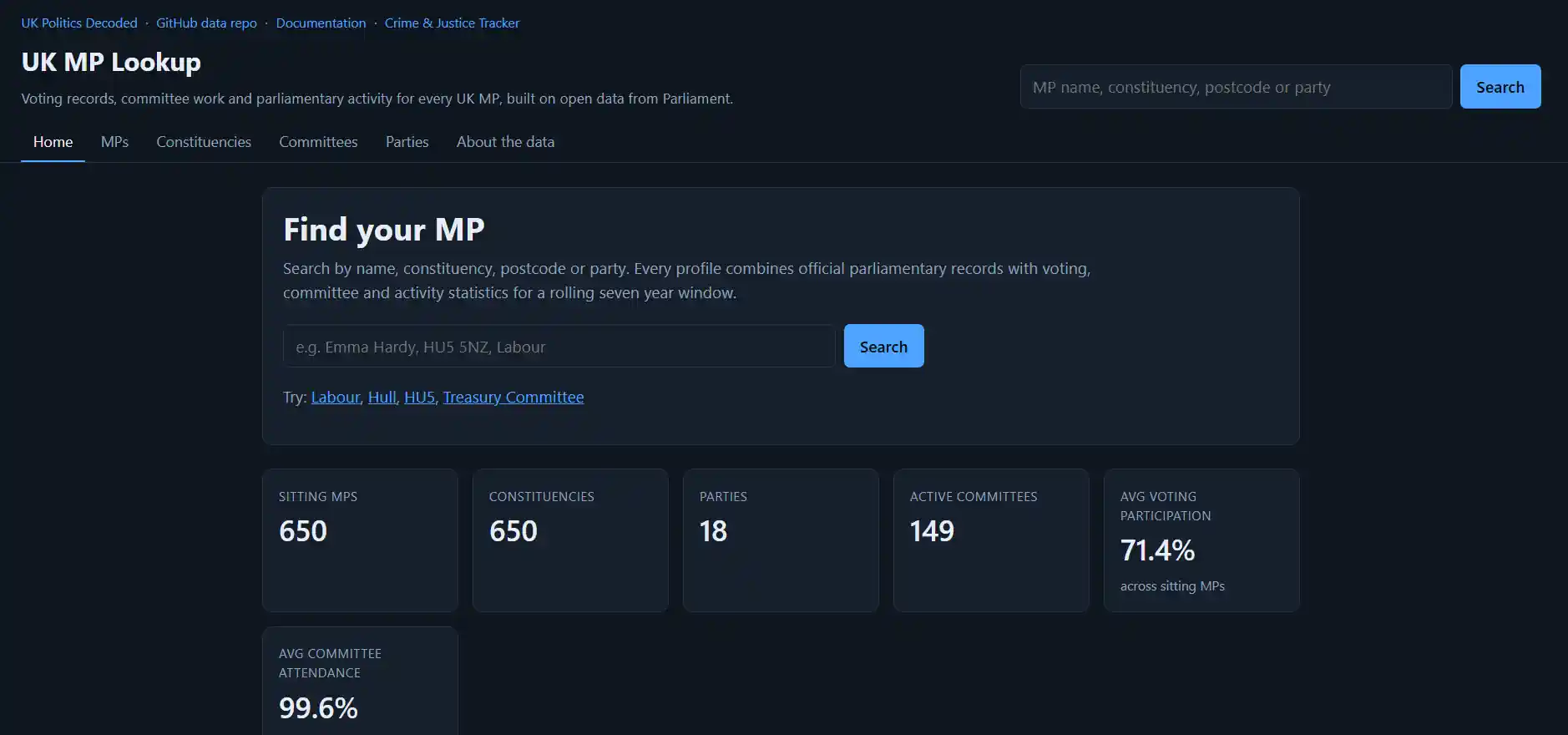
I find myself thinking about that gap a lot. It is the reason we built the UKPoliticsDecoded MP Lookup Tool, which is now open in beta.
More Than a Name and a Constituency
Plenty of MP directories do the basics well, constituency, party, contact details. Useful, certainly. But a directory tells you who someone is, not what they do.
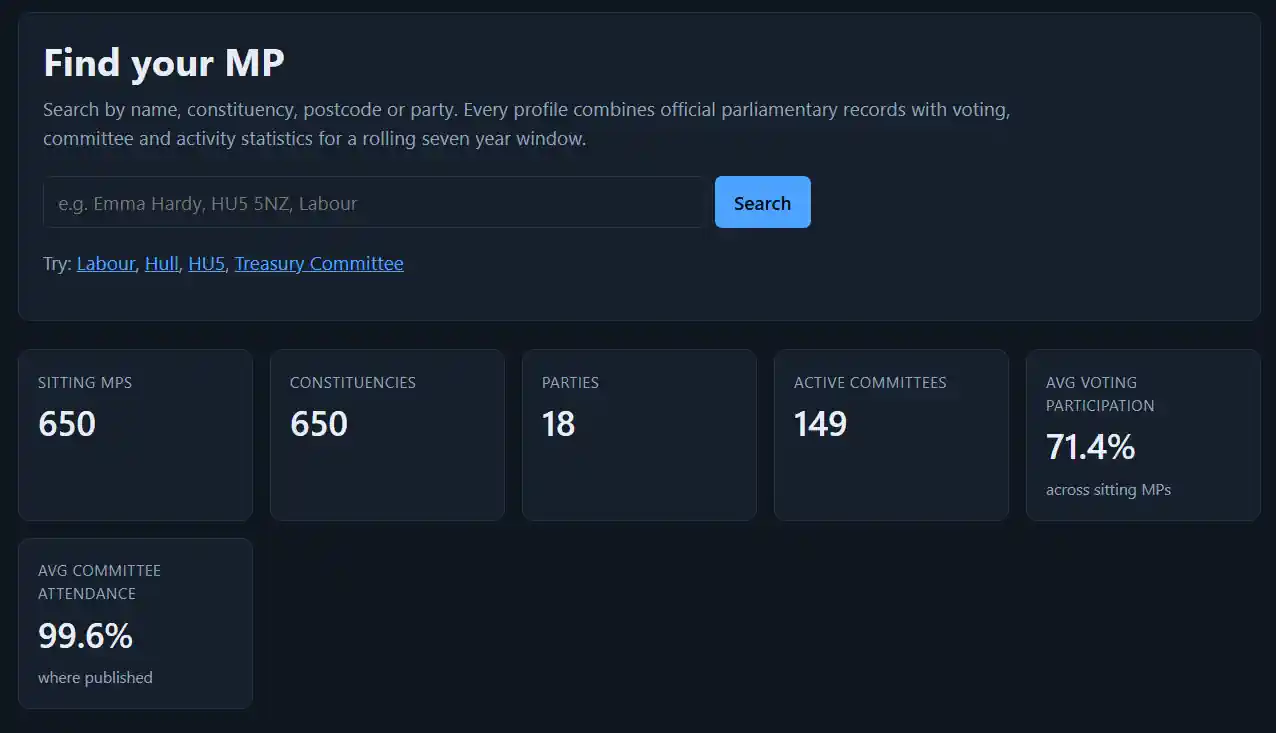
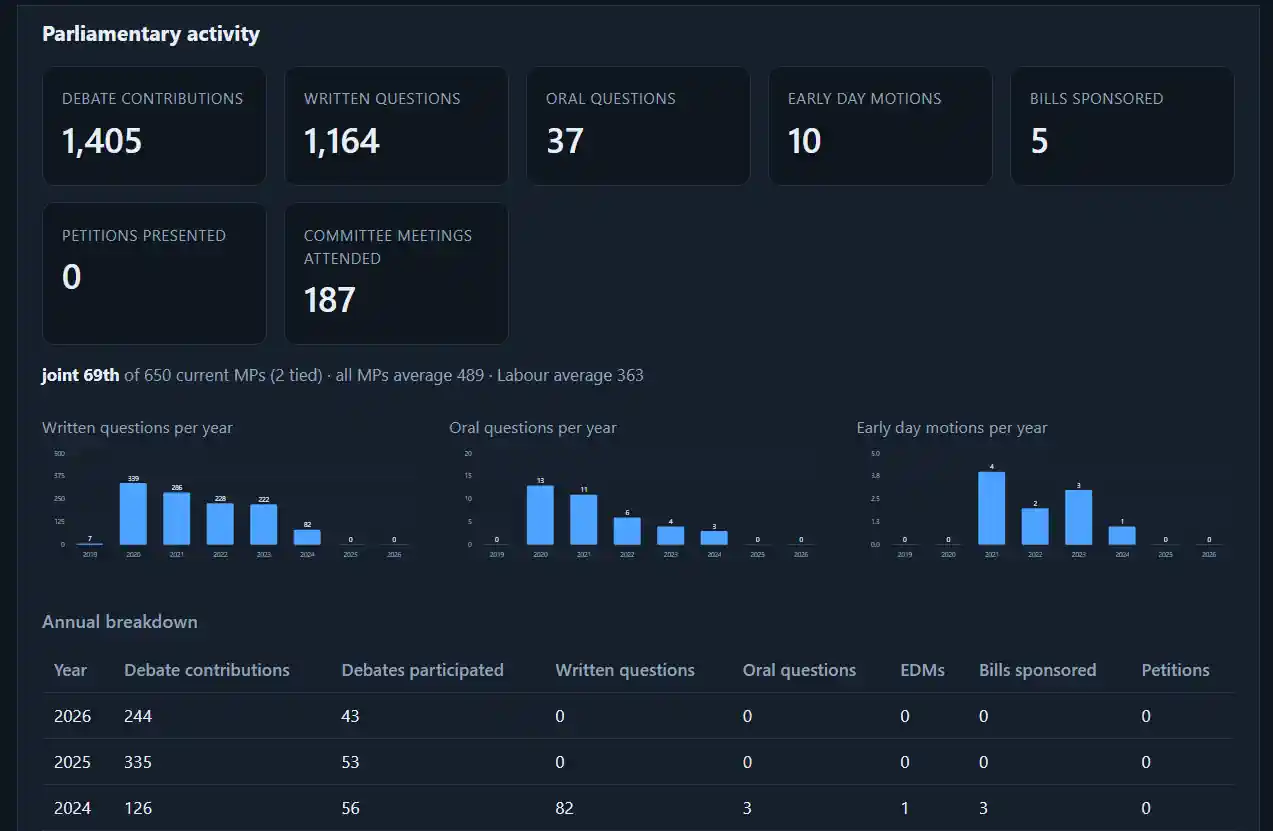
The Lookup Tool is built around the second question. Each profile draws on several parliamentary sources and brings together voting records, committee memberships, attendance data, parliamentary contributions, election history and other public information on a single page.
The aim is simple. Help a voter, researcher or reporter understand an MP's parliamentary record without opening six tabs.

Why Easier Access Matters for Accountability
Democratic accountability depends on people being able to check things. How did my MP vote? What committee work do they actually do? Are they in the chamber when it counts?
None of that information is secret. The difficulty is that "available" and "easy to find" are very different things, and when the second is missing, the first does less work than it should.
We would rather readers reach their own conclusions than be handed ours. The tool is meant to make parliamentary information easier to find, understand and verify, and nothing more than that.
From Reporting Politics to Building Public Data Tools
This launch is part of a shift in how we think about UKPoliticsDecoded. News and commentary will remain central, but a story is only as convincing as the evidence a reader can inspect behind it.
Earlier this year we launched the National Grid Tracker, which covers electricity generation, regional energy data, wholesale electricity pricing and system notifications. The MP Lookup Tool follows the same instinct, rather than only writing about Parliament, give people a way to examine it themselves.
Over time, we want to build a growing set of public interest tools and datasets across politics, public policy and national infrastructure.
What the Tool Can't Tell You
Any data project deserves some honesty about its limits. The Lookup Tool draws on information from a range of parliamentary sources, so it can only be as complete as what Parliament itself publishes. Where the official record is thin, our profiles will be too.
The platform's About page sets out the methodology, data sources and current limitations in full. It is in open beta, and I would rather say so plainly than pretend it is finished.
Further datasets, features and improvements are planned, and feedback from readers, researchers and journalists will shape what comes next. If something looks wrong or missing, tell us.
UKPoliticsDecoded began with a fairly modest belief, that political information should be easier to reach and easier to understand. This tool is another step towards that. Try it on your own MP, and see whether the record matches what you assumed.