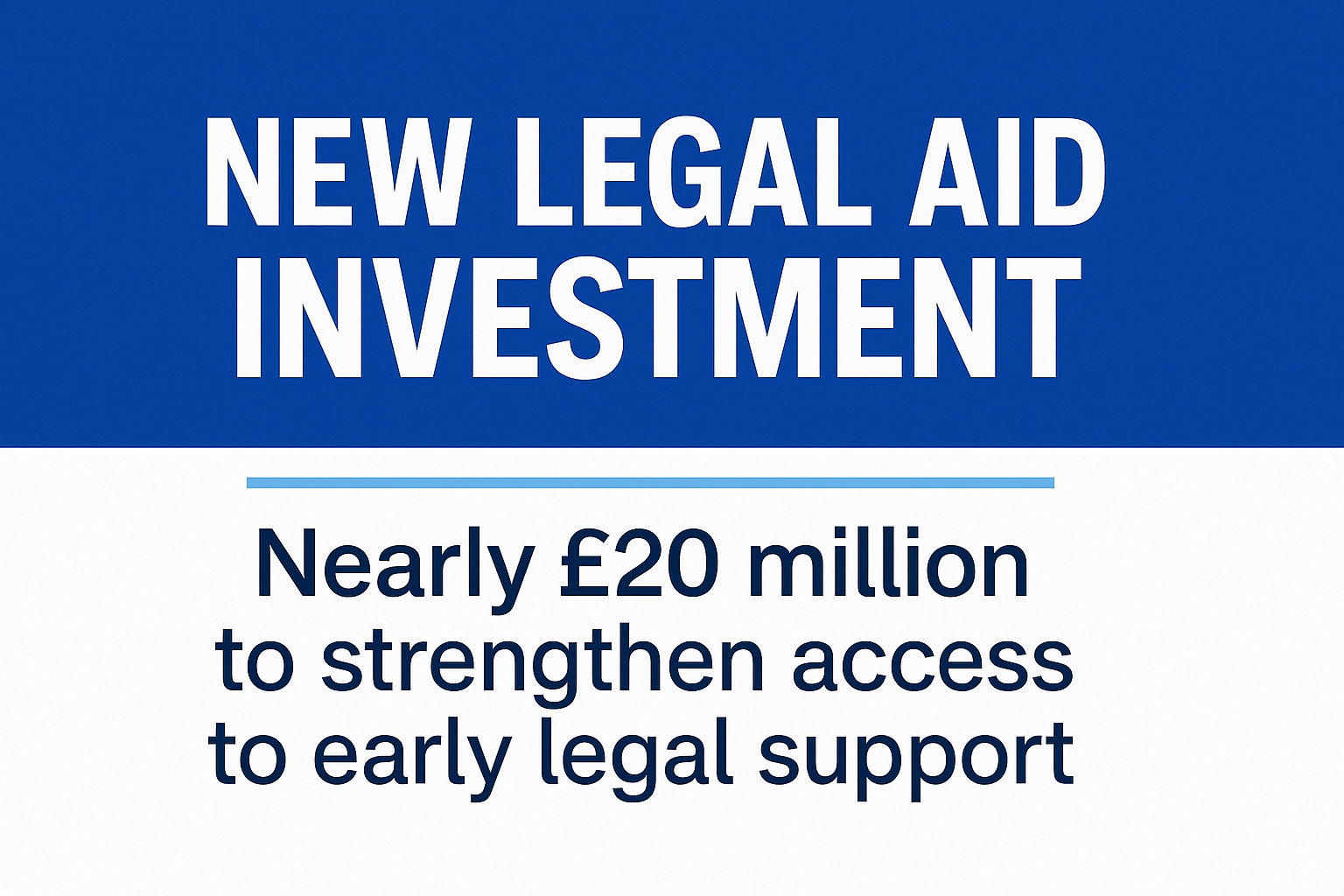
The government has announced a new £20 million multi year grant to expand early legal support for people facing civil justice problems, running from October 2026 to March 2029 and administered by the Access to Justice Foundation.
The investment represents a shift toward preventative legal intervention rather than crisis response, targeting four critical areas where early advice can prevent escalation: debt, housing disputes, employment issues, and family breakdowns.
🎯 Grant Highlights
- £20 million funding over 2.5 years (October 2026 - March 2029)
- Access to Justice Foundation will administer and distribute funds
- Four priority areas: debt, housing, employment disputes, family issues
- Prevention focus: early intervention before problems reach crisis point
- Sector stability: multi year commitment after decade of short term funding
📋 What the Grant Covers
The new grant programme is designed to strengthen civil legal support in areas where unresolved issues most frequently escalate into court proceedings, homelessness, or financial collapse.
Priority Areas for Support
🏠 Debt and Financial Crisis
- Early debt advice preventing spiral into unmanageable financial difficulty
- Negotiation support with creditors before legal action commences
- Benefits optimization ensuring people access all available financial support
- Budgeting assistance helping households manage limited resources effectively
- Bankruptcy alternatives exploring debt management plans and individual voluntary arrangements
🏡 Housing and Eviction Prevention
- Tenancy rights advice helping renters understand protections and obligations
- Eviction prevention early intervention when tenancies are threatened
- Housing benefit support ensuring proper claims and appeals processes
- Landlord negotiation resolving disputes before they reach possession proceedings
- Homelessness prevention securing alternative accommodation and support
💼 Employment Disputes
- Workplace rights guidance on dismissal, discrimination, and working conditions
- Employment tribunal preparation for workers facing unfair treatment
- Settlement negotiation resolving disputes without formal proceedings
- Redundancy support ensuring proper process and compensation
- Whistleblowing protection advice for workers reporting misconduct
👨👩👧👦 Family Issues
- Separation and divorce advice on financial and custody arrangements
- Child contact disputes mediation and legal guidance
- Domestic violence support obtaining protective orders and secure housing
- Financial settlements fair division of assets and ongoing support
- Cohabitation rights advice for unmarried couples
⏰ Implementation Timeline and Continuity
The government has carefully structured the rollout to avoid funding gaps that could disrupt existing services, extending current programmes while the new system launches.
Bridging Current to Future Support
Two existing Ministry of Justice grant schemes will be extended for six months until September 2026:
- Improving Outcomes Through Legal Support (IOTLS): Current programme supporting advice organizations
- Online Support and Advice Grant: Digital legal help platforms and resources
This ensures continuity of service while the new long term programme establishes operations and distributes funding through the Access to Justice Foundation.
Multi Year Stability Benefits
The 2.5 year funding commitment addresses a critical sector weakness:
🏗️ Organizational Benefits
- Staff retention: Organizations can offer secure employment rather than short-term contracts
- Service planning: Long term programme development and client relationship building
- Training investment: Worthwhile to develop specialist expertise with secure funding
- Partnership development: Time to build effective collaborations with other agencies
- Evidence gathering: Multi-year programmes can demonstrate impact more effectively
🎙️ Government Vision and Justification
Ministers have positioned the grant within the government's broader "Plan for Change" while acknowledging the specific challenges faced by those navigating legal problems without support.
Deputy Prime Minister David Lammy:
"It is absolutely vital that those facing some of life's most challenging situations such as debt, eviction and family issues are able to access the support they need.
This funding will ensure that essential legal support and information is available to those who need it most and will put the sector on a sustainable footing, as part of our Plan for Change."
Prevention Over Crisis Response
The government's approach reflects evidence that early intervention is more effective and cost-efficient than crisis response:
- Cost savings: Preventing homelessness costs less than emergency accommodation
- Court efficiency: Fewer unrepresented litigants reduces court time and complexity
- Better outcomes: Early resolution often achieves more satisfactory results for all parties
- Reduced trauma: Preventing escalation reduces stress and mental health impacts
- Economic stability: Keeping people in homes and jobs maintains economic productivity
📊 What This Doesn't Change
While the grant represents significant investment, it's important to understand its limitations and what remains unchanged in the legal aid landscape.
Legal Aid Eligibility Unchanged
This announcement does not represent a reversal of LASPO (Legal Aid, Sentencing and Punishment of Offenders Act 2012):
❌ What the Grant Does NOT Do
- Expand statutory legal aid: Eligibility criteria remain the same
- Restore LASPO cuts: Areas removed from legal aid scope are not reinstated
- Change means testing: Financial eligibility thresholds unchanged
- Address criminal legal aid: Grant focuses only on civil issues
- Create new legal rights: No changes to substantive law or court procedures
Grant vs Legal Aid Distinction
The new funding operates alongside, rather than replacing, the statutory legal aid system:
| Aspect | Legal Aid System | New Grant Programme |
|---|---|---|
| Legal basis | Statutory entitlement under Legal Aid Agency | Discretionary grant funding |
| Eligibility | Strict means and merits testing | Broader access criteria set by advice organizations |
| Coverage | Limited scope post-LASPO | Focuses on early intervention and advice |
| Funding certainty | Ongoing budget allocation | Time-limited grant (2026-2029) |
| Political sustainability | Requires legislation to change | Can be modified or discontinued by future governments |
Conclusion: Incremental Progress Within System Constraints
The £20 million legal aid grant represents meaningful investment in early legal support while acknowledging the political and financial constraints that make comprehensive legal aid reform challenging.
For those who will receive help, the funding could prove transformative, preventing evictions, resolving debt crises, and avoiding family breakdown. The multi year commitment also provides welcome stability to advice organizations that have operated on precarious short term funding for over a decade.
However, the grant's limitations are equally significant. It does not restore areas of law removed from legal aid by LASPO, nor does it address the broader access to justice crisis facing those who cannot afford legal representation.
The programme's success will ultimately depend on implementation, how effectively the Access to Justice Foundation distributes resources, whether advice organizations can scale up capacity, and whether early intervention genuinely prevents the escalation that costs both individuals and the state more in the long term.
As a political strategy, the grant allows the government to demonstrate commitment to access to justice without the controversy and expense of full legal aid reform. As a policy intervention, it targets resources where they may achieve maximum impact. Whether this approach proves sufficient to address the scale of unmet legal need will become clear as the programme unfolds from 2026.
🎯 Key Takeaways
- £20m grant funds early legal support in debt, housing, employment and family issues from 2026-2029
- Access to Justice Foundation will administer funding to advice organizations across England and Wales
- Multi year commitment provides sector stability after decade of short-term funding cycles
- Grant supplements but does not replace legal aid system or restore LASPO cuts
- Focus on prevention and early intervention rather than crisis response or court representation