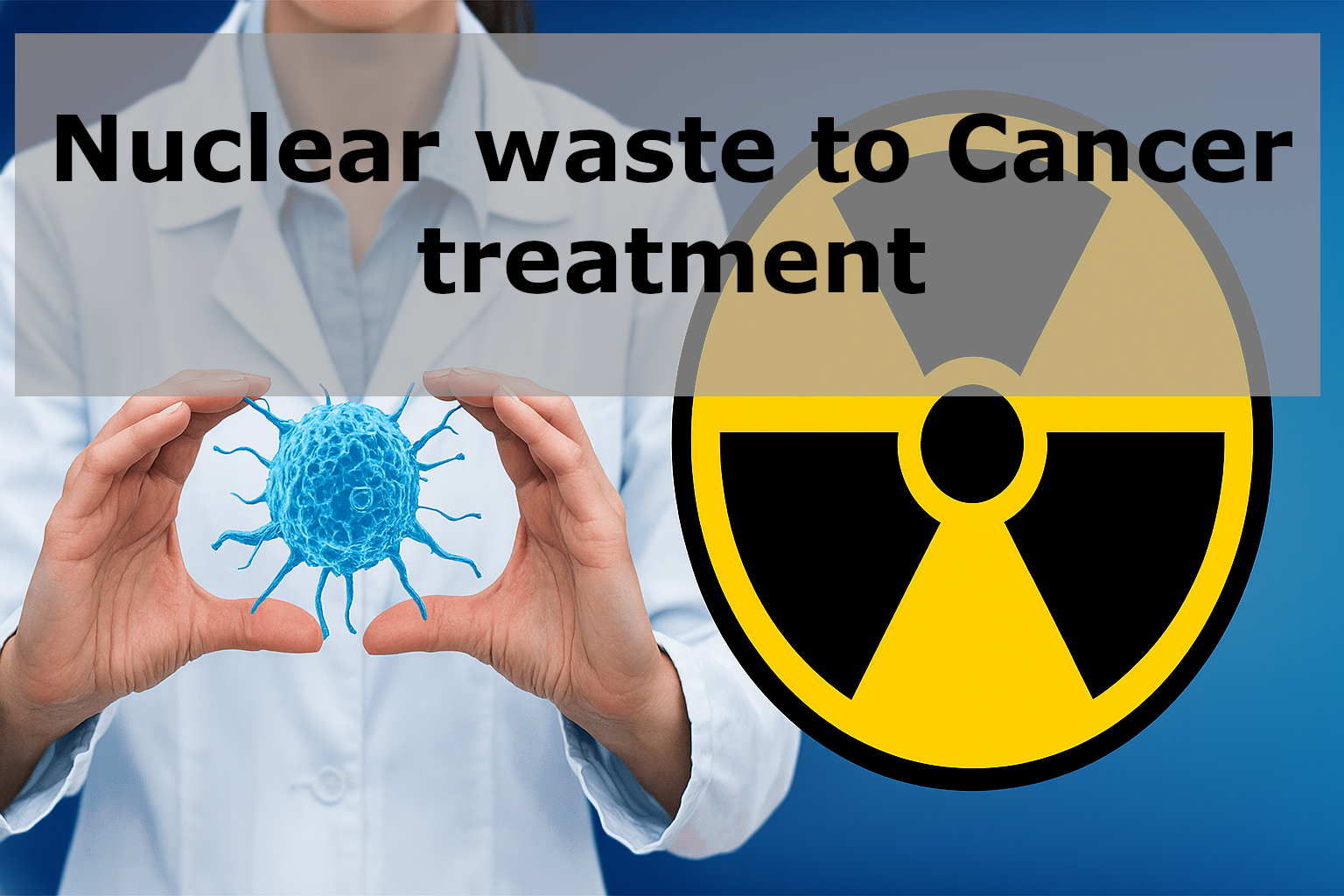
The UK Government has announced a pioneering deal to transform hundreds of tonnes of stored nuclear waste material into cutting edge cancer treatments, marking a rare policy success that could deliver tens of thousands of lifesaving doses each year.
In a striking narrative shift, material long regarded as a costly liability is being repurposed into a medical asset through a 15 year agreement between the Nuclear Decommissioning Authority (NDA) and Bicycle Therapeutics, a biotech firm co-founded by Nobel Prize winner Sir Greg Winter.
🎯 Breakthrough Highlights
- 400 tonnes of uranium transformed from waste liability to medical resource
- Tens of thousands of doses annually for treatment resistant cancers
- Lead-212 isotope extraction for precision radiopharmaceuticals
- 15 year partnership with Nobel Prize winning biotech innovators
- Global leadership in medical isotope production and cancer therapy
🔄 Nuclear Waste Reframed as Healthcare Resource
The partnership represents a fundamental reimagining of nuclear waste management, transforming stored uranium from a long term storage challenge into an active component of cancer care. The extraction of lead-212 isotopes from reprocessed uranium enables the production of radiopharmaceuticals precision drugs that deliver targeted radiation directly to cancer cells.
Revolutionary Medical Technology
Radiopharmaceuticals represent a new frontier in precision medicine, offering hope for patients with tumours that resist conventional treatments:
🧬 How Radiopharmaceuticals Work
- Targeted delivery: Isotopes attached to molecules that seek specific cancer cells
- Precision radiation: Radiation delivered directly to tumour sites, minimising healthy tissue damage
- Treatment resistant cancers: Effective against tumours that evade chemotherapy and radiotherapy
- Reduced side effects: Focused treatment reduces systemic toxicity compared to traditional approaches
- Combination potential: Can be used alongside existing treatments for enhanced effectiveness
Target Cancers and Patient Impact
The initiative specifically targets some of the most challenging forms of cancer:
- Prostate cancer: Particularly advanced cases resistant to hormone therapy
- Neuroendocrine tumours: Rare cancers affecting hormone-producing cells throughout the body
- Metastatic disease: Cancer that has spread to multiple sites, often beyond conventional treatment options
- Recurrent cancers: Tumours that return after initial treatment, requiring novel therapeutic approaches
📊 Scale and Strategic Impact
The sheer scale of the initiative demonstrates both the UK's commitment to innovation and the potential for transforming nuclear waste management across the globe.
Resource Transformation
📈 Project Scale
- Material source: Up to 400 tonnes of uranium from UK storage facilities
- Production capacity: Tens of thousands of treatment doses annually
- Partnership duration: 15 year agreement ensuring long-term supply
- Technology focus: Lead-212 isotope extraction and radiopharmaceutical production
- Patient reach: Potential to treat thousands of cancer patients yearly
Economic and Strategic Benefits
Beyond immediate medical applications, the partnership delivers wider strategic advantages:
- Cost transformation: Nuclear waste storage costs offset by medical production revenue
- UK competitiveness: Positioning Britain as a leader in medical isotope production
- Supply chain security: Reducing dependence on international isotope suppliers
- Innovation catalyst: Encouraging further biotech investment and research partnerships
- Export potential: Surplus production capacity for international medical markets
🎙️ Leadership Voices and Vision
Government and industry leaders have positioned the initiative as both a medical breakthrough and a model for innovative policy thinking.
Nuclear Decommissioning Authority Leadership
David Peattie, NDA Group CEO:
"We're proud to make part of our uranium inventory available to Bicycle, enabling the development of innovative, life saving treatments.
As the organisation entrusted with the safe and secure management, storage, and disposal of the UK's radioactive materials and waste, a responsibility we take extremely seriously, this collaboration demonstrates how we can go beyond our core mission.
By leveraging our unique capabilities, expertise, and resources, we're helping to advance wider UK Government ambitions and create a lasting positive legacy for the nation."
Health Innovation Leadership
Dr Zubir Ahmed, Health Innovation Minister:
"Every breakthrough that gives patients and their loved ones new hope matters deeply and this extraordinary partnership could be truly life changing for people facing some of the hardest to treat cancers.
I'm immensely proud that we're backing partnerships like this, showcasing how British innovation can transform lives. By turning nuclear material into precision cancer treatments, we're opening new frontiers in the fight against this deadly disease.
This is exactly the kind of bold thinking that will help us build an NHS fit for the future, harnessing life sciences potential to improve care, save lives, and drive economic growth across the UK."
🏥 Context: NHS Transformation and Investment
The nuclear waste to cancer treatment initiative emerges within a broader context of NHS investment and health system transformation, representing a rare policy success story amid ongoing healthcare challenges.
Cancer Care Improvements
The government's wider programme to transform cancer care is showing tangible results:
📈 Cancer Care Progress (2024-25)
- 110,000 more patients diagnosed or had cancer ruled out within 28 days of urgent GP referral
- Expanded diagnostic capacity through investment in new technology and equipment
- Reduced waiting times for cancer diagnosis and treatment initiation
- Earlier detection programmes saving lives through timely intervention
- Enhanced screening programmes reaching more at-risk populations
NHS Staffing and Investment
Alongside technological innovation, the NHS is receiving critical investment in human resources:
- 2,500 additional doctors appointed in 2025, strengthening clinical capacity
- Specialist recruitment: Focus on cancer specialists and diagnostic experts
- Training programmes: Investment in medical education and specialist development
- Support staff expansion: Nurses, radiographers, and technical specialists
- Research capacity: Academic and clinical research positions
Legacy Challenges and Recovery
Health leaders acknowledge the scale of transformation required following decades of underinvestment:
⚕️ NHS Recovery Context
- Historical underinvestment: Sustained cuts since 2010 left NHS "on its knees"
- Service degradation: Long waits and difficulty securing GP appointments
- Recovery timeline: Experts note restoration to 2008 service levels will take time
- Strategic approach: Innovation partnerships as stepping stones to broader improvement
- Positive momentum: Nuclear waste initiative demonstrates effective policy coordination
🌍 International Competition and UK Positioning
The nuclear waste to cancer treatment partnership positions the UK strategically in a global race for medical isotope dominance and radiopharmaceutical leadership.
Global Medical Isotope Market
Countries worldwide are investing heavily in radiopharmaceutical research and production:
🌏 International Competitors
- United States: Major investment in DOE isotope production programmes
- Canada: Historical leader in medical isotope production
- Germany: Significant pharmaceutical industry radiopharmaceutical development
- Netherlands: Advanced nuclear medicine research facilities
- France: Nuclear expertise applied to medical isotope production
UK Competitive Advantages
The British approach leverages unique strengths:
- Nuclear waste resource: Existing uranium stockpiles provide immediate material source
- Regulatory expertise: Established nuclear regulatory framework ensuring safety
- Biotech innovation: World leading companies like Bicycle Therapeutics
- NHS integration: Direct pathway from production to patient treatment
- Research excellence: Universities and institutions contributing to development
Strategic Policy Coordination
The initiative demonstrates effective coordination across multiple government departments:
- Nuclear policy: NDA expertise in waste management and safety
- Health innovation: Department of Health and Social Care support
- Science investment: UK Research and Innovation backing
- Economic policy: Life sciences strategy implementation
- Regulatory coordination: Streamlined approvals for innovative treatments
🔬 Science Investment and Research Excellence
The nuclear waste transformation aligns with multi million pound government backing for UK Research and Innovation projects, demonstrating joined up policy rather than isolated initiatives.
Research and Innovation Context
The partnership reflects broader investment in science and innovation:
🧪 UK Research Investment
- UKRI funding: Multi million pound backing for cutting edge projects
- Life sciences focus: Priority sector for innovation investment
- University partnerships: Academic institutions contributing expertise
- Industry collaboration: Public-private research partnerships
- International cooperation: Global research networks and knowledge exchange
Innovation Ecosystem Benefits
Success in nuclear waste transformation creates wider innovation benefits:
- Talent attraction: World class researchers drawn to UK programmes
- Investment magnetism: International biotech investment following UK leadership
- Knowledge spillovers: Research breakthroughs benefiting multiple sectors
- Start-up ecosystem: Encouraging new biotech company formation
- Export opportunities: UK expertise and technology exported globally
Conclusion: From Waste to Wonder
By transforming nuclear waste into medicine, the UK is not only tackling one of the hardest challenges in oncology but also reshaping the narrative around nuclear science. What was once a symbol of risk is now being reframed as a resource for healing, offering hope to patients and signaling a rare moment of policy success.
The partnership between the Nuclear Decommissioning Authority and Bicycle Therapeutics demonstrates how innovative thinking can transform liabilities into assets, creating value for patients, taxpayers, and the broader economy simultaneously.
For the thousands of patients who will benefit from these treatments, the initiative represents hope where conventional medicine has reached its limits. For policymakers, it offers a model of how government can facilitate innovation while delivering measurable public benefits.
As the UK continues to navigate economic challenges and seeks to establish post-Brexit identity, the nuclear waste to cancer treatment breakthrough exemplifies the country's potential to lead through science, innovation, and compassionate policy. In turning yesterday's nuclear waste into tomorrow's cancer cures, Britain has found a path from liability to legacy.
🎯 Key Takeaways
- UK transforms 400 tonnes of nuclear waste into tens of thousands of annual cancer treatment doses
- 15 year NDA-Bicycle Therapeutics partnership leverages Nobel Prize winning expertise
- Radiopharmaceuticals offer hope for treatment resistant prostate and neuroendocrine cancers
- Initiative positions UK competitively in global medical isotope market worth billions
- Success demonstrates effective cross-departmental policy coordination and long term vision