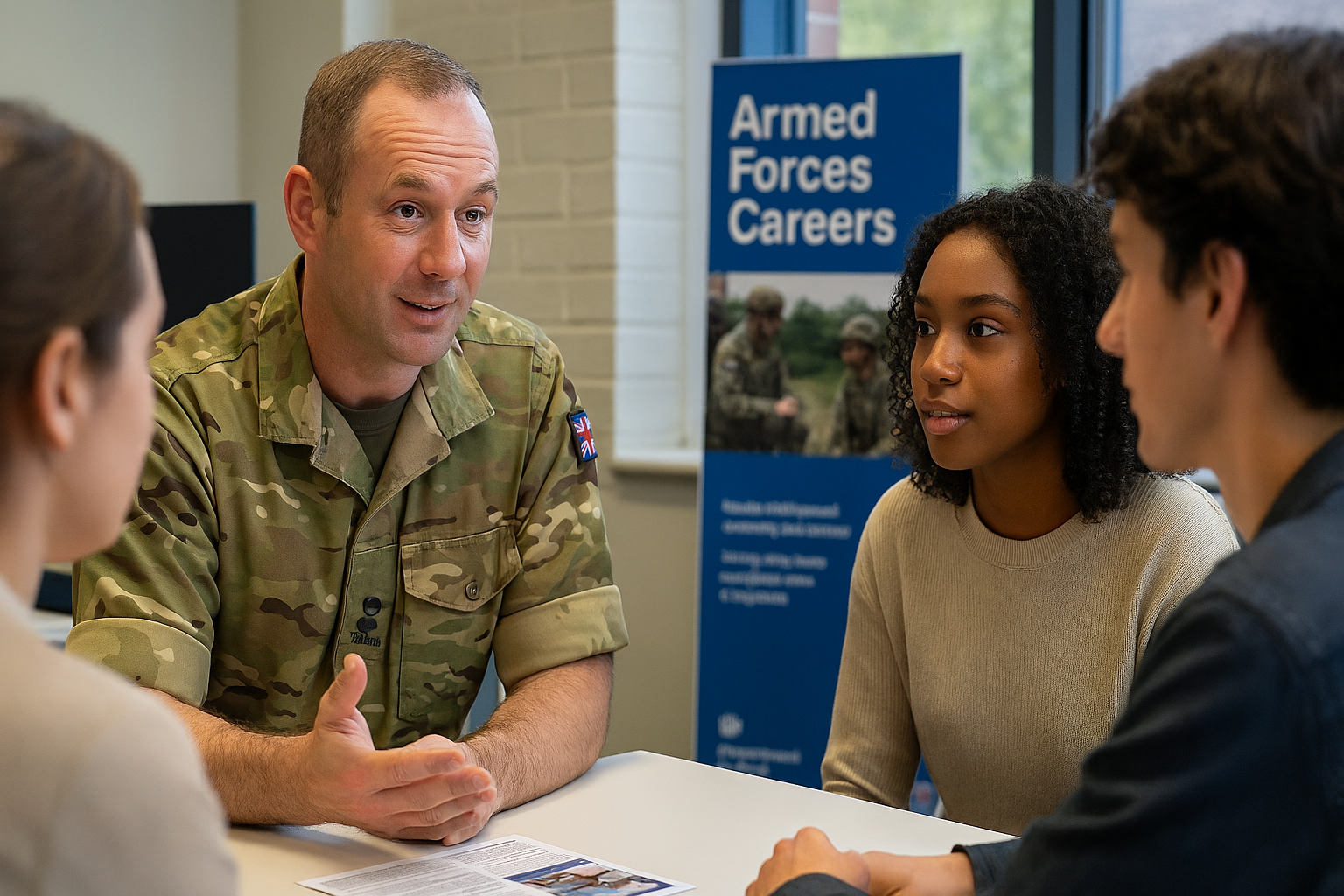
The Government has announced a new partnership between the Ministry of Defence (MoD) and the Department for Work and Pensions (DWP) that embeds military careers advice directly into Jobcentre Plus. Ministers describe the move as a way to widen access to Armed Forces careers, strengthen defence capability, and expand opportunities for young people at a time of shrinking job vacancies and persistent youth unemployment.
The initiative represents a significant shift in how the military approaches recruitment, moving beyond traditional channels to reach young people who may not have previously considered Armed Forces careers but could benefit from the structured training, qualifications, and long term career prospects that military service provides.
🎯 Partnership Overview
- Military careers advice embedded directly in Jobcentre Plus offices nationwide
- Serving personnel visits to speak with jobseekers about Armed Forces opportunities
- Specialist training for work coaches on military roles and career pathways
- West Midlands pilot targeting region with UK's highest youth unemployment rate
- 100+ apprenticeship programmes from GCSE to Masters level qualification
💼 What the New Partnership Does
The collaboration creates formal links between military recruitment and jobseeker support services, bringing Armed Forces careers directly into the places where young people seek employment assistance.
Military Careers Advice Inside Jobcentres
For the first time, military career guidance will be systematically integrated into civilian employment support:
- Serving personnel visits: Regular presence of military representatives in Jobcentre Plus offices
- Direct conversations: One to one discussions between jobseekers and Armed Forces career advisors
- Work coach training: Specialist education for DWP staff on military roles and pathways
- Site visits programme: Work coaches visiting military facilities to understand career options
- Formal pairing: Armed Forces Career Offices linked with local Jobcentres for ongoing coordination
Targeted Support for Young People
The partnership prioritises groups facing particular employment challenges:
🎓 Youth Focused Initiatives
- Youth Hubs: Dedicated support for care leavers and underrepresented communities
- Royal Navy Mentoring Circles: Connecting young people with serving personnel for guidance
- West Midlands pilot: Enhanced Armed Forces engagement in highest youth unemployment region
- Apprenticeship routes: Clear pathways to qualifications and technical skills
- Alternative entry schemes: Multiple routes into military careers beyond traditional recruitment
Apprenticeships and Skills Development
The Armed Forces remain the UK's largest apprenticeship provider, offering structured training that addresses critical skills shortages:
- Engineering programmes: Mechanical, electrical, and aviation specialisms
- Cyber security training: High demand digital skills with civilian application
- Logistics and supply chain: Skills essential for modern economy
- Healthcare roles: Medical training and emergency response capabilities
- Aviation careers: Pilot training and aircraft maintenance specialisms
⚔️ Current Armed Forces Personnel Levels
The recruitment partnership addresses well documented challenges with military personnel numbers and retention that have persisted for several years.
Personnel Shortage Context
The UK Armed Forces have experienced long term reductions in personnel numbers, creating operational challenges that the Government is actively working to address:
Current Personnel Challenges
- Below target strength: All three services (Army, Royal Navy, RAF) operating below Government stated targets
- Recruitment pressures: Difficulty attracting sufficient new personnel across technical and operational roles
- Retention issues: Experienced personnel leaving faster than they can be replaced
- Skills gaps: Particular shortages in cyber, engineering, and specialist technical roles
- Parliamentary scrutiny: Defence Committee reports highlighting capability concerns
Government Response Strategy
Ministers describe the partnership as part of efforts to "reverse years of hollowing out" and rebuild defence capability:
- Recruitment reform: Removal of "100 outdated recruitment policies" to streamline processes
- Pay improvements: Largest military pay rise in 20 years to improve retention
- New entry schemes: Cyber Direct Entry programme with £40,000+ starting salaries
- Armed Forces Commissioner: New role to advocate for service personnel welfare
- Wider reach: Expanding recruitment beyond traditional demographics and regions
📊 Labour Market Context: 734,000 Job Vacancies
The partnership launches against a backdrop of significant labour market challenges that affect both young people seeking work and employers struggling to find skilled staff.
Current Employment Landscape
Official statistics reveal a complex employment picture with shrinking vacancies alongside persistent unemployment:
📈 Labour Market Data (February 2026)
- 734,000 job vacancies across the UK economy
- Millions seeking work including significant numbers of young people
- Skills shortages persist in engineering, digital, logistics, and healthcare
- 90,000 fewer under 24s on payrolls since July 2024
- Barriers to employment affecting transition from education to work
Youth Unemployment Challenges
Young people face particular difficulties entering the labour market:
- Experience barriers: Entry level positions requiring previous experience
- Skills mismatches: Education not always aligned with employer needs
- Geographic disparities: Limited opportunities in some regions, particularly the West Midlands
- Care leaver disadvantage: Young people leaving care facing additional employment barriers
- Training gaps: Insufficient access to practical skills development
The Armed Forces as Skills Provider
The Government frames military service not only as employment but as large scale skills provision addressing critical shortages:
- Structured training: Comprehensive programmes from basic to advanced levels
- Shortage area focus: Skills in engineering, cyber, logistics, and healthcare
- Long term value: Qualifications and experience valuable after military service
- Guaranteed progression: Clear career pathways and advancement opportunities
- Immediate employment: Job security and income while training
🎓 Military to Civilian: Skills Translation
A central argument for the partnership is that military training provides qualifications and experience directly applicable to civilian careers in high demand sectors.
Technical Skills Development
Armed Forces training covers technical specialisms facing critical shortages:
Digital & Technology
- Cyber security specialists and analysts
- IT systems administration and networking
- Communications and electronic warfare
- Data analysis and intelligence processing
Engineering & Technical
- Mechanical and electrical engineering
- Aviation maintenance and systems
- Marine engineering and technology
- Nuclear and energy systems
Healthcare & Emergency
- Combat medical training and paramedic skills
- Emergency response and crisis management
- Mental health and trauma support
- Public health and epidemiology
Logistics & Management
- Supply chain management and procurement
- Project management and coordination
- Transport and distribution systems
- Resource planning and allocation
Professional Qualifications Framework
Military training leads to nationally recognised qualifications:
- Academic progression: GCSE to Masters level programmes
- Professional certifications: Industry recognised qualifications and accreditations
- Apprenticeship completion: Full apprenticeships in over 100 specialisms
- Leadership development: Management and supervisory qualifications
- Transferable credentials: Qualifications valued by civilian employers
Soft Skills and Personal Development
Military service develops personal attributes highly valued by employers:
- Teamwork and collaboration: Working effectively in diverse groups
- Discipline and reliability: Consistent performance and time management
- Problem solving: Analytical thinking and decision making under pressure
- Adaptability: Flexibility in changing circumstances and environments
- Leadership capability: Taking responsibility and motivating others
🏛️ Wider Government Policy Integration
The Armed Forces partnership forms part of comprehensive government strategy addressing youth employment, skills development, and economic growth.
Youth Guarantee Programme
The recruitment partnership aligns with the £820 million Youth Guarantee programme:
💰 Youth Support Framework
- Almost one million young people to be supported through comprehensive programmes
- 350,000 training and workplace opportunities including apprenticeships and skills development
- 55,000 guaranteed jobs across public and private sectors
- Targeted support for care leavers and disadvantaged communities
- Regional focus on areas with highest youth unemployment
Defence Policy Reforms
Military recruitment improvements complement broader defence policy changes:
- Pay and conditions: Largest military pay rise in 20 years improving retention
- Armed Forces Commissioner: New independent advocacy role for service personnel
- Cyber Direct Entry: Graduate scheme with starting salaries above £40,000
- Recruitment modernisation: Streamlined processes and reduced bureaucracy
- Career development: Enhanced progression opportunities and civilian qualifications
Labour Market Reform Strategy
Alan Milburn leads investigation into barriers affecting youth employment:
- Systemic barriers: Identifying structural obstacles to young people entering work
- Skills alignment: Ensuring education and training meet employer needs
- Regional disparities: Addressing geographic inequalities in employment opportunities
- Employer engagement: Encouraging businesses to create entry level positions
- Long term strategy: Sustainable solutions for youth employment challenges
Conclusion: Balancing Opportunity and Realism
The Armed Forces recruitment partnership represents an innovative approach to addressing two interconnected challenges: youth unemployment and military recruitment shortfalls. By embedding military careers advice directly into jobseeker support services, the Government creates new pathways for young people while potentially strengthening national defence capability.
The partnership's strengths lie in its practical focus on skills development, structured career progression, and immediate employment security. For young people facing barriers to civilian employment, military service offers guaranteed training, qualifications, and income while developing capabilities essential for modern economy sectors.
However, success will depend on implementation quality and realistic expectations. Military service cannot solve youth unemployment alone, and effective integration between civilian and military careers systems requires sustained investment and coordination. The West Midlands pilot will provide crucial evidence about what works and where challenges arise.
For the Armed Forces, the partnership offers potential solutions to persistent recruitment challenges while accessing previously untapped talent pools. Better matched recruits with realistic expectations may improve retention rates and overall military effectiveness.
The broader economic benefits, skills development, regional investment, and reduced labour market shortages that justify the partnership as workforce development rather than simply military recruitment. Military training creates capabilities valuable across civilian sectors, supporting long term economic competitiveness and national resilience.
Ultimately, the partnership reflects government recognition that addressing youth unemployment requires creative approaches that leverage all available opportunities, including military service as a pathway to skills, qualifications, and career advancement. Success will be measured not just in recruitment numbers but in genuine improvements to young people's life chances and career prospects.
🎯 Key Takeaways
- MoD-DWP partnership embeds military careers advice directly in Jobcentre Plus offices nationwide
- Targets youth unemployment while addressing Armed Forces recruitment challenges below target strength
- 100+ apprenticeship programmes offer qualifications from GCSE to Masters level in shortage skill areas
- West Midlands pilot tests enhanced approach in region with highest youth unemployment rate
- Success depends on implementation quality and integration with broader youth employment strategy
📚 Sources & Further Reading
- Gov.UK - Armed Forces careers unlocked for tens of thousands through new recruitment drive
- FE News - ONS Labour Market Data Jan 2026: 90,000 fewer under-24s on payrolls since July 2024
- ONS - UK Labour Market: January 2026
- Gov.UK - UK Labour Market Statistics: January 2026
- Learning and Work Institute - Labour Market Briefing: January 2026
- House of Commons Library - UK Armed Forces Personnel Statistics
Archived copy (OGL): archived page
Archived internally for verification (01 March 2026)
Archived copy (OGL): archived page
Archived copy (OGL): archived page
Archived internally for verification (01 March 2026)
Archived copy (OGL): archived page