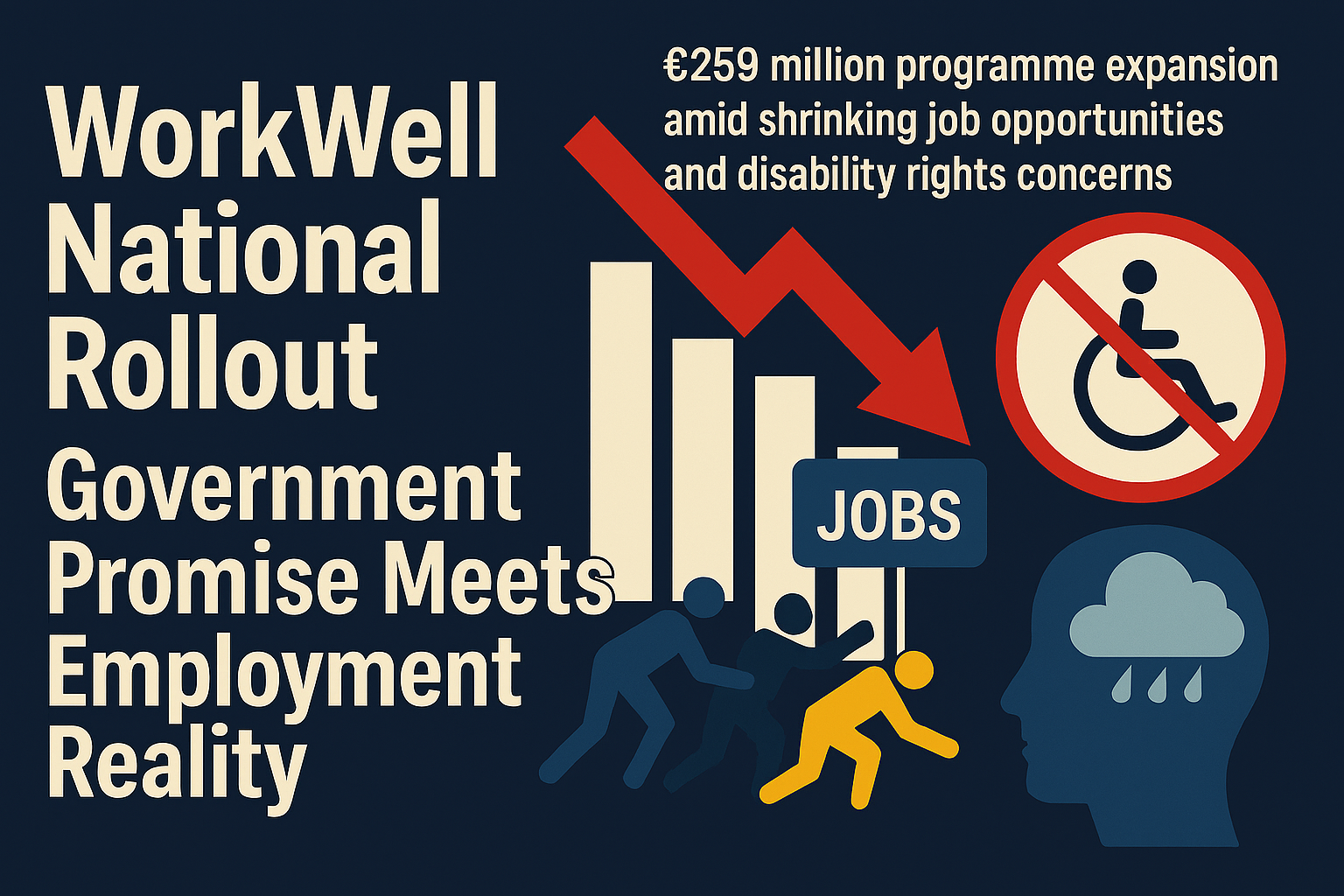
The government has announced the national rollout of WorkWell, a health and employment support programme designed to help up to 250,000 people with health conditions stay in or return to work. Backed by up to £259 million over three years, the expansion represents a significant policy shift towards integrating healthcare and employment support across England.
Yet beneath the positive messaging about supporting people back to work lies a fundamental disconnect between policy ambitions and labour market realities. With job opportunities shrinking for nearly a decade and intense competition for available roles, the programme's success may depend as much on economic conditions as on the quality of support provided.
🎯 WorkWell National Expansion
- 250,000 people target: Support for individuals whose health affects work capacity
- £259 million funding: Three year investment through NHS and local partnerships
- Comprehensive support: Physiotherapy, counselling, workplace adjustments, and return to work planning
- No wrong door model: Multiple referral routes including GP, employer, and self referral
- NHS integration: delivered through Integrated Care Boards and community organisations
📋 The WorkWell Model
WorkWell represents the government's attempt to bridge the gap between healthcare and employment support, offering early, personalised interventions for people whose health conditions affect their ability to work.
Service Components
The programme provides comprehensive support designed to address both medical and employment challenges:
- Physiotherapy: Physical rehabilitation and pain management support
- Counselling and psychological support: Mental health interventions and coping strategies
- Workplace adjustment advice: Recommendations for accommodating health conditions
- Return to work planning: Structured pathways for re-entering employment
- Ongoing condition management: Long term health and employment sustainability support
Access and Delivery Structure
The programme's "no wrong door" approach aims to make support accessible through multiple channels:
🚪 Referral Routes
- GP referrals: Healthcare professionals identifying work related health concerns
- Employer referrals: Workplace initiated support for employees experiencing health issues
- Jobcentre Plus: Benefits system integration for those seeking work
- Local services: Community organisation and council referrals
- Self referral: Direct access for individuals seeking proactive support
Delivery involves partnerships between NHS Integrated Care Boards, Local Authorities, Jobcentre Plus, and community organisations, with services designed locally to meet specific community needs.
📊 Pilot Programme Results
The national rollout builds on pilot programmes conducted in 15 areas, which provide insight into both the programme's potential and the challenges it addresses.
Pilot Statistics
Participant Profile Analysis
The pilot data reveals significant insights about the population WorkWell aims to serve:
- Mental health dominance: Nearly half of participants cite mental illness as their primary employment barrier
- High unemployment rate: Nearly 60% of participants were already out of work when engaging with services
- Health work intersection: Participants face complex challenges where health conditions directly impact employment capacity
- Support demand: High uptake suggests significant unmet need for integrated health employment services
🗣️ Ministerial Messaging and Political Framing
Government ministers have positioned WorkWell as both a compassionate response to individual need and an economic necessity for reducing long term benefit dependency.
Work and Pensions Secretary Pat McFadden
"Too many people are signed off sick without support. WorkWell gives people the help they need to stay employed, which is beneficial for individuals, businesses, and the economy."
McFadden's framing emphasises the current system's inadequacy while positioning WorkWell as a solution that serves multiple stakeholders simultaneously.
Health Secretary Wes Streeting
"No one should have to choose between health and work. The current fit note system writes people off. WorkWell will ease pressure on GPs and help cut NHS waiting lists."
Streeting's comments reveal the government's broader strategy of using WorkWell to address NHS capacity issues while reforming employment support systems.
Policy Integration Strategy
The government frames WorkWell within several wider policy objectives:
- NHS waiting list reduction: Reducing GP burden through alternative support pathways
- Fit note system modernisation: Moving beyond simple medical certificates to active support
- Economic inactivity reduction: Addressing 2.8 million people out of work due to long term sickness
- Health employment integration: Strengthening links between medical care and work capacity
- 10 year health plan delivery: Contributing to broader healthcare system transformation
🎯 Success Stories and Stakeholder Support
The government announcement includes testimonials and stakeholder endorsements that illustrate WorkWell's intended approach and early support from delivery partners.
Participant Experience: Sadie
📝 Individual Success Story
- Proactive engagement: Sought help for stress and work life balance issues
- GP referral pathway: Accessed through healthcare professional recommendation
- Consistent support: Received ongoing guidance from dedicated WorkWell adviser
- Employment retention: Improved balance while remaining with current employer
- Early intervention: Support provided before reaching crisis point
Delivery Partner Perspectives
Shaw Trust highlights the programme's accessibility features:
- Flexible delivery methods: in person, phone, video, or local cafés
- Integration of employment coaches with health professionals
- Support for national expansion and increased capacity
NHS Confederation emphasises systemic benefits:
- Recognition of the link between good work and good health
- Potential to reduce economic inactivity and NHS pressure
- Support for rollout across all Integrated Care Boards
💼 The Employment Reality Gap
While WorkWell's support services address genuine needs, the programme operates within labour market constraints that government messaging largely ignores. The disconnect between policy ambitions and employment realities raises questions about the programme's ultimate effectiveness.
Shrinking Job Opportunity Pool
Official employment statistics reveal structural challenges that WorkWell cannot directly address:
UK Job Market Reality (January 2026)
- 734,000 vacancies nationwide concentrated in London and South East
- Nearly decade long decline in job opportunities across most sectors
- Millions competing for shrinking pool of available roles
- Part time dominance: Many available positions offer reduced hours or temporary contracts
- Regional disparities: Limited opportunities outside major urban centres
Competition Intensity
The mathematics of job seeking present challenges that individual support programmes cannot overcome:
- Application volume: Popular positions receive hundreds of applications
- Skill mismatches: Available roles may not match participants' abilities or health limitations
- Employer preferences: Competition from candidates without health conditions or employment gaps
- Geographic constraints: Limited mobility due to health conditions restricting job search radius
- Economic uncertainty: Employers reluctant to hire during economic contraction periods
The Minister Reality Disconnect
Government messaging suggests a fundamental misunderstanding of the constraints facing people seeking work:
Ministerial Assumptions
- Health support alone enables employment
- Sufficient job opportunities exist for programme participants
- Individual barriers are the primary obstacle
- Support services guarantee employment outcomes
- Economic conditions remain stable for job seeking
Lived Experience Reality
- Job scarcity limits opportunities regardless of support quality
- Competition from healthier candidates disadvantages programme participants
- Structural economic factors constrain employment availability
- Health conditions create ongoing work capacity limitations
- Financial pressure during job seeking creates additional stress
🚩 Disability Rights Concerns
Disability rights organisations have expressed concerns about WorkWell's potential to become a pathway for removing people from benefits rather than genuinely supporting employment choices.
Benefit Assessment Concerns
Critics worry that WorkWell participation could be used to reassess benefit eligibility:
- Work capability assessments: Programme participation potentially used as evidence of work readiness
- Benefit sanctions: Risk of financial penalties for those unable to secure employment despite support
- Medical model assumptions: Focus on individual deficits rather than systemic barriers
- Pressure to participate: Subtle coercion through benefits system integration
- Outcome measurement: Success defined by benefit exit rather than wellbeing improvement
Complex Conditions Challenge
WorkWell's approach may not adequately address the realities of complex or fluctuating health conditions:
⚕️ Condition-Specific Challenges
- Fluctuating conditions: Variable capacity making consistent employment difficult
- Progressive illnesses: Declining capacity over time requiring ongoing support adjustments
- Multiple conditions: Complex interactions between different health issues
- Mental health stigma: Employer discrimination against candidates with psychiatric conditions
- Accommodation costs: Expensive workplace adjustments deterring employer participation
Financial Transition Risks
The programme announcement does not address critical questions about financial support during transitions:
- Benefit continuity: What happens if employment attempts fail?
- Assessment impact: How does programme participation affect future benefit claims?
- Financial gaps: Support during the period between benefit exit and employment
- Housing security: Risk of accommodation loss during uncertain transition periods
- Family impact: Effects on dependents during employment transitions
📈 Economic and Social Context
WorkWell's launch occurs within broader economic and social pressures that shape both its necessity and its likelihood of success.
Economic Inactivity Crisis
The programme addresses genuine statistical challenges:
- 2.8 million people: Currently out of work due to long term sickness
- Rising trend: Economic inactivity increasing over several years
- NHS pressure: Healthcare system struggling with demand from people unable to work
- Benefit costs: Increasing expenditure on incapacity benefits
- Productivity impact: Lost economic output from reduced workforce participation
Social and Health Factors
Several trends contribute to the challenges WorkWell aims to address:
🏥 Contributing Factors
- Mental health crisis: Rising anxiety, depression, and stress related conditions
- NHS waiting lists: Delayed treatment exacerbating work limiting conditions
- Workplace stress: Increased pressure and insecurity affecting employee health
- Aging population: More people experiencing age related health issues
- Long COVID impact: Ongoing effects affecting work capacity for many individuals
Policy Coordination Requirements
WorkWell's success depends on coordination across multiple government departments and agencies:
- Department for Work and Pensions: Benefits system integration and work coach deployment
- Department of Health and Social Care: NHS service provision and waiting list management
- Local government: Community services and partnership delivery
- Education sector: Skills training and retraining programmes
- Employer engagement: Private sector participation in accommodation and hiring
🔍 Implementation Challenges and Gaps
Several implementation challenges may affect WorkWell's ability to deliver its ambitious goals.
Capacity and Resource Constraints
- NHS capacity: Already stretched health services providing additional employment support
- Staff expertise: Training health professionals in employment related interventions
- Local variation: Different implementation approaches across ICB areas
- Waiting times: Potential delays accessing WorkWell services during high demand
- Rural access: Service delivery challenges in remote or poorly connected areas
Measurement and Accountability
Questions remain about how WorkWell's success will be measured and what accountability mechanisms exist:
Accountability Questions
- Success metrics: How will programme effectiveness be measured?
- Long term tracking: Will participants be followed up months or years later?
- Quality standards: What consistency requirements exist across delivery areas?
- Participant voice: How will user feedback influence programme development?
- Cost effectiveness: Will the full economic impact be assessed?
Integration Complexity
Bringing together healthcare, employment, and benefits systems presents significant coordination challenges:
- Data sharing: Information flow between NHS, DWP, and local authorities
- Different cultures: Healthcare and employment services operating with different priorities
- Referral pathways: Ensuring smooth transitions between different parts of the system
- Funding streams: Coordinating financing from multiple sources
- Performance measurement: Aligning different agencies' success criteria
🌍 International Comparisons
Other countries have developed different approaches to supporting people with health conditions into employment, offering lessons for WorkWell's implementation.
Nordic Model Approaches
🇳🇴 Norway
- Inclusive Working Life: Focus on workplace adaptation and employer support
- Gradual return: Partial sick leave allowing gradual work resumption
- Employer incentives: Financial support for workplace accommodations
- Long term perspective: Sustainable employment rather than quick return focus
🇩🇰 Denmark
- Flexicurity model: Combination of flexible employment and strong social security
- Active labour market policies: Extensive retraining and support programmes
- Employer cooperation: Strong partnership between government and business
- Individual plans: Personalised support based on specific needs
Alternative Policy Approaches
- Universal Basic Income pilots: Reducing employment pressure while supporting job seeking
- Employer levy systems: Funding workplace accommodations through business contributions
- Supported employment: Ongoing workplace assistance rather than transition focus
- Health first approaches: Prioritising condition management over employment outcomes
- Job creation programmes: Public sector employment for people with health conditions
Conclusion: Promise, Reality, and the Path Forward
WorkWell represents genuine policy innovation in integrating healthcare and employment support, addressing real needs identified through pilot programmes and stakeholder engagement. The £259 million investment and national rollout demonstrate government commitment to supporting people with health conditions.
However, the programme's ultimate success will depend on factors largely beyond its direct control. With 729,000 job vacancies nationwide and intense competition for available roles, individual support alone cannot guarantee employment outcomes. The government's optimistic messaging contrasts sharply with labour market realities that participants will face.
Most critically, WorkWell operates within a benefit system that disability rights advocates fear could use programme participation to justify benefit removal. Without parallel reforms ensuring financial security during employment transitions, the programme risks becoming a pathway to destitution rather than empowerment.
For WorkWell to succeed as more than policy theatre, it requires:
- Labour market interventions that create genuine opportunities for people with health conditions
- Benefit system reforms that provide security during employment transitions
- Employer engagement programmes that address discrimination and accommodation costs
- Realistic outcome measures that prioritise wellbeing alongside employment statistics
The programme's vision of supporting people to thrive in work despite health challenges is admirable. Achieving it will require confronting economic realities that individual support programmes cannot overcome alone. Success demands policy coordination that matches the scale of ambition with the complexity of the challenges faced by the people WorkWell aims to serve.
🎯 Key Takeaways
- WorkWell national rollout targets 250,000 people with £259 million three year investment
- Programme provides comprehensive health employment support through NHS and local partnerships
- Success constrained by shrinking job market with only 734,000 vacancies nationwide
- Disability rights concerns about potential benefit assessment implications require attention
- Effectiveness depends on complementary policies addressing labour market and benefit system gaps
📚 Sources & Further Reading
- Gov.UK - Expansion of support scheme to help thousands of people back into work
- FE News - WorkWell expansion to support up-to 250k people back into work
- ONS - Jobs and vacancies in the UK: January 2026
- Disability Rights UK - Government responds to Pathways to Work Green Paper
- Disability Rights UK - Government needs to radically rethink its approach to disability
- Big Issue - DWP WorkWell scheme: What disabled people need to know
- The Canary - DWP WorkWell: From GP sick note to work or no benefits