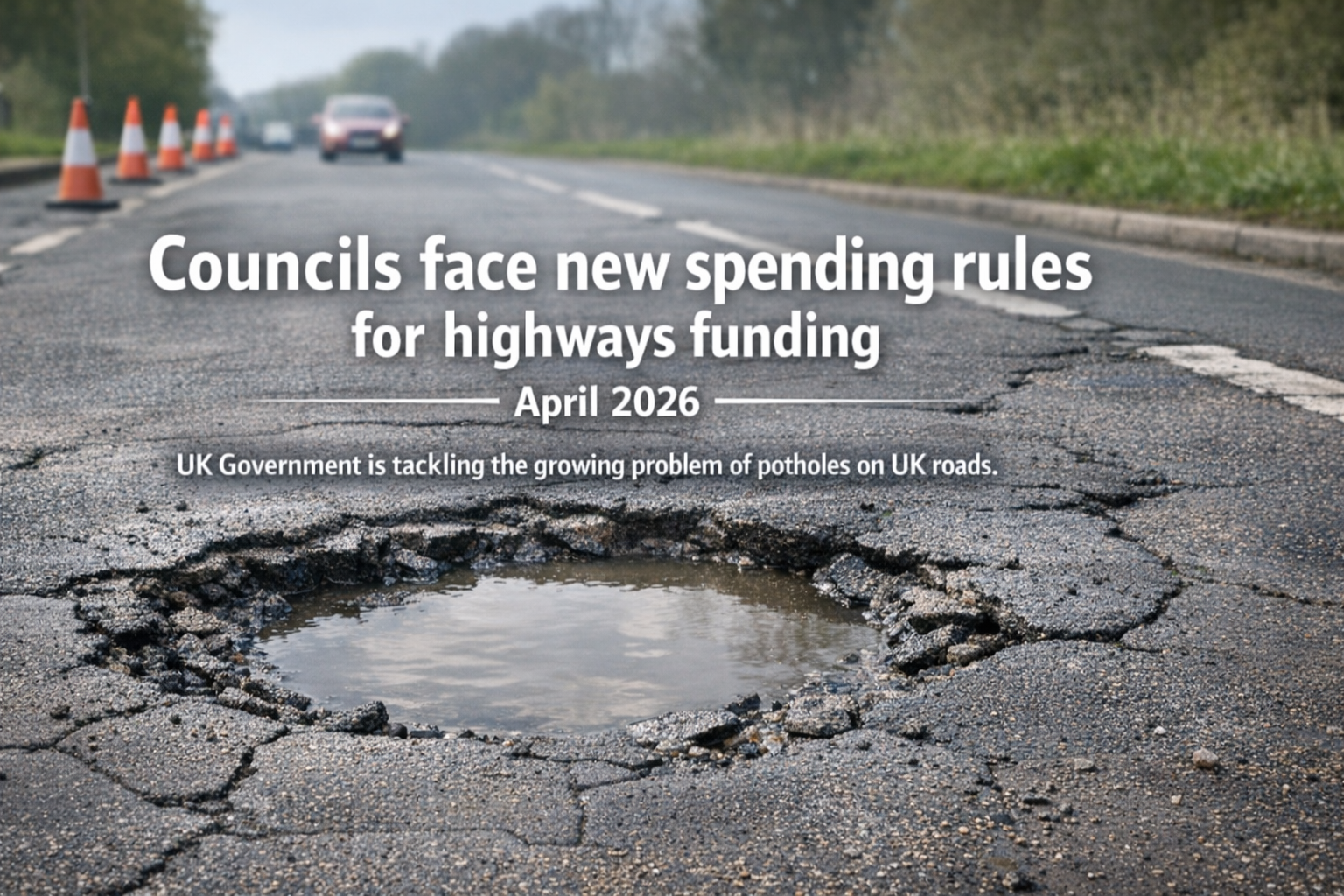
Councils in England are facing new rules around how they spend highways funding, with up to one third of their allocation at risk if they cannot demonstrate that money is being used effectively on road maintenance.
The Department for Transport has introduced the changes as part of a wider package designed to improve road conditions, increase transparency, and shift councils toward long term preventative maintenance rather than reactive pothole repairs.
Key Points at a Glance
- The new rules apply to all 154 local highway authorities in England
- A combined £1.6 billion annual funding pot is affected
- £525 million will be held back unless councils meet new transparency and performance requirements
- Councils must prove funding is spent solely on road maintenance and publish long term asset management plans
- 13 red rated councils will receive targeted expert support worth £300,000 over two years
- Pothole damage currently costs the average motorist around £500 in avoidable repairs
What Is Actually Changing?
The Department for Transport is holding back £525 million of the total £1.6 billion annual highways funding pot. Councils will only receive this money if they can demonstrate four things,
- Full transparency on how highways funding is spent
- Evidence that all funding is used solely for road maintenance
- Long term maintenance planning
- Improved training and capability within highways teams
The government says the reforms are designed to ensure taxpayers "see real improvements" and that funding is not redirected to other local priorities.
Why the Rules Are Tightening
Ministers argue that poor road conditions impose a direct financial burden on drivers. Pothole damage costs the average motorist around £500 in avoidable repairs, and the government says record investment in local roads must be used as intended rather than absorbed into wider council budgets.
The stated aims of the new system are to:
- Ensure record investment in local roads is used as intended
- Improve road conditions after what ministers describe as "a decade of decline"
- Give the public clearer visibility of how councils are performing
- Shift councils toward preventative maintenance, not just reactive pothole repairs
The new rules form part of a wider push to demonstrate value for money and improve the condition of England's local road network.
How the New System Works
Transparency Requirements
Councils must now publish:
- Annual reports showing all highways funding is spent on road maintenance
- Long term asset management plans
- Evidence of improved training and professional development for highways staff
Performance Ratings
This announcement follows the government's first red, amber, and green (RAG) ratings for all 154 local highway authorities. The ratings assess two things, the current condition of local roads, and how effectively councils are using the £7.3 billion in government funding allocated to them.
The ratings are intended to give the public a clear picture of which councils are performing well and which are not.
Support for Underperforming Councils
The government is launching targeted support for 13 red rated councils. This consists of £300,000 of expert planning support over two years, designed to help those authorities raise standards, improve maintenance programmes, and deliver better outcomes for road users.
A Note on the Wider Picture
Local authorities are managing these new requirements alongside significant budget pressures and competing statutory duties. The additional reporting and planning obligations will require capacity and resources, particularly in smaller or more stretched councils. The targeted support for red rated authorities addresses some of this, but broader budget constraints remain a structural challenge across local government.
What Ministers Are Saying
Roads and Buses Minister Simon Lightwood framed the reforms as a direct response to public frustration with deteriorating road surfaces.
Simon Lightwood, Roads and Buses Minister: "Drivers deserve smooth, safe journeys and every pound must go straight into fixing roads and tackling potholes. Councils that fail to maintain roads risk losing up to a third of their funding. Multi year funding will help councils plan properly and reverse a decade of decline."
The government is positioning the reforms as both a crackdown on poor performance and a support package for councils that need help improving.
What Industry Bodies Are Saying
RAC
Simon Williams, RAC head of policy: "These measures should go a long way to addressing poor road conditions. Ensuring funding is actually spent on roads will be welcomed by drivers. Preventative maintenance is essential to stop potholes forming, and multi year funding should lead to better quality roads."
AA
Edmund King, AA president: "Potholes remain the number one motoring issue for drivers. Scrutiny of council repair plans is right. Councils should prioritise resurfacing, not just patching, and proper investment leads to safer, smoother journeys."
Both organisations support the focus on transparency and long term planning.
What Happens Next
Councils must now publish detailed maintenance and spending reports, demonstrate that all highways funding is used for road maintenance, and show credible long term plans alongside evidence of improved workforce capability.
The Department for Transport will assess councils annually, apply funding reductions where performance is inadequate, provide targeted support to red rated authorities, and continue publishing RAG ratings to give the public visibility of how each council is performing.
The government says the reforms will lead to smoother, safer roads, fewer potholes, better value for taxpayers, and more consistent maintenance standards across England.
Wider Policy Context
The reforms sit within a broader package of record multi year investment in local roads, responding to long standing calls from councils for predictable funding. Multi year certainty is intended to enable better planning and reduce long term costs through preventative maintenance. Transparent performance ratings are designed to increase public accountability.
Local authorities, meanwhile, face the challenge of balancing these new requirements with wider budget pressures and competing statutory duties. The outcome will depend significantly on whether the combination of financial incentives, published ratings, and targeted support proves sufficient to drive sustained improvements in road condition across England.