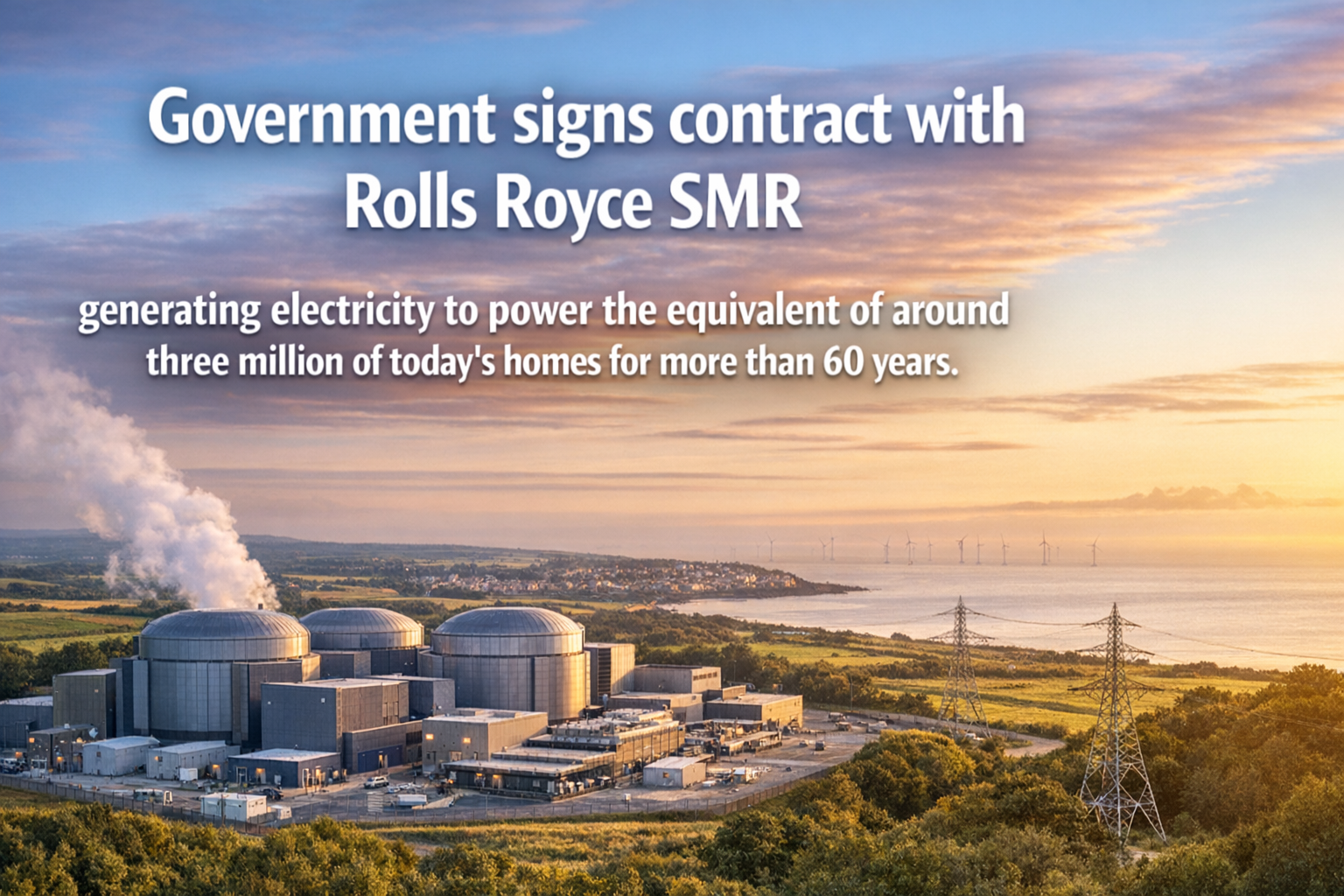
The government has now signed a contract with Rolls Royce SMR through Great British Energy - Nuclear (GBE-N), moving the UK SMR programme into its next formal phase. In plain English, this means the programme is no longer at preferred bidder stage. It has entered contract delivery work focused on design, regulation, and planning before any final go ahead on building.
What has actually been announced?
According to the GOV.UK announcement published on 13 April 2026, GBE-N has signed a contract that starts technology design activities for the UK's first small modular reactors (SMRs). Rolls Royce SMR had already been selected as preferred technology partner in June 2025, and this contract confirms the next step.
The statement says the contract covers early project work including:
- site specific design work
- regulatory engagement
- planning processes
All of this happens ahead of a future Final Investment Decision, so this is a major milestone, but not the final construction approval stage.
What scale are we talking about?
The government says the three unit project is expected to generate at least 1.4 GWe. It also says that is enough stable electricity to power the equivalent of around three million of today's homes for more than 60 years.
On jobs, the announcement estimates around 3,000 jobs at peak construction, plus thousands more across the UK supply chain.
Where does the money fit in?
The government says £2.6 billion was allocated in the 2025 Spending Review to support this contract and wider programme delivery. The announcement also says the National Wealth Fund is committing up to £599 million to Rolls Royce SMR to support development of the technology.
Separately, GBE-N says it has already awarded over £350 million in contracts across the supply chain this year.
Why ministers are framing this as energy security
The announcement repeatedly links the contract to energy security and reduced exposure to fossil fuel market shocks. The government's position is that more homegrown low carbon power helps reduce vulnerability to global instability and price volatility.
What key figures said
Simon Bowen, Chair of Great British Energy - Nuclear, said:
"This is an immense moment for the UK nuclear programme, our organisation, and the industry as a whole."
Energy Secretary Ed Miliband said:
"At a time of global instability, this is a major milestone for Britain's energy security."
Chancellor Rachel Reeves said:
"This investment, along with vital financing from the National Wealth Fund, will strengthen our energy security, create skilled jobs and help to build a new generation of homegrown nuclear technology that will power our economy for decades to come."
Chris Cholerton, Chief Executive of Rolls Royce SMR, said:
"This contract unlocks the delivery of our first three units and brings certainty to the UK SMR programme."
The Nuclear Regulatory Taskforce
Before this contract was signed, the government commissioned the Nuclear Regulatory Taskforce, led by John Fingleton, to carry out an independent review of how nuclear projects are regulated in the UK. Its final report was published on 24 November 2025.
The Taskforce concluded that:
- the UK's regulatory system had contributed to a "relative decline" in the country's global nuclear leadership
- the system had become "overly complex" and bureaucratic, favouring process over safe outcomes
- regulatory complexity had made recent nuclear projects more expensive and behind schedule
The Taskforce set out 47 recommendations covering planning, environmental regulation, radiological rules, and the structure of regulatory bodies. It estimated that implementing these reforms could:
- save tens of billions of pounds from the current £150 billion projected cost of decommissioning legacy nuclear activities
- reduce long term energy costs for consumers
- increase investor confidence and attract further private capital into the UK nuclear sector
This review forms part of the wider policy environment in which the GBE-N and Rolls-Royce SMR contract is being delivered, aiming to create a more predictable and efficient regulatory pathway for new nuclear projects.
What happens next?
The immediate next phase is technical and regulatory: design finalisation for real sites, engagement with regulators, and planning work. The government statement makes clear this all sits before a future Final Investment Decision.
So the practical takeaway is simple: this is a significant contractual and policy milestone, but there are still major delivery steps ahead before full build out is confirmed.