AI Use & Transparency: AI tools were used to support source discovery and to structure the article for clarity. All research, verification, drafting, and final editorial decisions are fully human led. Learn about our AI policy.
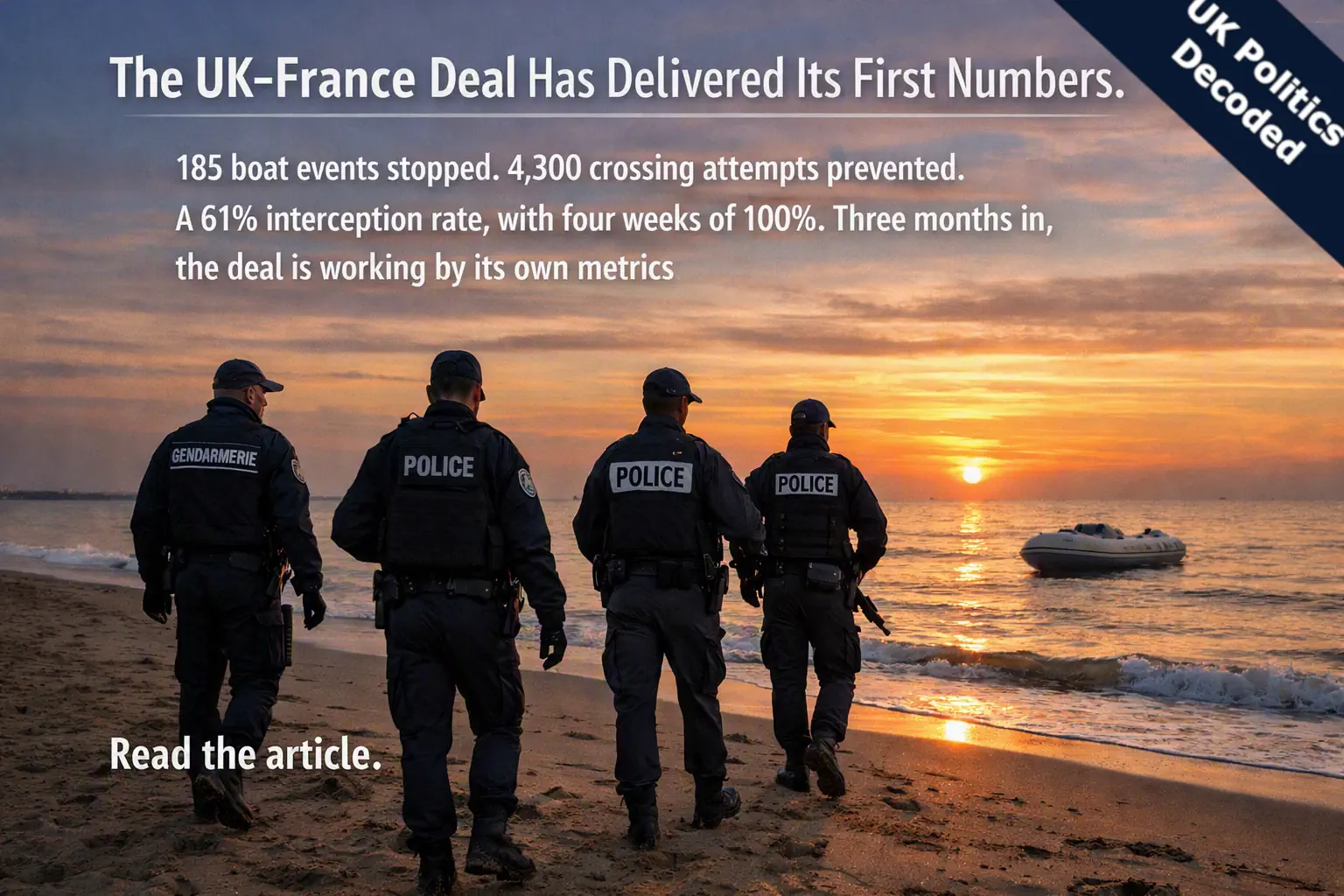
The government published the first results of the UK-France small boats deal today, and they're better than I expected. French units funded by the UK prevented 185 small boat crossing events between late April and early August, a 61% event prevention rate, nearly 5 percentage points higher than the same period last year. In four separate weeks, officers achieved something that would have seemed unlikely even two years ago, they stopped every single crossing attempt. A 100% weekly interception rate. Four times.
It's worth sitting with that before moving straight to the qualifications. The Compagnie de Marche and the new CRS riot unit deployed on Northern French beaches since June, which we covered at the time, have been operating in genuinely difficult conditions. Dispersing large groups on beaches at night. Seizing boats concealed in vehicles and hidden in vegetation. Intercepting taxi boats on open water. The NCA's dedicated people smuggling officer count has nearly trebled since the start of 2025, from 276 to close to 800. These are not small numbers.
And yet. That 61% prevention rate also means roughly 39% of crossing attempts still succeeded. Those crossings happened. The people who made it across are now in the UK asylum system, joining a backlog the government has been trying to clear since taking office. The people who were turned back are still in France, most likely still in the informal camp networks around Calais and Dunkirk, still in debt to the smuggling gangs that moved them there, and in many cases still intending to try again. Being turned back from the beach is not the same as going home.
The government has a trial underway that goes further than beach enforcement. Under a mechanism in the deal, migrants detained on French beaches are being held and where possible deported either to their home countries or to EU countries they passed through. Forty people have been removed so far. A permanent Immigration Removal Centre is under construction in Dunkirk. That's a structurally more meaningful intervention than simply turning people away from the waterline. But 40 is a small number against the scale of what's moving through the Channel corridor, and the Dunkirk centre isn't built yet.
What I keep returning to is the framing. The deal's success metrics are built around what France stops, crossings prevented, boats seized, smugglers arrested. All of it measurable, reportable, and politically legible. What doesn't appear in today's release is any account of what happens to the people who don't make it across. Where do they go? Do they attempt the crossing again the following week? Are they dispersed, deported, or absorbed back into the informal population along the French coast? The government doesn't say, and I'm not sure the data exists to answer it cleanly.
I'm not raising this to dismiss what's been achieved. The deal is doing what it was designed to do. The question is whether it was designed to do enough. Disrupting launches is operationally necessary. It isn't a substitute for the kind of returns arrangements or asylum processing reform that would reduce the number of people seeking to make the crossing in the first place. Smuggling gangs adapt. The 12 taxi boats intercepted at sea since March will be replaced by different vessel types and different launch windows. The business model endures because the underlying demand for it does too.
Three months in, the deal has earned its headline numbers honestly. Home Secretary Mahmood is right to point to them. But working by the metrics agreed in April isn't quite the same as working in the broader sense. The more meaningful measure, the one I'd want to see in another three months isn't how many boats France stopped. It's whether fewer people are trying to leave in the first place. That number won't appear in a Border Security Command press release. And I'm not convinced it's been designed into the deal.