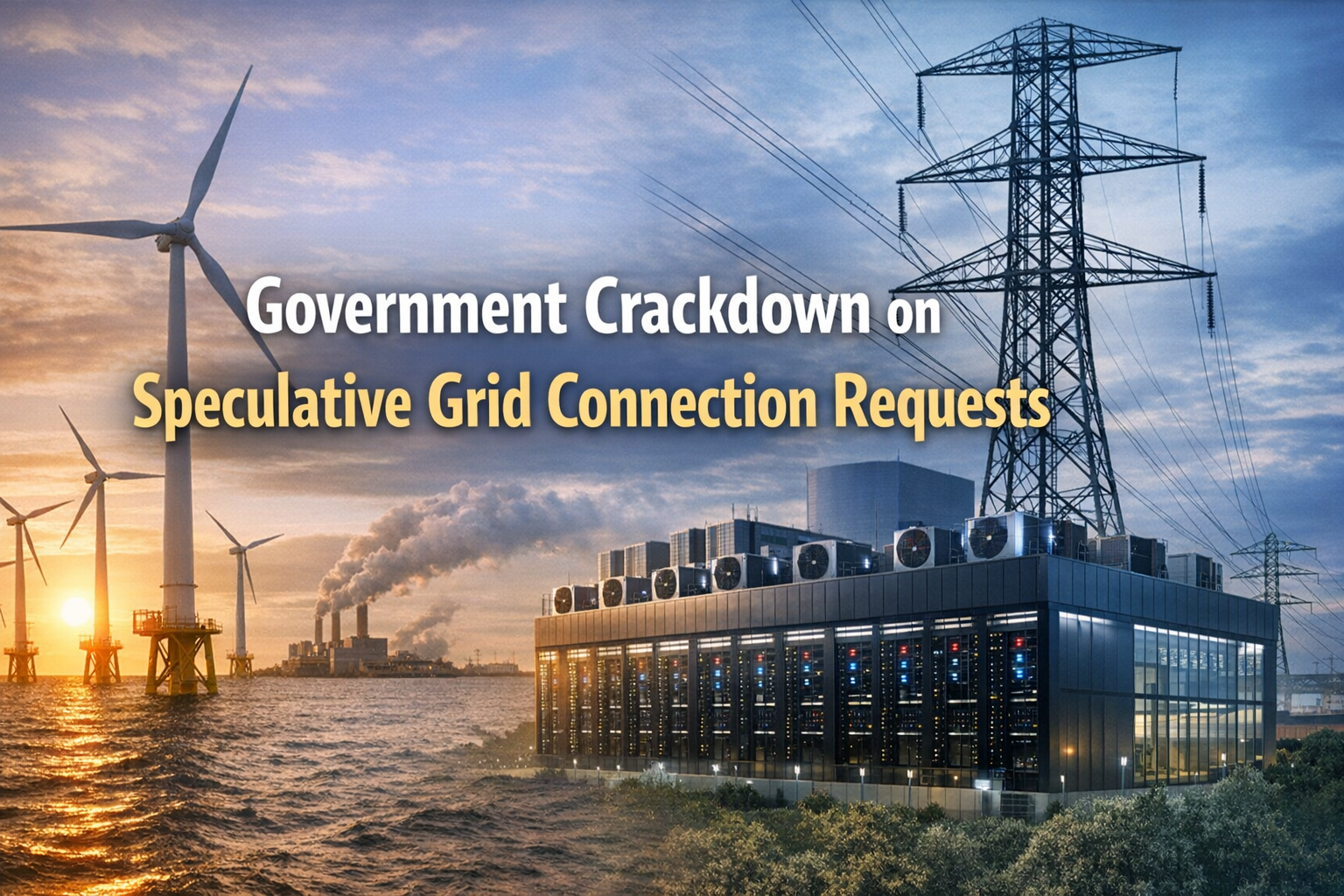
The government has announced a consultation on reforms designed to reduce speculative demand side grid connection applications. Ministers say the volume of applications has grown by 460% in six months, overwhelming the transmission level queue and delaying viable projects by up to 15 years.
The proposals would tighten entry and retention rules, increase financial requirements for developers, and give ministers the ability to prioritise strategically important projects such as AI data centres, EV charging hubs and industrial sites.
The reforms form part of the government's wider clean energy and industrial strategy agenda, alongside ongoing efforts to reduce the generation side queue and accelerate grid upgrades.
Why the Reforms Are Being Proposed
A Surge in Demand Side Applications
Transmission level demand connection requests have risen sharply, with many considered speculative or insufficiently developed. This has contributed to long waits for projects that are ready to proceed, including data centres and industrial electrification schemes.
System Impacts
Speculative applications inflate the pipeline, making it harder for network operators to plan reinforcement and allocate capacity. The government and NESO argue that the queue must reflect credible, committed projects to maintain energy security and support economic growth.
Policy Context
The government has already implemented reforms to clean up the generation queue, which NESO says has now been cut by more than half. Ministers are positioning the reforms as part of the UK's "clean energy superpower" mission and its Industrial Strategy.
What the Government Is Proposing
1. Tougher Conditions for Joining and Staying in the Queue
Ofgem will consult on measures that may include:
- Higher financial commitments such as deposits or milestone linked fees
- Removal of stalled or speculative projects
- Stronger evidence requirements to demonstrate project readiness
2. A Published List of "Strategically Important Projects"
Government would be able to identify and prioritise projects such as:
- AI Growth Zones
- Data centres
- Industrial electrification projects
- EV charging hubs
These projects would move to the front of the queue as capacity becomes available.
3. A Strategic Approach to Data Centre Connections
The government intends to coordinate data centre siting and connection decisions by:
- Prioritising locations near existing grid capacity
- Reducing the need for new infrastructure
- Balancing AI related demand with wider system needs
4. Connections Accelerator Service
This service is already supporting key projects including manufacturers, hospitals, prisons and data centres to secure faster connections. Further updates are expected later in 2026.
5. AI Growth Zone Incentives
Data centres in designated zones may receive:
- Priority access to grid capacity
- Discounts on electricity bills
- Support to build their own high voltage lines and substations to accelerate connection
Stakeholder Positions
Government
Ministers argue that speculative applications are blocking projects that deliver growth, jobs and innovation. They emphasise the importance of data centre capacity for the UK's AI ambitions.
NESO
Supports prioritisation and removal of speculative applications, stating that the demand pipeline must reflect credible and committed projects.
Ofgem
Warns that bold action is needed to address bottlenecks and is preparing its own consultation on tougher queue management rules.
Industry
Data centre operators and tech industry groups broadly welcome the reforms, emphasising the need to recognise the value of different types of compute capacity both inside and outside AI Growth Zones.
Wider Context
Grid Connection Reform
The generation side queue grew ten fold between 2018 and 2023. NESO's reforms have reduced it by more than half, with new offers now being issued. Government estimates this could unlock £40bn per year in private investment and reduce the need for costly grid reinforcement.
Network Upgrades
The reforms sit alongside the largest upgrade to Great Britain's electricity network in decades, aimed at delivering clean power, reducing reliance on fossil fuels and lowering bills.
Risks and Trade offs
While the reforms aim to accelerate strategically important projects, including AI data centres and industrial electrification, they also introduce several system level trade offs that are not fully addressed in the government's announcement.
Increased Electricity Demand May Rely on Gas in the Near Term
Data centres and other large demand side projects require continuous, high volume electricity. Even with ongoing grid upgrades and new renewable capacity, the pace of demand growth is likely to exceed the pace of clean generation build out. As a result, additional consumption may be met by gas fired power stations, particularly during periods of low wind or system stress.
Prioritisation May Shift Capacity Away from Other Sectors
Giving priority access to AI Growth Zones, data centres and industrial sites could mean slower connections for other users, including smaller businesses, local authorities and public sector projects outside the priority list.
Higher Financial Requirements Could Deter Smaller Developers
Proposals to increase deposits or milestone linked fees may help remove speculative applications, but they could also disadvantage smaller organisations or community scale projects with limited capital.
Geographic Concentration of Demand
Prioritising data centres near existing grid capacity may reduce the need for new infrastructure, but it could also concentrate demand in specific regions, creating localised pressure on networks.
Long term Uncertainty for System Planning
The scale and speed of AI related demand growth is difficult to forecast. If projections change, network operators may face challenges in planning reinforcement, allocating capacity and maintaining system stability.
Public Debate on Subsidies and Alternative Investment Options
As the government prioritises AI related infrastructure, a parallel public debate has emerged about the long term cost of supporting energy intensive data centres.
Concerns About Ongoing Subsidies
Some incentives such as discounted electricity bills or support for private high voltage infrastructure could create recurring public costs. Critics argue that these commitments may grow over time as AI related demand increases.
Billions Already Invested in AI Partnerships
The UK has already committed substantial funding to AI research, compute partnerships and commercial collaborations. Some commentators question whether further public support for data centre energy use represents the best allocation of resources.
Alternative Proposals: Publicly Owned Renewable Generation
A recurring theme in public discussion is that equivalent funding could instead be directed towards:
- Publicly owned offshore wind farms
- Community owned energy projects
Supporters of this approach argue it could increase competition in a sector dominated by private operators and deliver cheaper electricity directly to households.
Balancing Industrial Strategy with Energy Affordability
The government's approach prioritises economic growth and AI competitiveness. However, some analysts note that prioritising high demand commercial users may increase pressure on the grid and prolong reliance on gas fired generation, with implications for household bills.
Upcoming Public Consultation
The government has confirmed that a full public consultation on the proposed reforms will be published on GOV.UK. This will set out detailed options for tightening queue management rules, defining "strategically important" projects, and determining how financial requirements for developers should be calibrated. Stakeholders including local authorities, industry, community groups and individual respondents will be able to provide feedback before final decisions are made.