What's Being Proposed and Why It Matters
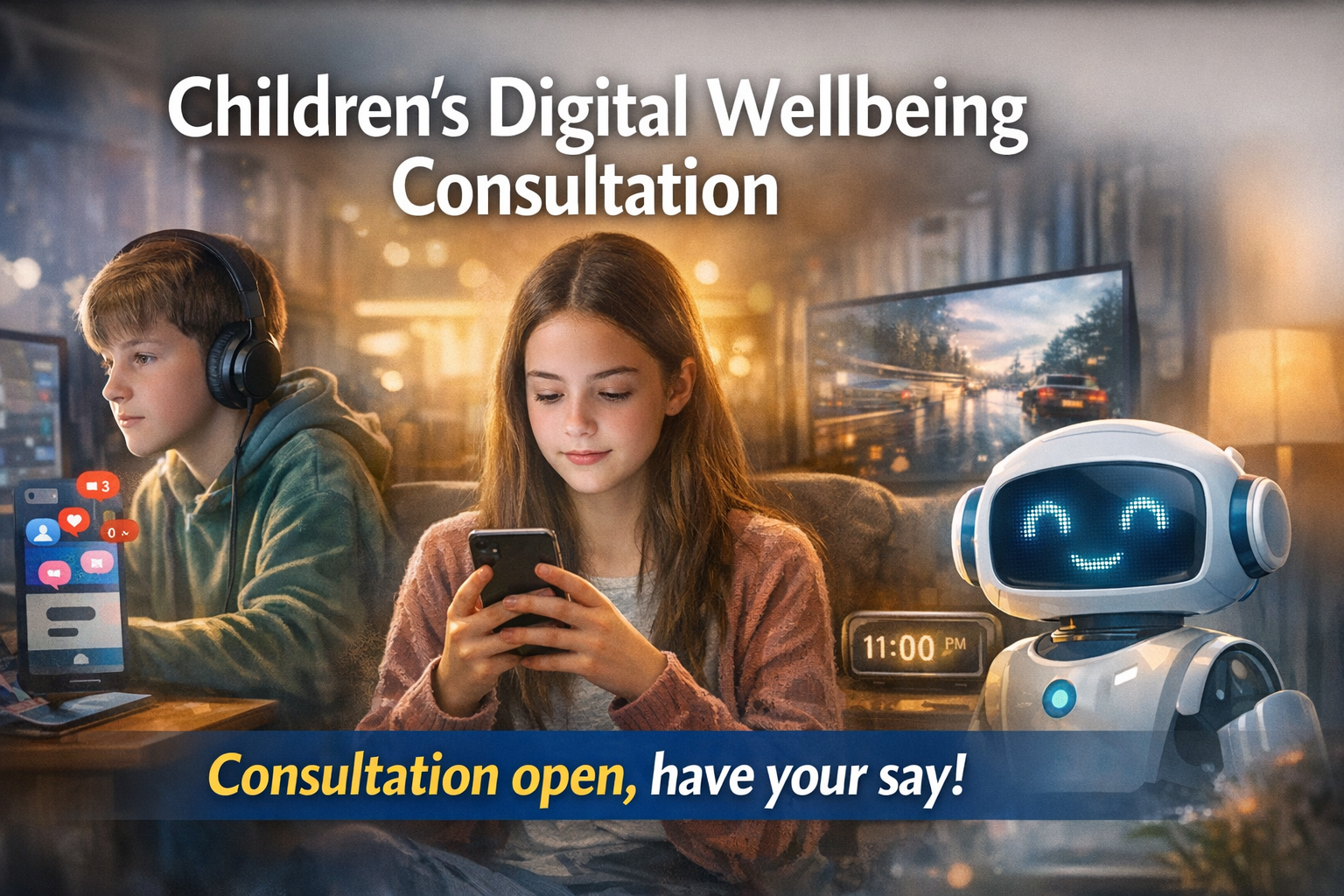
On 2 March 2026, the UK government launched what it describes as the world's most ambitious consultation on children's digital wellbeing, a sweeping review of how social media, gaming platforms, and AI chatbots shape childhood. Despite the scale of the proposals, coverage across major news outlets has been surprisingly limited. This post sets out the key measures under consideration, why the consultation is happening now, and what it could mean for families, platforms, and policymakers.
Why This Consultation?
Millions of parents report the same concerns:
- disrupted sleep
- declining concentration
- compulsive scrolling
- exposure to harmful content
- reliance on AI chatbots for advice
- uncertainty about when to give a child a phone
- difficulty enforcing boundaries on platforms designed to maximise engagement
The Online Safety Act created new duties for platforms, but ministers argue that the pace of technological change, especially AI, requires a more flexible, faster moving regulatory approach. This consultation is the government's attempt to gather public evidence before deciding whether to introduce new powers and restrictions.
What the Consultation Covers
The scope is unusually broad. Rather than focusing solely on social media, the government is examining the entire digital environment children interact with.
1. Minimum Age for Social Media
The consultation asks whether the UK should introduce a legally enforceable minimum age for social media use and, if so, what that age should be.
Arguments being explored include:
- For a ban: reducing exposure to addictive design, harmful content, and social pressure.
- Against a ban: risk of pushing children into unregulated spaces, and concerns about digital literacy gaps.
2. Addictive Design Features
Platforms may be required to disable features such as:
- infinite scrolling
- autoplay
- algorithmic "For You" feeds
- engagement streaks
The focus is on features that keep children awake late into the night or encourage compulsive use.
3. Mandatory Overnight Curfews
The government is exploring whether platforms should automatically restrict access for under 18s during certain hours to support healthier sleep patterns.
4. AI Chatbots and Children
A major new area of concern. The consultation asks:
- Should children be able to use AI chatbots without restrictions?
- Should certain features be disabled for under 18s?
- How should platforms prevent children from treating AI systems as real people?
Some educators, child development specialists and technology developers also highlight that well designed chatbots can support learning, creativity and emotional regulation, arguing that restrictions should be proportionate and evidence based.
5. Gaming and Screen Time
The review includes gaming platforms, loot boxes, and the impact of late night play on wellbeing.
6. Strengthening Age Verification
The government wants views on how to make age checks more robust without creating privacy risks. Critics of the existing Online Safety Act have argued that robust age verification in practice often requires users to hand over official identity documents or biometric data to private companies, which then store them in corporate databases creating significant cybersecurity and privacy risks.
7. Support for Parents and Children
Beyond regulation, the consultation asks how families can be better supported to navigate the digital world, including through new guidance, education, and tools.
Real World Pilots With Families
One of the most significant announcements is the plan to run live pilots with teenagers and parents. These pilots will test:
- social media bans
- overnight curfews
- daily screen time limits
The aim is to gather real world evidence before making decisions, a notable shift from previous digital policy approaches.
New Legislative Powers
The Prime Minister and Technology Secretary have announced new powers that would allow ministers to act quickly once the consultation concludes. Instead of waiting years for new primary legislation, the government wants the ability to introduce targeted measures within months.
This signals a move toward a more agile regulatory model. The Independent Reviewer of Terrorism Legislation has noted that the government is proposing to amend the Online Safety Act 2023 by way of a new clause in the Crime and Policing Bill, granting wide powers to amend the Act by regulation in connection with AI generated content and AI facilitated harm, subject to approval by a single vote in each House.
Concerns Raised About the Online Safety Framework
Alongside the consultation, a number of concerns about the direction of online safety regulation have been raised by campaigners, parliamentarians and analysts and are relevant to how any new measures might work in practice.
Voting at 16 vs. Restricted Access Online
In Scotland and Wales, 16 and 17 year olds can vote in devolved elections; the same age group is often in the frame for social media or platform restrictions. Critics argue that young people who are deemed mature enough to vote are simultaneously restricted from learning, accessing political content, or taking part in public debate online because of broad age gating and age verification requirements that treat them as children. Locking 16 and 17 year olds out of educational or civic content, it is argued, undermines both digital literacy and democratic participation.
Age Gating, Official Documents and Biometric Data
Making age checks "more robust" frequently means platforms and services requiring users to prove their age using official documents (such as passports or driving licences) or biometric data (such as facial recognition or voice patterns). In practice, that can mean sensitive data being uploaded, scanned and stored in private companies' databases. Critics and cybersecurity analysts have warned that this:
- greatly increases the volume of highly sensitive data held by commercial firms
- creates a much larger cyber attack surface for the UK, because every company holding such data becomes a potential target for hackers and hostile actors
- exposes people to lasting harm when data is breached, because biometric data and official document details cannot be "changed" like a password once stolen
Real world incidents illustrate the risk. In October 2025, Discord disclosed that an unauthorised party had gained access to one of its third party customer support providers, the breach was later attributed by Discord to 5CA, a Netherlands based vendor. The attackers reportedly accessed around 70,000 users' government ID images used for age verification, alongside other data. Discord stated that its own systems were not directly breached the intrusion came via the third party provider highlighting how age verification can multiply the number of organisations holding sensitive identity documents and expand the attack surface when those providers are compromised.
Analysis published on UKPoliticsDecoded has previously set out how the storage of biometric data and official identity documents on private company servers, driven by age verification and related duties, has been described as dramatically expanding the nation's cyber attack surface and creating new risks for individuals.
Who Can Respond?
The consultation is open to:
- parents and carers
- young people
- teachers and those working with children
- civil society organisations
- academics
- industry
Dedicated versions for parents and young people aim to make participation easier. The consultation closes on 26 May 2026, with a government response expected in the summer.
Why This Matters
This consultation could reshape the digital landscape for an entire generation. Depending on the outcome, the UK may see:
- legally enforceable age limits
- platform level curfews
- restrictions on AI chatbot features
- new design standards for social media and gaming
- faster regulatory intervention as technology evolves
Yet public awareness remains low. For a process that could redefine childhood online, engagement will be crucial.
What Happens Next
Over the next three months, the government will run:
- community events
- school engagement sessions
- MP led local conversations
- influencer roundtables
- an academic evidence panel
- a national "digital childhood" conversation
Alongside this, new guidance on healthy screen time for ages 5–16 will be published for the first time.