AI Use: AI tools were used to support source discovery and to structure the article for clarity. All research, verification, drafting, and final editorial decisions are fully human led. Learn about our AI policy.
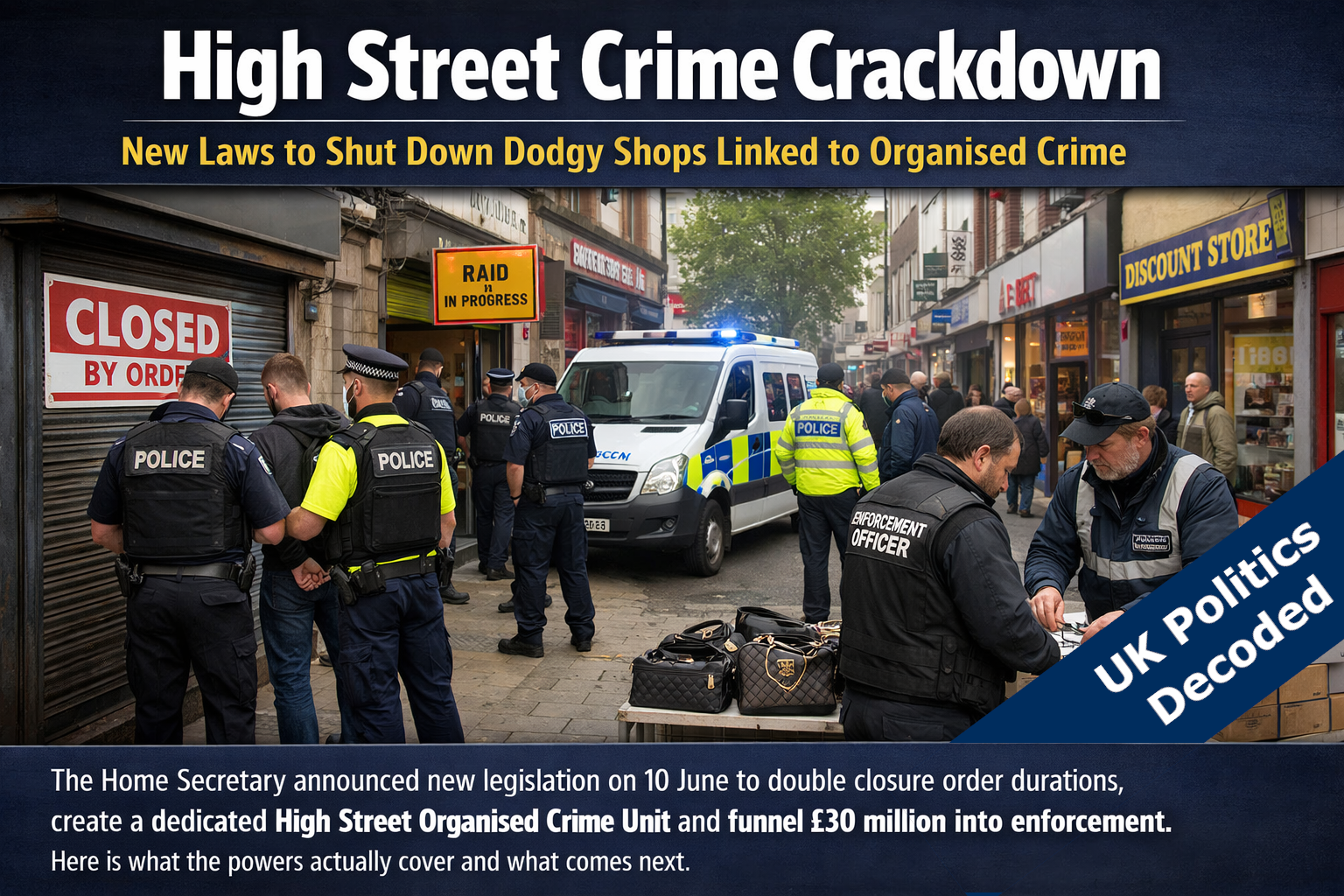
Vape shops, barbers, nail salons and mini marts linked to organised criminal networks are to be targeted under a new national enforcement drive, with the government proposing to double the length of time a business can be forcibly shut down. Home Secretary Shabana Mahmood announced the measures on 10 June 2026, alongside £30 million in new funding for police and trading standards, and the creation of a dedicated High Street Organised Crime Unit.
The National Crime Agency estimates that at least £12 billion of criminal cash is generated in the UK each year, with around £1 billion laundered through high street businesses. The government says criminal gangs have been using shopfronts as cover for drug supply, immigration crime and money laundering, often with efforts to conceal who actually controls the business.
What the Government Announced
- Closure orders: Maximum duration to be doubled from 6 months to 12 months giving investigators more time to gather evidence and pursue prosecutions.
- New temporary closure power: A further rapid use power is being explored that would not require evidence of anti social behaviour, specifically targeting shops involved in criminality.
- £30 million funding: New money for police and trading standards to fund raids, arrests and cash seizures across thousands of businesses.
- High Street Organised Crime Unit: A new cross government body to coordinate enforcement action nationally.
- Visa sponsorship review: The Home Secretary has instructed officials to urgently review whether vape shops, barbers and car washes should remain on the skilled worker sponsorship list, following concerns about potential misuse.
Under existing legislation, police and local authorities can apply to close a business premises for up to six months. The problem, according to the government, is that businesses have frequently been able to reopen before an investigation concludes resuming illegal activity and forcing councils and police forces to make repeated applications to the courts, consuming time and resource.
By doubling the maximum duration to twelve months, the government says investigators will have the runway to follow money trails, identify criminal backers who operate from behind the scenes, and build cases that lead to prosecution rather than repeated temporary closures.
The Existing Legislative Backdrop
- Crime and Policing Act: Already extended closure notices from 48 hours to 72 hours, providing councils with more time to gather initial evidence before seeking a longer order.
- Current maximum: Six months for a closure order but businesses can reopen after this period even if investigations are still live.
- Consultation required: The new regulations extending closure orders are expected to be laid by the end of 2026 following consultation with interested parties.
- Secondary legislation: The government will introduce the changes through secondary legislation rather than a new primary Act.
Alongside the extension to existing closure orders, the government is also exploring a separate, faster acting temporary closure power designed specifically for shops involved in criminality. The significance here is in the trigger threshold. Currently, local authorities typically rely on evidence of anti social behaviour to shut down a premises quickly. The proposed new power would remove that requirement, making it possible to close a shop on grounds of suspected criminal activity without needing to first demonstrate anti social behaviour as the gateway.
The detail of how this power would work in practice including safeguards, the standard of evidence required, and what right of appeal would be available to businesses has not yet been set out. The government has said the rapid review into local responders powers will explore these questions.
The £30 million announced on 10 June is described as new funding specifically for police and trading standards response to organised crime. The government has not published a detailed breakdown of how the money will be allocated between forces and local authorities, but the announcement states that thousands of businesses are expected to be raided, with hundreds of arrests and millions of pounds in cash seizures anticipated as a result.
What Enforcement Agencies Welcomed
- Closure order extension: The Chartered Trading Standards Institute (CTSI) welcomed the intent to extend durations, calling closure orders a key enforcement tool for its members.
- Investigative time: CTSI noted that current limitations prevent officers from properly investigating criminality before a business can reopen.
- Community protection: The Centre for Social Justice said stronger powers would help tackle gangs it says have "hijacked shopfronts" to sell illegal tobacco, traffic drugs and facilitate immigration crime.
- Cross government coordination: The creation of the High Street Organised Crime Unit was seen as a step toward more joined up national enforcement.