AI Use: AI tools were used to support source discovery and to structure the article for clarity. All research, verification, drafting, and final editorial decisions are fully human led. Learn about our AI policy.
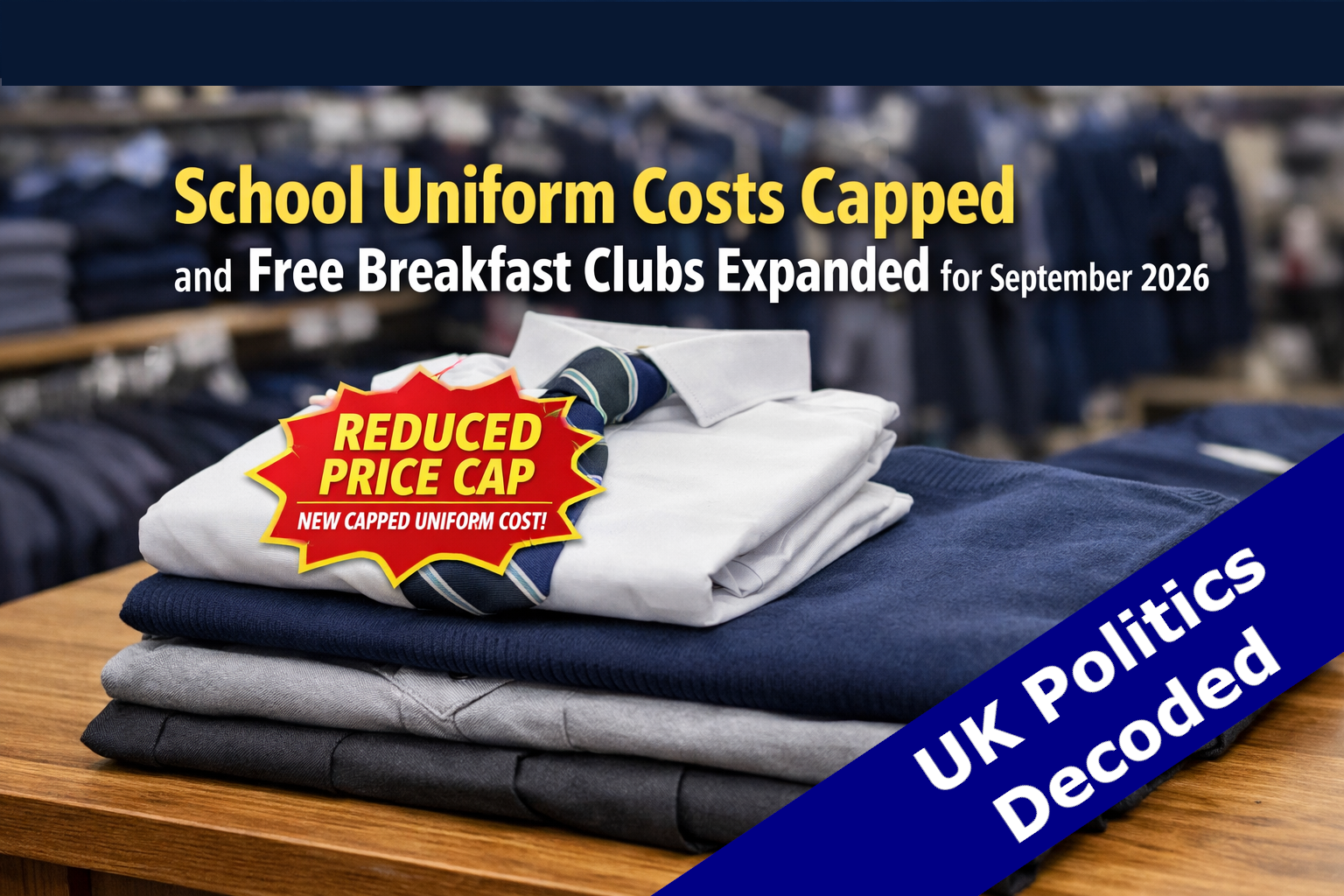
From September 2026, schools in England must comply with new legal limits on the number of branded uniform items they can require. The rules, confirmed by the Department for Education on 6 July, cap primary and all through schools at three compulsory branded items and secondary and middle schools at four, provided one of those is a tie.
The change is part of a wider package of back to school cost reductions announced by Education Secretary Bridget Phillipson alongside Children's Minister Olivia Bailey MP. Free breakfast clubs are also expanding significantly, with 1,400 more schools joining the programme from September, bringing the total to more than 2,700 across England.
At a glance
- Uniform cap: Primary and all through schools limited to 3 compulsory branded items, secondary and middle schools to 4 if one is a tie, effective September 2026
- Breakfast clubs: Over 2,700 schools from September, up from around 300 at programme launch, 680,000 children eligible, up from 300,000 today
- Breakfast club saving: Worth up to £450 and approximately 95 hours of childcare per year for families using the club every school day
- Free school meals: Extended to every household on Universal Credit, worth up to £500 per eligible child per year
- Combined potential saving: Up to approximately £1,000 per child per year from breakfast clubs and free school meals combined
Under the new rules, schools can still specify requirements for generic uniform items including colour, shade, fabric, and fit but cannot require parents to purchase branded versions of everyday basics such as trousers, shirts, or socks from a particular supplier. The change means more of those items can be bought from any shop or supermarket, rather than from a single, sometimes considerably more expensive, contracted retailer.
Government polling found that one in three parents still worry about the cost of school uniform. The branded item limit is a legal requirement under the Education (Guidance about Costs of School Uniforms) Act 2021, which already required governing boards to have regard to statutory cost guidance. The September 2026 cap now makes it an enforceable obligation.
Alongside the cap, the Department published strengthened statutory guidance on 6 July requiring schools to take further steps to bring down the cost of individual uniform items, particularly more expensive pieces such as blazers and jumpers. Schools must act on this guidance in time for parents purchasing uniform ahead of the 2027/28 school year. The guidance also reaffirms that schools should avoid single supplier contracts except in limited circumstances, and must make second hand uniform accessible to all parents, with information published on their websites.
The free breakfast club programme has already delivered cumulative savings of nearly £25 million for families, through more than 10 million free breakfasts served and around 5 million hours of childcare unlocked. For a family using their school's club every day, the annual benefit works out at up to £450 and approximately 95 hours of morning childcare, roughly two working weeks back in terms of the morning school run.
More than 680,000 children will be able to attend free breakfast clubs after the summer holidays, up from around 300,000 today. The government says it has exceeded its own target of adding 2,000 schools to the programme in the current year, with 1,400 more now confirmed for September. The clubs are designed partly to ease pressure on working parents mornings and partly to ensure children arrive settled and fed before lessons begin.
Free school meals are being extended to every household claiming Universal Credit, regardless of the household's earnings within that benefit threshold. The Department values this extension at up to £500 per eligible child per year. Combined with the breakfast club saving, a family in a Universal Credit household using both could save close to £1,000 annually per child.
Those figures sit alongside the government's broader early years childcare offer. More than 548,000 working parent entitlement codes were validated in spring 2026 under the expanded 30 hours free childcare scheme. The Department for Education estimates this is saving families an average of £8,000 per year per child where the full 30 hour entitlement is taken up.
On 6 July, the government launched a consultation on reforming the early years funding system, which runs until 14 September 2026. The proposals seek views on changing how local councils distribute funding for disadvantaged two year olds, with the aim of directing more money directly to nurseries and childminders rather than being retained at council level.
A wider cost of living initiative, the Great British Summer Saving scheme runs from 25 June to 1 September 2026. It includes a temporary VAT cut on children's meals in restaurants and children's and family tickets for cinemas and theatres, alongside free bus travel for children aged 5 to 15 in England throughout August.
The government's Best Start Family Hubs programme is also expanding. More than 200 hubs are now open, with a target of up to 1,000 by 2028, backed by more than £900 million in funding. A new Best Start Improvement Coalition was launched on 6 July to support delivery, bringing together businesses, charities, and social investors.
Key Takeaways
- From September 2026, primary and all through schools are legally limited to 3 compulsory branded uniform items, secondary and middle schools to 4 if one is a tie
- Strengthened statutory guidance requires schools to reduce the cost of individual items especially blazers and jumpers ahead of the 2027/28 school year
- Over 2,700 schools will offer free breakfast clubs from September 2026, with 680,000 children eligible, up from 300,000 today
- Free school meals are extended to all Universal Credit households combined with breakfast clubs, eligible families could save up to £1,000 per child per year
- An early years funding consultation is open until 14 September 2026, proposing changes to how councils pass funding for disadvantaged two year olds to providers
Sources & Further Reading
- GOV.UK - Government to cut costs for parents ahead of new school year (Department for Education, 6 July 2026) Archived copy (OGL): archived page
- GOV.UK - Cost of school uniforms: statutory guidance (Department for Education, updated 6 July 2026) Archived copy (OGL): archived page
- Department for Education - Early years funding: proposed changes to the entitlements funding system (consultation, opens 6 July 2026, closes 14 September 2026) Archived copy (OGL): archived page