AI Use: AI tools were used to support source discovery and to structure the article for clarity. All research, verification, drafting, and final editorial decisions are fully human led. Learn about our AI policy.
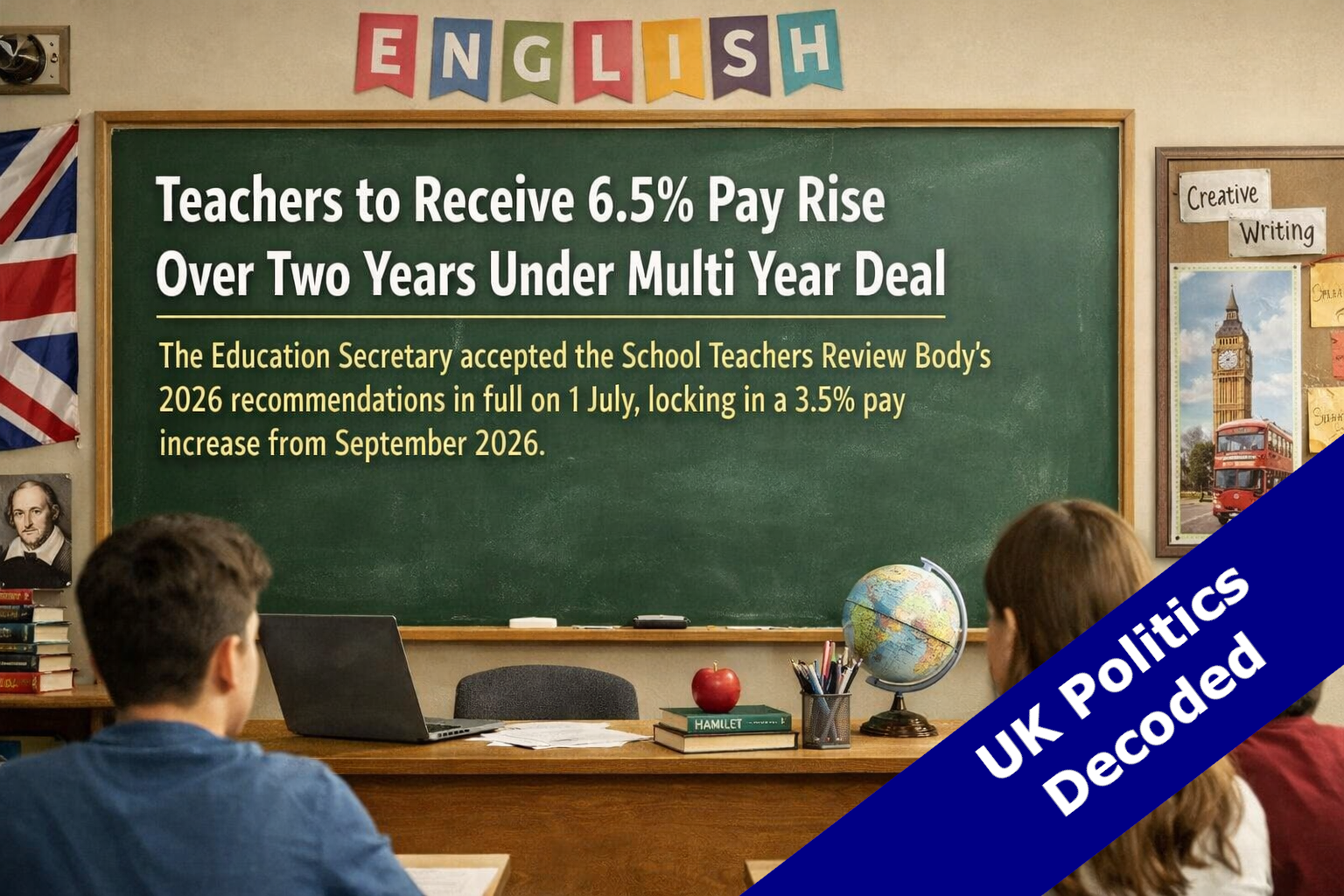
School teachers in England will receive a 6.5% pay increase spread across the next two years. Education Secretary Bridget Phillipson accepted the School Teachers Review Body's 2026 recommendations in full on 1 July 2026, confirming a 3.5% rise from September 2026 followed by a further 3% from September 2027.
The deal takes the cumulative pay increase since the July 2024 general election to 17%, equivalent to almost £7,900 over four years for the average classroom teacher. From September 2026, average salaries will rise to over £52,800, reaching over £54,400 from September 2027.
At a glance
- Pay rise: 3.5% from September 2026, then 3% from September 2027, 6.5% total over two years
- Cumulative increase: 17% since the general election, approximately £7,900 over four years
- Average salary: Over £52,800 from September 2026, rising to over £54,400 from September 2027
- School funding: £1.8 billion additional funding over two years, schools must find the first 1% of each year's rise themselves
- Further education: £485 million additional funding for colleges and other FE providers over two years
The decision to accept the School Teachers Review Body's recommendations covers both years simultaneously, rather than setting pay on an annual basis. The government says the approach gives schools and colleges greater certainty when planning budgets. Phillipson described it as reflecting the government's recognition that teachers "go above and beyond every day" and that their dedication should be rewarded.
The two year framework also applies to support staff, who are expected to benefit from the additional school funding provided alongside the pay award.
The government is providing £1.8 billion in additional funding to schools over the two year period to cover the cost of the award. Schools will, however, be expected to fund the first 1% of each annual pay rise from within their existing budgets, a condition the Department for Education frames as continuing "efforts to maximise value."
That expectation sits within the government's Maximising Value for Pupils programme, published in December 2025. The programme targets systemic cost pressures in four areas, commercial purchasing, assets (including reserves), workforce deployment, and digital capability. The Department has already negotiated an energy deal for schools and is developing a Crown Commercial Service framework for agency supply teachers, due in June 2026, after national expenditure on agency supply teachers reached £1.4 billion in 2023/24.
Schools are encouraged to use the Department's Financial Benchmarking and Insight Tool to compare their spending against similar schools and identify savings opportunities. The government cites Bishop Hogarth Catholic Education Trust as an example the trust increased its annual interest income from £16,000 to over £1.1 million after reviewing its banking arrangements.
Colleges and other further education providers will receive £485 million in additional funding over the same two year period. The government says the money is intended to help providers recruit and retain teachers delivering vocational, academic, and technical courses. Further education colleges are not covered by the School Teachers Review Body, so pay in the sector is set separately, this funding sits alongside rather than within the STRB process.
The pay announcement came alongside new controls on executive salaries in multi academy trusts. From September 2026, trusts must seek government approval before advertising any role paying over £174,000. Annual pay rises for executives will also be capped in line with increases awarded to classroom teachers, executives cannot receive a higher percentage rise than the rate set for the wider school workforce.
The Department says the change mirrors arrangements already in place in the NHS and college sector. It frames the measure as a matter of consistency, ensuring that salary growth at the top of the academy trust structure does not outpace pay for teachers in classrooms.
The government points to improved recruitment figures as context for the deal. More than 4,500 additional teachers have joined secondary schools, special schools, and colleges since 2024 putting the government above 70% of its commitment to recruit 6,500 new teachers within its first parliamentary term, with three years remaining. The number of people choosing to train to teach rose by 13% this year, which the Department describes as a post pandemic record.
Fewer teachers are also leaving the profession than in recent years, according to the government's figures, though the Department has not published the underlying retention data alongside this announcement. The multi year pay structure is expected to support longer term workforce planning by giving prospective teachers greater salary certainty before they commit to training.
Key Takeaways
- School teachers in England will receive 3.5% more pay from September 2026, followed by a further 3% from September 2027, 6.5% over two years
- The Education Secretary accepted the School Teachers Review Body's 2026 recommendations in full on 1 July 2026
- £1.8 billion in additional funding will be provided to schools over two years, schools must find the first 1% of each annual award from within their own budgets
- £485 million in additional funding will go to further education colleges and other providers over the same period
- From September 2026, academy trusts must seek government approval before advertising roles paying over £174,000, and executive pay rises are capped in line with teacher pay awards