AI Use: AI tools were used to support source discovery and to structure the article for clarity. All research, verification, drafting, and final editorial decisions are fully human led. Learn about our AI policy.
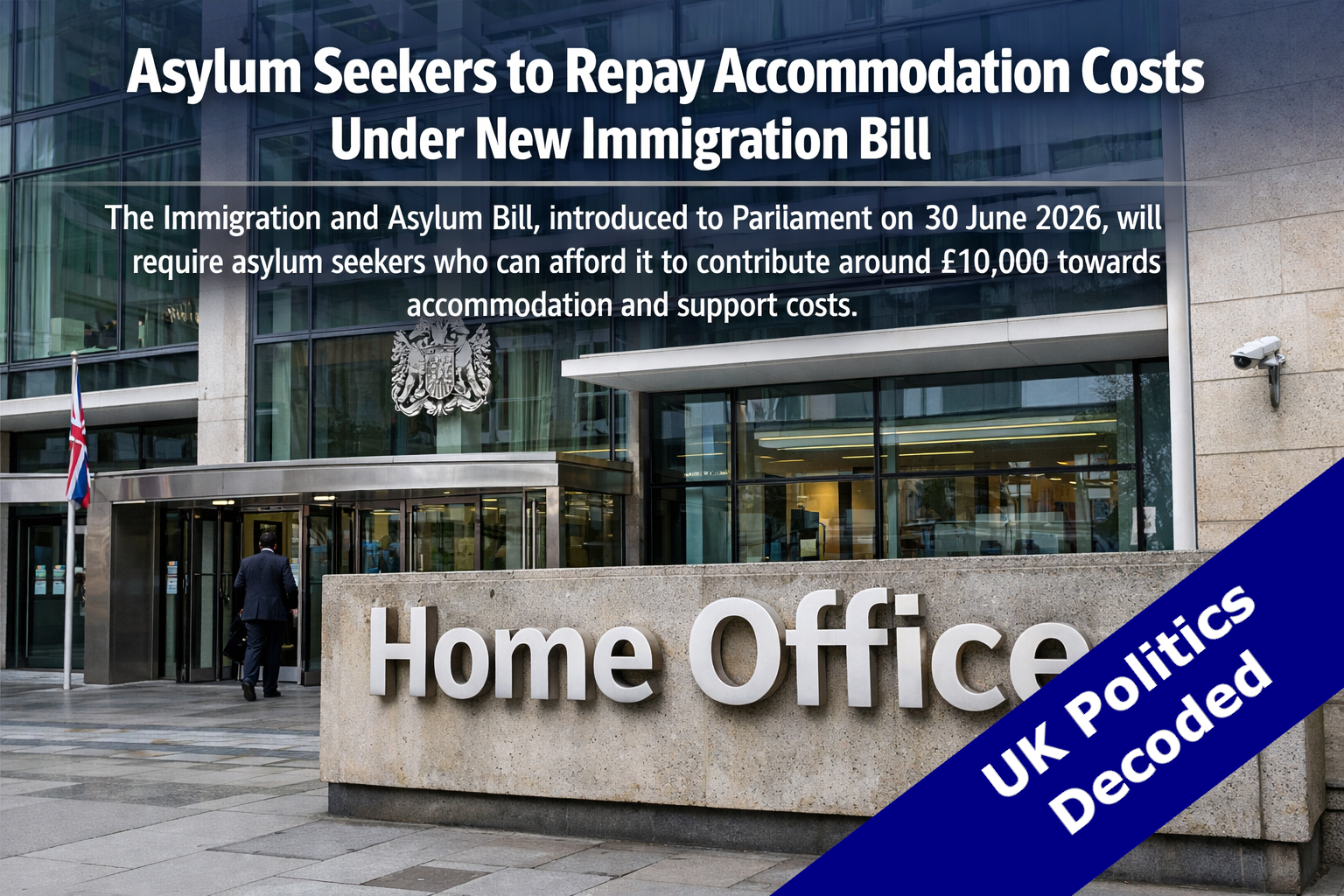
The government has introduced legislation that would, for the first time, require asylum seekers to repay a contribution towards the cost of their accommodation and support. The Immigration and Asylum Bill, introduced to Parliament on 30 June 2026, creates new powers for the Home Office to recover costs from adults who have received asylum support including subsistence payments or housing, once they have access to sufficient funds.
Home Secretary Shabana Mahmood said the cost of asylum accommodation had become "too high" and that it was "right that we ask those who can contribute to do so." The asylum support system cost the taxpayer £4 billion last year, covering both accommodation and weekly subsistence payments. The government says it has already reduced those costs by close to £1 billion since taking office.
At a glance
- Expected repayment: Around £10,000 per person, a contribution to total support costs, not full recovery
- How it works: A flat rate monthly charge above a set income threshold, primarily via direct payments to the Home Office
- Settlement link: Migrants must repay the full amount before becoming eligible for settlement in the UK
- Departures: Those who leave the UK must clear outstanding payments before being permitted to return
- Safeguards: The Home Secretary retains power to adjust the charge and threshold to prevent destitution
The Bill does not demand an upfront lump sum. Eligible adults would pay off the charge in monthly instalments once their income exceeds a threshold set by the Home Secretary. The primary payment route is expected to be direct payments to the Home Office, though the government is also exploring whether the tax and benefits systems could be used as additional mechanisms.
The Home Secretary will have the power to adjust both the rate of the charge and the income threshold at which it applies. The government says this flexibility is intended to ensure the scheme remains fair to the taxpayer while not forcing any migrant into financial hardship.
Repayment is built into the immigration pathway in two ways. Individuals who have not cleared the full amount will not be eligible for settlement. Anyone who leaves the UK and wishes to return must also ensure any outstanding balance is paid before re-entry.
The Home Office's published rates put the cost of accommodating asylum seekers at £23.25 per person per night in dispersal accommodation and £144 per person per night in hotels. Weekly subsistence payments range from £9.95 to £49.18 per person depending on individual circumstances.
The government has been closing asylum hotels as part of its cost reduction programme. Thirty one have been shut since April 2026, with hundreds of asylum seekers moved into what Ministers describe as basic accommodation, including ex-military sites. The £10,000 repayment figure is set against those ongoing costs, the government frames it as a partial contribution, not an attempt to recover the full expense of someone's support.
The repayment obligation applies to adults only. It does not take effect until the Home Office determines an individual has access to sufficient funds. Asylum seekers who remain in the UK on a pathway to settlement fall within the scheme's scope once they meet the financial threshold.
Government figures on employment outcomes among those granted refugee status give some indication of when individuals might reach that threshold. A quarter of 16 to 64 year olds who were granted asylum between 2015 and 2023 were in employment within the same calendar year as their grant. That figure rose to 50% two years after status was granted. Among those in work eight years after their grant, 37% were in full time employment, with median earnings of £23,000 and 40% earning above minimum wage.
The accommodation cost recovery provision sits within the Immigration and Asylum Bill, which the government describes as the most significant overhaul of asylum policy in a generation. The Bill's stated aims are to establish a "firm but fair" asylum system, restore order to immigration processing, and reduce what the government calls the pull factors that drive illegal migration. The cost recovery measure is one element within a wider legislative package the Bill introduces.
Mahmood said receiving asylum support was "a right, but also a responsibility," and that once people were able to contribute and repay, the government expected them to do so.
Key Takeaways
- The Immigration and Asylum Bill, introduced 30 June 2026, requires asylum seekers who can afford it to repay around £10,000 towards accommodation and support costs
- Payments are made monthly above an income threshold, both the rate and threshold can be adjusted by the Home Secretary
- Full repayment is required before an individual is eligible for settlement, those leaving the UK must also clear balances before returning
- Asylum support cost the taxpayer £4 billion last year, the government says it has already cut costs by close to £1 billion, including closing 31 hotels since April 2026
- The obligation applies to adults only and does not activate until the individual has access to sufficient funds
Sources & Further Reading
- GOV.UK - Asylum seekers will pay towards costs of accommodation (Home Office, 30 June 2026) Archived copy (OGL): archived page
- Parliament.uk - Immigration and Asylum Bill (1st Reading) Archived copy (OGL): archived page