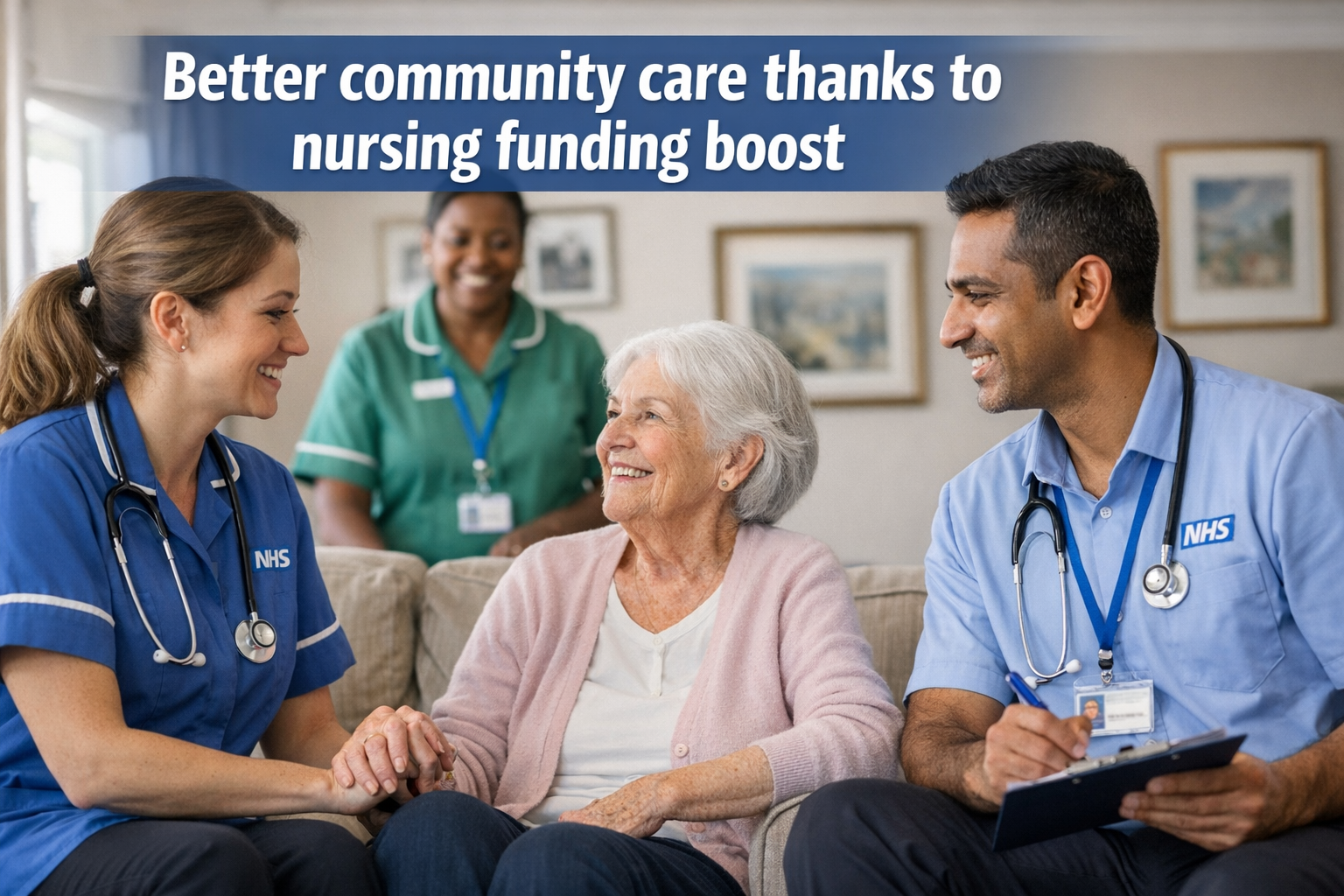
The government has announced a 5.4% increase in the weekly rates paid to care homes for providing NHS funded nursing care, taking effect from 1 April 2026. The Department of Health and Social Care says the uplift will support approximately 80,000 people who receive nursing care in community settings and help reduce pressure on hospitals by supporting faster and more sustainable hospital discharge.
NHS funded nursing care (FNC) is a contribution paid directly by the NHS to care homes on behalf of eligible residents who require the input of a registered nurse. The rates are reviewed periodically and the April 2026 increase represents the largest percentage uplift in recent years, rising from the current standard rate of £254.06 to £267.68 per week, and from £349.50 to £368.24 per week on the higher rate.
Key Points at a Glance
- 5.4% rate increase for NHS funded nursing care, effective 1 April 2026.
- Around 80,000 people in community nursing care settings are expected to benefit.
- Standard rate rises from £254.06 to £267.68 per week; higher rate from £349.50 to £368.24 per week.
- Wider measures include a £4.6 billion boost to adult social care funding by 2028–29, £723 million for home adaptations, and an independent commission on long term social care reform.
What Is Changing?
From 1 April 2026, the NHS funded nursing care rates will change as follows:
| Rate type | Current weekly rate | New weekly rate (from April 2026) |
|---|---|---|
| Standard rate | £254.06 | £267.68 |
| Higher rate | £349.50 | £368.24 |
These payments are made directly by the NHS to care homes providing nursing care. They are intended to contribute to the cost of registered nursing support for eligible residents. Eligibility is determined through a clinical assessment, and the higher rate applies to those with more complex nursing needs.
Why the Government Says the Increase Is Needed
According to the Department of Health and Social Care, the uplift is designed to achieve three related aims: to support care homes that deliver specialist nursing care; to reduce pressure on NHS hospitals by preventing avoidable admissions; and to speed up hospital discharge by enabling people to move into social care settings when clinically appropriate.
Ministers describe the change as part of the government's wider plan to lay the foundations for a national care service, a longer term reform commitment that the government says will reshape adult social care in England.
Wider Adult Social Care Measures
The nursing care rate announcement sits alongside several previously trailed commitments to adult social care funding.
Additional Local Authority Funding
The government plans to make an extra £4.6 billion available for adult social care in 2028–29, compared with 2025–26. This includes £500 million earmarked for the first fair pay agreement for care workers, a commitment intended to improve pay and conditions for the social care workforce.
Disabled Facilities Grant
A total of £723 million has been allocated for 2026–27 to support home adaptations for disabled people through the Disabled Facilities Grant. This funding enables local authorities to help disabled individuals remain in their own homes by funding adaptations such as stairlifts, wet rooms and wider doorways.
Support for Carers and Disabled Adults
Ministers highlight two further recent changes as part of the same direction of travel:
- The largest uplift since the 1970s to the Carer's Allowance earnings threshold, intended to allow more unpaid carers to take on paid work without losing their entitlement.
- The biggest increase in a decade to the minimum income guarantee for disabled adults, which sets a floor on the level of financial support available after means tested social care charges are applied.
National Care Service Development
Beyond the immediate funding changes, the government has appointed Baroness Louise Casey to chair an independent commission on adult social care. The commission is tasked with making recommendations on long term reform of the social care system, including how it is funded, organised and staffed.
The commission's first proposals are expected to be published later in 2026. The government has described its national care service ambition as a multi-year project, and the commission's work is intended to inform the detailed policy and legislation needed to deliver it.
Key Takeaways
- NHS funded nursing care rates rise by 5.4% from 1 April 2026, with the standard rate increasing to £267.68 and the higher rate to £368.24 per week.
- Around 80,000 people in community nursing care settings are expected to benefit from the uplift.
- The government frames the increase as part of efforts to reduce hospital admissions and speed up discharge into social care settings.
- Wider adult social care commitments include £4.6 billion in additional local authority funding by 2028–29, £723 million for home adaptations, and improvements to the Carer's Allowance earnings threshold and the minimum income guarantee for disabled adults.
- Baroness Louise Casey has been appointed to lead an independent commission on long term social care reform, with initial proposals expected later in 2026.
📚 Sources & Further Reading
- Gov.UK – Better community care thanks to nursing funding boost (09 March 2026) Archived copy (OGL): archived webpage
- Commons library – The 10 Year Health Plan for England Archived copy (OGL): archived document