AI Use: AI tools were used to support source discovery and to structure the article for clarity. All research, verification, drafting, and final editorial decisions are fully human led. Learn about our AI policy.
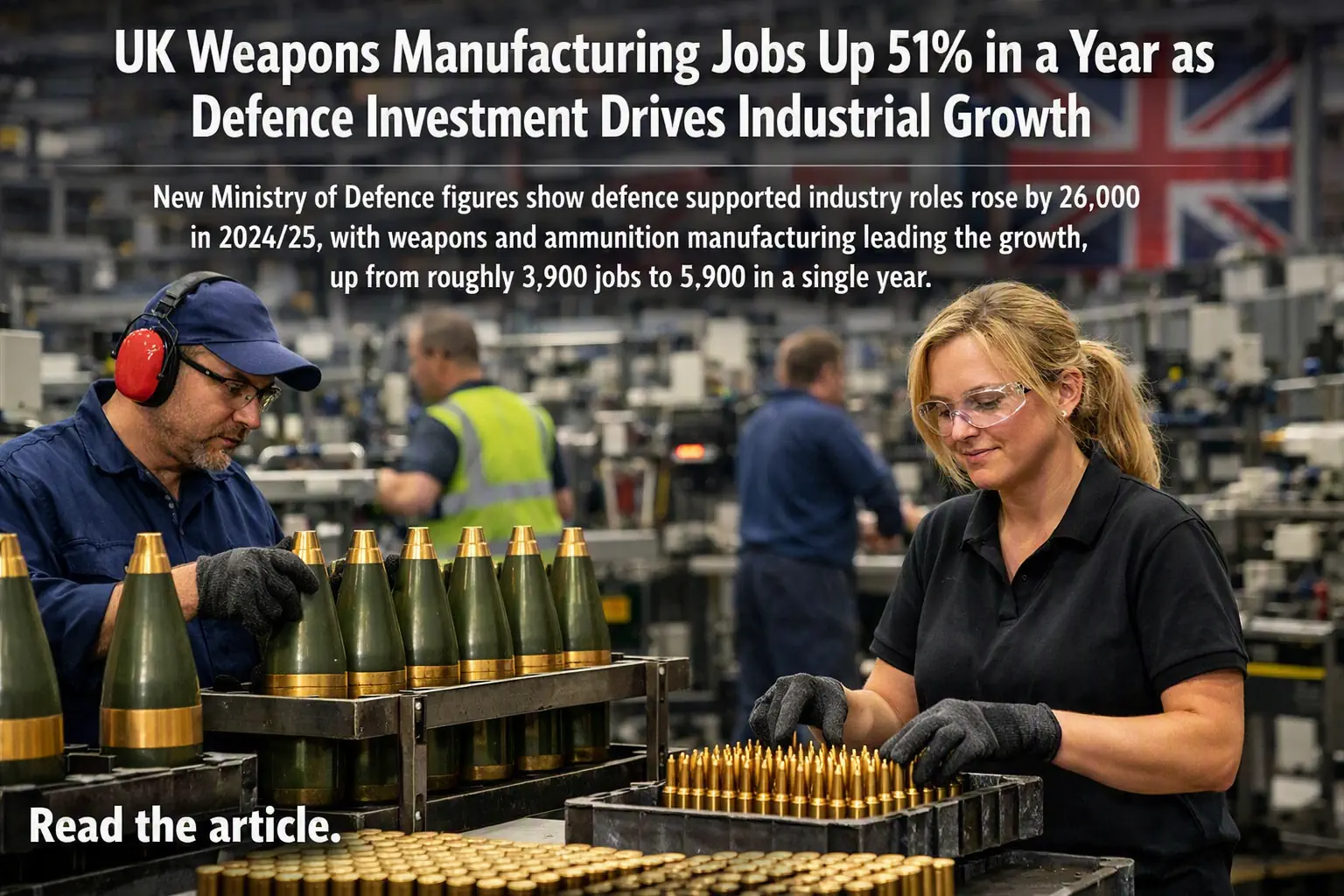
The number of UK jobs in weapons and ammunition manufacturing rose by 51 per cent in a single year, according to Ministry of Defence employment estimates published on 20 August 2026. In real terms, that is approximately 2,000 additional roles, bringing the total for weapons, ammunition, and military fighting vehicles to 5,900, up from roughly 3,900 the year before.
The figures cover the 2024/25 financial year and sit within a broader 26,000 year on year increase in defence supported employment across UK industry. Combined with direct roles in the Armed Forces and Civil Service, UK defence now accounts for 462,000 jobs nationally. The Ministry of Defence described the growth as evidence that defence is "an engine for growth" and part of the government's wider push towards what it calls the reindustrialisation of Britain.
At a Glance
- 51% rise: Weapons and ammunition manufacturing jobs grew from roughly 3,900 to 5,900 in 2024/25
- 26,000 more: Overall year on year increase in UK defence supported industry roles
- 462,000 total: UK defence jobs across the Armed Forces, industry, and Civil Service
- Regional gains: North West up nearly 4,000 roles, South East up more than 3,000 year on year
- £298 billion: Committed under the Defence Investment Plan over the next four years
Where the Growth Is Concentrated
Two regions stand out in the regional breakdown. The North West saw nearly 4,000 additional defence supported roles year on year, making it one of the sharpest beneficiaries of increased spending. The South East added more than 3,000 extra jobs over the same period. The Ministry of Defence framed the gains as evidence that defence investment is reaching "every corner of the country," though the press release does not publish a full regional breakdown beyond those headline figures.
The 26,000 increase in UK industry roles covers both direct employment, people working in defence manufacturing and indirect jobs in the broader supply chain, including sub contractors and businesses that depend on defence procurement for a significant share of their revenue. The weapons and ammunition sector's 51 per cent rise is striking in percentage terms, but the sector is starting from a relatively modest base. Context matters, a gain of 2,000 jobs in a sector that previously employed 3,900 people represents rapid proportional growth, even if the absolute numbers remain small compared with, say, naval shipbuilding or aerospace.
The Munitions Pipeline
The jump in weapons manufacturing jobs is directly tied to a stated policy objective. The government has made rebuilding what it describes as a sovereign, "always on" pipeline of munitions supply a defence priority meaning the UK should be capable of producing artillery shells, missiles, and other critical munitions at scale domestically, without relying on allied nations to fill gaps in a sustained conflict.
That language reflects concerns that have gathered urgency since 2022. Western nations, including the UK, supplied substantial quantities of ammunition to Ukraine, and the experience exposed how quickly national stockpiles can deplete when a high intensity conflict runs for years rather than weeks. Rebuilding domestic capacity is the direct policy response, and the employment figures suggest that response is already reaching the shop floor.
Luke Pollard, Minister for Defence Readiness and Industry, said the data showed that "a rising defence budget is creating more good jobs across the UK." He described defence as an engine for growth, adding that "as we increase our military readiness and capabilities we are generating good well paid jobs nationwide." The government has positioned the expansion of sovereign manufacturing capability as simultaneously a security decision and an economic one.
The Investment Behind the Numbers
The employment growth does not stand alone. It sits within a much larger financial commitment. The government's Defence Investment Plan earmarks £298 billion for UK defence over the next four years, spanning munitions, shipbuilding, and advanced technology. That figure provides the long term order pipeline that defence manufacturers need to justify hiring, training, and capital investment at scale.
The nuclear strand of defence investment is handled separately. The Defence Nuclear Enterprise, the umbrella programme for the UK's submarine deterrent and nuclear capabilities supports 47,000 jobs and more than 6,000 suppliers across the country. A separate government announcement committed a further £8.4 billion to advance the next generation of nuclear submarines, adding to the sustained pipeline of work flowing to submarine building yards and their associated supply chains.
Taken together, the nuclear programme, the conventional munitions drive, and the broader Defence Investment Plan represent a level of sustained UK defence expenditure that the Ministry of Defence says is already showing up in the labour market data for 2024/25.
Employment statistics for a single financial year capture a moment rather than a trend. The 51 per cent rise in weapons jobs is the sharpest figure in the release, but it reflects a sector ramping up in direct response to specific procurement decisions. Whether the trajectory continues depends on those orders being sustained and on the government following through with the spending commitments set out in the Defence Investment Plan over the full four year period.
For communities in the North West and South East where the gains are most visible, the near term effect is already real, more hiring, more supply chain activity, more skilled manufacturing work. The longer question of whether that translates into durable industrial capability, the "always on" production base the government is describing will take more than one year of employment data to answer.
The Ministry of Defence publishes updated employment estimates annually. The next set of figures will show whether the growth seen in 2024/25 has held, expanded, or moderated as the Defence Investment Plan moves from spending commitments into contracted delivery.
Key Takeaways
- Weapons and ammunition manufacturing jobs rose 51% in 2024/25, reaching 5,900, an increase of approximately 2,000 year on year
- UK defence supported industry employment rose by 26,000, total defence employment across the Armed Forces, industry and Civil Service stands at 462,000
- The North West gained nearly 4,000 roles year on year, the South East gained more than 3,000, the government says the investment is reaching communities across the country
- The gains are tied to a deliberate policy of rebuilding sovereign, "always on" munitions production capacity for artillery, missiles, and other critical military supplies
- A £298 billion Defence Investment Plan over four years, plus £8.4 billion for next generation nuclear submarines, underpins the long term order pipeline supporting the employment growth
Sources & Further Reading
- British weapons jobs rise by more than 50% in a year as defence investment strengthens UK industry - Ministry of Defence / GOV.UK (20 August 2026) Archived copy (OGL): archived page
- UK Defence in Numbers, MOD Defence Statistics collection - GOV.UK Archived copy (OGL): archived page
- Defence Investment Plan - Ministry of Defence / GOV.UK Archived copy (OGL): archived page
- Defence Nuclear Enterprise - Ministry of Defence / GOV.UK