AI Use: AI tools were used to support source discovery and to structure the article for clarity. All research, verification, drafting, and final editorial decisions are fully human led. Learn about our AI policy.
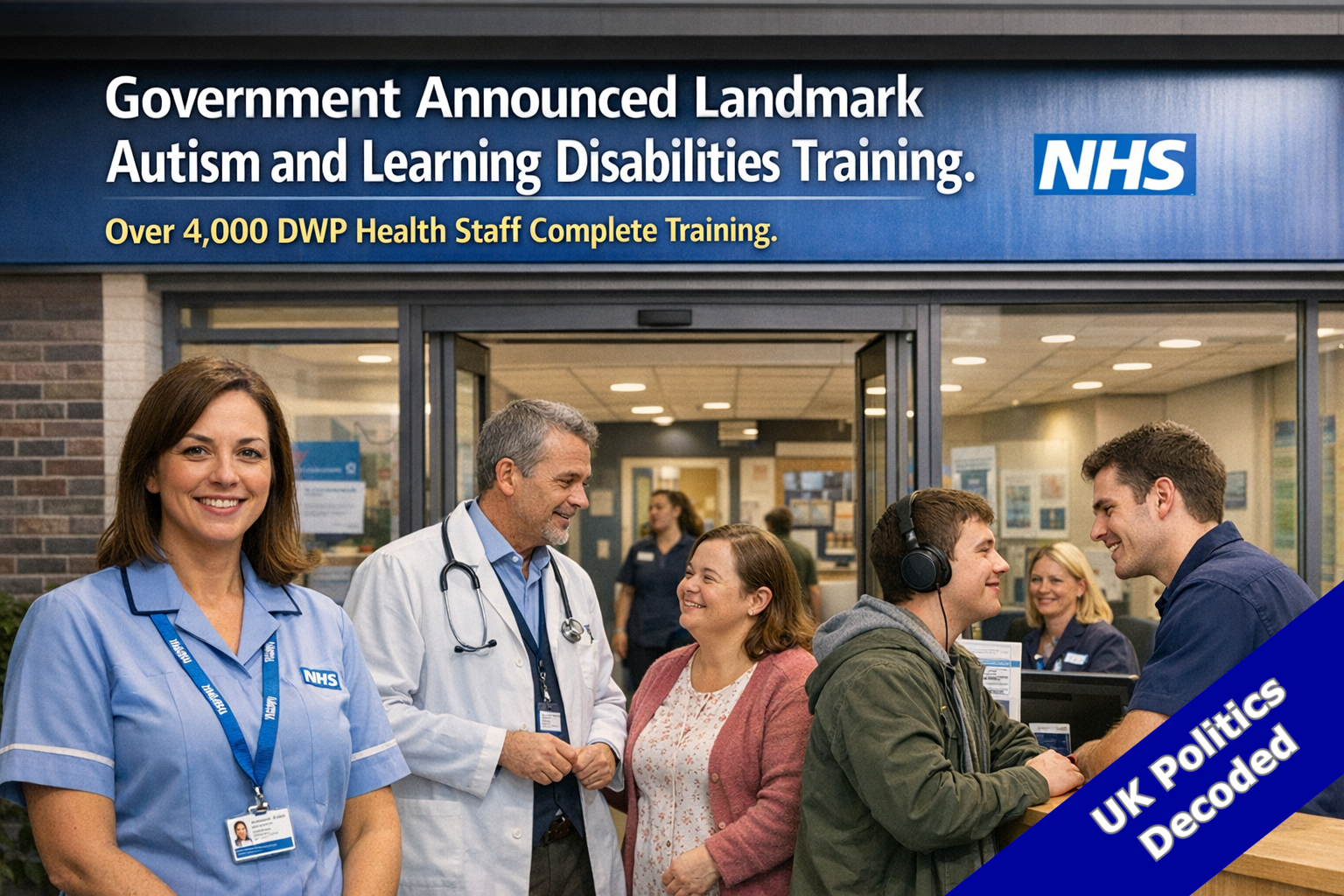
On 29 April 2026, the government announced that more than 4,000 DWP healthcare professionals have now completed part of the Oliver McGowan Mandatory Training on Learning Disability and Autism. The milestone was announced to mark the close of Autism Awareness Month and forms part of a broader government commitment to put disabled people, particularly autistic people and those with learning disabilities, at the centre of how public services are designed and delivered.
The training is named after Oliver McGowan, a young man with autism and a learning disability who died in 2016 after being given antipsychotic medication against his and his family's wishes. His mother, Paula McGowan OBE, campaigned for this training to become law, a campaign that ultimately succeeded through the Health and Care Act 2022. That law made the training mandatory across health and social care. The DWP is now rolling it out to the healthcare professionals who carry out benefits assessments on its behalf.
The Announcement at a Glance
- 4,399 DWP health professionals trained: 231 work directly for DWP; a further 4,168 work for external provider organisations that carry out assessments on DWP's behalf. All are expected to complete the full training programme.
- Named after Oliver McGowan: The training was established following his death in 2016, and was made mandatory across health and social care by the Health and Care Act 2022.
- Tackling diagnostic overshadowing: A key focus of the training is identifying when symptoms are wrongly attributed to a person's disability rather than investigated properly, a problem known as diagnostic overshadowing.
- Practical adjustments for assessments: Staff learn to give autistic people and those with learning disabilities more time in assessments, use simpler language, and ensure environments are sensory aware.
- Independent Disability Advisory Panel: Alongside the training, the government has appointed ten experts with lived experience of disability to advise on the design and delivery of health and disability policy.
Who Was Oliver McGowan and Why Does This Training Carry His Name?
Oliver McGowan was a teenager with autism and a learning disability who died in November 2016 at the age of 18. An inquest found his death was potentially avoidable. Oliver had been given antipsychotic medication against the expressed wishes of himself and his family, after being admitted to hospital for a neurological condition. The medication caused fatal complications.
His mother, Paula McGowan OBE, dedicated herself to ensuring that staff working with autistic people and those with learning disabilities would receive proper, standardised training. Her campaign helped shape what became a legal requirement. The Health and Care Act 2022, passed under the previous government, made the Oliver McGowan Mandatory Training on Learning Disability and Autism a statutory requirement across health and social care in England. Extending that requirement to DWP's healthcare professionals, who assess hundreds of thousands of benefit claimants each year, is a significant step in that legacy.
What Is Diagnostic Overshadowing?
- What it means: Diagnostic overshadowing happens when a clinician or assessor attributes a person's symptoms or behaviour to their existing disability, rather than exploring whether something else may be causing them.
- Why it matters for disabled people: For autistic people and those with learning disabilities, this can mean physical health problems or mental health conditions go undiagnosed and untreated, because staff assume the presentation is simply part of the disability.
- In a benefits context: It can also mean an assessor misreads how a person communicates, behaves under stress, or describes their condition, leading to assessments that do not accurately reflect that person's actual needs.
- What the training does about it: The Oliver McGowan training specifically addresses diagnostic overshadowing, giving staff the knowledge and tools to look beyond a person's disability label and assess their individual needs properly.
What Does the Training Actually Change?
The training is not simply awareness raising. It is designed to produce concrete changes in how DWP healthcare professionals carry out their work. The practical adjustments it introduces matter because many autistic people and those with learning disabilities face significant barriers when navigating the benefits system, from the language used in communications to the sensory environment of a Jobcentre.
Adjustments to Assessments
The training gives healthcare professionals practical tools to make meaningful reasonable adjustments. These include:
- More time in assessments: Allowing autistic people and those with learning disabilities extra time to process questions and communicate their answers clearly, reducing the anxiety that a rushed assessment can create and improving the accuracy of what is recorded.
- Simpler, clearer communications: Jobcentres and assessment services will use more accessible language in letters, forms, and face to face interactions, making it easier for people who find complex language difficult to process.
- Sensory aware environments: Ensuring that assessment settings and Jobcentres are adapted to feel safer and more manageable for people who may find busy, loud, or unpredictable environments overwhelming.
- Listening to people who know the individual: The training reinforces the importance of listening to family members, carers, and others who know the person being assessed, not just the person themselves, since communication differences can mean someone struggles to convey their needs in an unfamiliar setting.
Wider Neurodivergence Support Beyond the Training
The Oliver McGowan training milestone sits alongside other recent steps the government has taken to support neurodivergent people in accessing work and public services:
- Acas neurodivergence masterclasses: DWP funded Acas to deliver free neurodivergence masterclasses for small and medium sized employers, with more than 1,800 employer representatives attending to build confidence in recruiting and supporting neurodivergent staff.
- Right to try work: The government legislated to give benefit claimants the legal right to try work without the immediate risk of losing their benefits, a change described as particularly significant for neurodivergent people who may need to test employment without the all or nothing pressure of the existing system.
- Independent academic review: An expert academic panel has been examining the specific barriers neurodivergent people face in the workplace, with its recommendations under active consideration.
What this delivers
- Better assessments: Trained assessors are more likely to make accurate judgements about the needs of autistic people and those with learning disabilities, rather than being misled by communication differences or diagnostic overshadowing.
- Fairer access to benefits: Adjustments like extra time and clearer communications give people a genuine opportunity to convey their needs, rather than being disadvantaged by how assessments are structured.
- Lived experience at the centre: The Independent Disability Advisory Panel ensures that people with direct experience of disability shape how DWP develops and delivers its policies going forward.
Other considerations
- Completing the training: The figures cover those who have completed part of the training. Some healthcare professionals who are in their onboarding phase are included in the numbers but are not yet carrying out assessments independently.
- Scale of need: There are 1.5 million people with a learning disability in the UK alone, and autistic people represent a significant proportion of benefit claimants. Training thousands of assessors is progress, but demand for properly adjusted assessments remains large.
- Consistency across providers: The majority of trained professionals work for external providers, not directly for DWP. Ensuring consistent application of training across different organisations is an ongoing challenge.
- Pathways to Work context: The government's broader welfare reforms, including changes to PIP and Universal Credit through the Pathways to Work green paper, will affect many of the same people this training is designed to help. The two need to work together.
How Does This Fit Into the Bigger Picture?
The Oliver McGowan training milestone is one part of a wider shift in how the government is approaching disability and the benefits system. The 10 Year Health Plan for England, published in 2025, is explicit that disabled people face stark health inequalities, including poorer life expectancy. People with learning disabilities die around 20 years earlier on average than the general population. The Plan commits to addressing these inequalities through neighbourhood based care, more holistic support, and better coordination between the NHS and the benefits system.
The Plan also commits to joining up the work, health and skills systems to help people facing complex challenges into employment, building on programmes like Connect to Work, which will provide tailored support for 300,000 disabled people and those facing complex barriers over the next five years, backed by £1 billion a year in employment support by the end of the decade.
The Bigger Policy Picture
- 10 Year Health Plan: Recognises that disabled people, particularly those with learning disabilities, face significant and avoidable health inequalities. It commits to neighbourhood based support and better integration between health and the benefits system.
- Connect to Work: A £1 billion a year employment support programme investing in tailored help for 300,000 disabled people and those with complex barriers to work over the next five years.
- Independent Disability Advisory Panel: Ten experts with lived experience of disability appointed to advise on the design of health and disability policy, ensuring lived experience shapes decisions at the highest level.
- Pathways to Work: The government's green paper on welfare reform commits to developing a support guarantee for disabled people and those affected by benefit changes, providing access to work, health and skills support.
- Health and Care Act 2022: The legislation that made Oliver McGowan training mandatory across health and social care, creating the legal foundation on which this DWP rollout rests.
What Does This Mean for Autistic People and Those with Learning Disabilities Navigating DWP?
For anyone who is autistic or has a learning disability and is currently involved in a benefits assessment, or supporting someone who is, the announcement does not mean an instant transformation. Training takes time to embed, and the proportion of assessors who have completed the full programme will continue to grow over the coming months. But the direction of change is meaningful: the government is now legally and practically committed to ensuring that healthcare professionals carrying out DWP assessments understand autism and learning disability, not just in theory but in practice.
The adjustments that flow from the training, more time, simpler language, sensory aware environments, and proper attention to what family members and carers say, address real barriers that autistic people and those with learning disabilities face when trying to access support they are entitled to. For organisations like Mencap, whose chief executive welcomed the announcement, this is a step towards a more accessible and inclusive benefits system, one where people can be properly understood and receive the level of support that is right for them.
Key Takeaways
- More than 4,000 DWP healthcare professionals have now completed part of the Oliver McGowan Mandatory Training on Learning Disability and Autism, a milestone announced to mark the close of Autism Awareness Month.
- The training is named after Oliver McGowan, who died in 2016 after being given antipsychotic medication against his and his family's wishes. His mother's campaign led to the training becoming law under the Health and Care Act 2022.
- The training tackles diagnostic overshadowing and equips assessors with practical tools including more assessment time, clearer communications, and sensory aware environments.
- An Independent Disability Advisory Panel of ten experts with lived experience of disability has been appointed to advise on the design and delivery of health and disability policy.
- The training sits within a broader government programme including Connect to Work, the 10 Year Health Plan, and the Pathways to Work green paper, all of which aim to reduce barriers for disabled people in the benefits system and in work.
📚 Sources & Further Reading
-
GOV.UK – DWP puts disabled people first: Thousands of health staff complete landmark autism and learning disabilities training (29 April 2026)
Archived copy: Archived page -
GOV.UK – Fit for the Future: 10 Year Health Plan for England (accessible version)
Archived copy: Archived page -
Legislation.gov.uk – Health and Care Act 2022
Archived copy: Archived page - Mencap – About Mencap and learning disability in the UK
- Oliver McGowan.ORG – Oliver McGowan's Story