AI Use: AI tools were used to support source discovery and to structure the article for clarity. All research, verification, drafting, and final editorial decisions are fully human led. Learn about our AI policy.
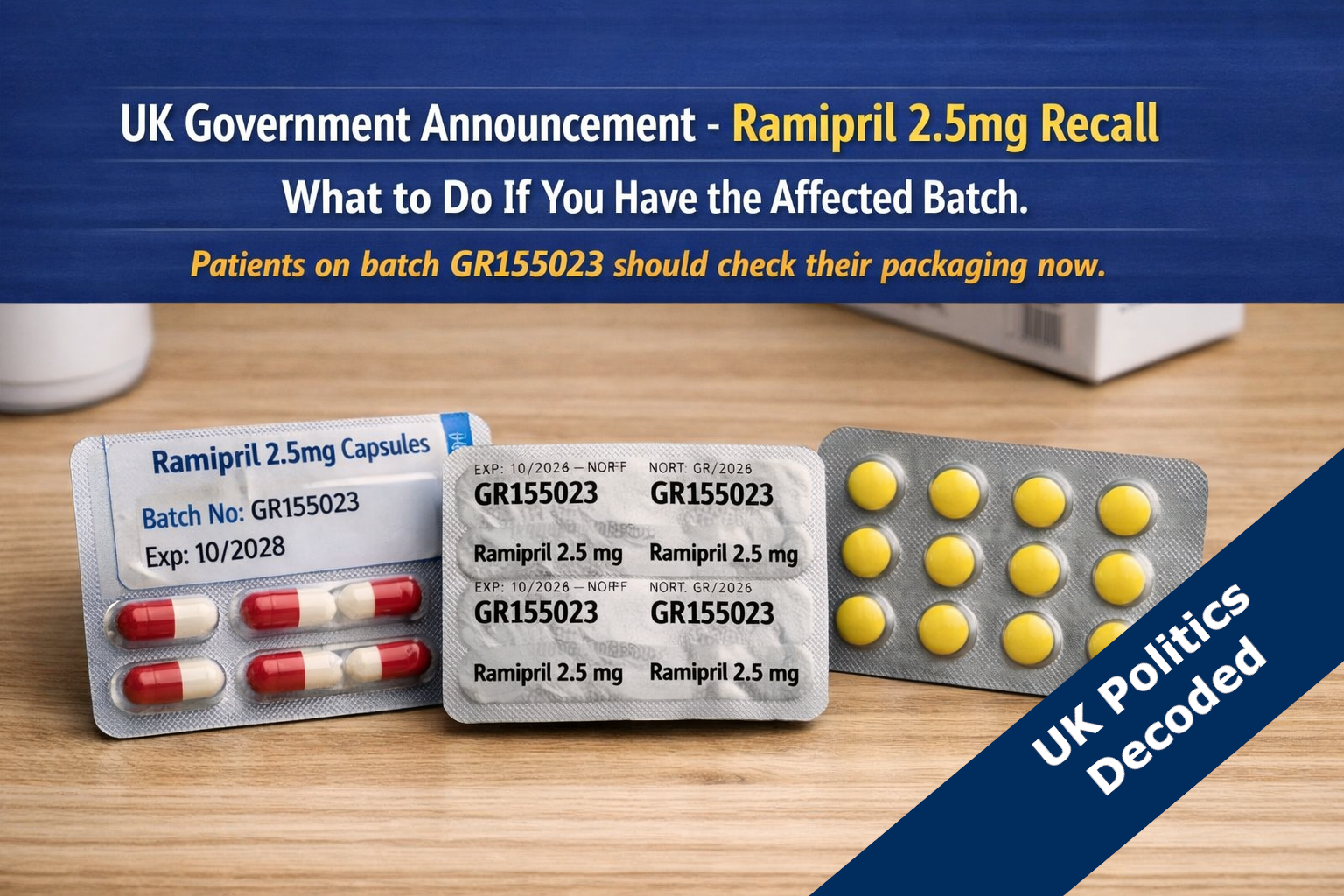
Patients taking Crescent Pharma Limited Ramipril 2.5mg capsules are being asked to check their packaging immediately. The Medicines and Healthcare products Regulatory Agency (MHRA) issued a precautionary recall on 28 May 2026 after a healthcare professional found two blister strips of Ramipril 10mg capsules inside a sealed carton that should have contained 2.5mg capsules.
Only one batch is affected, batch number GR155023. Both the 2.5mg and 10mg products were manufactured at the same site, and the regulator believes the mix up occurred during the carton packing stage. No other batches have been implicated.
Quick Summary
- Affected product: Crescent Pharma Limited Ramipril 2.5mg capsules, batch number GR155023.
- The problem: Some cartons from this batch may contain Ramipril 10mg blister strips instead of 2.5mg.
- What to do: Check the batch number and expiry date on your outer carton. If the blister strips inside are labelled 10mg, do not take the medicine, instead contact your pharmacy.
- If the blister strips say 2.5mg: No action needed. Continue taking your medicine as prescribed.
- Issued by: The MHRA, as a Class 2 recall (a fault that could cause illness or mistreatment but is not immediately life threatening).
What the Packaging Error Means in Practice
Ramipril is prescribed for high blood pressure (hypertension), certain types of kidney disease, and heart failure. The standard starting dose is low, often 1.25mg or 2.5mg and is increased gradually depending on how a patient responds. Taking a dose four times higher than prescribed, in this case 10mg instead of 2.5mg, can cause a significant drop in blood pressure.
The MHRA's Chief Safety Officer, Dr Alison Cave, said patients who believe they may have taken any 10mg capsules from an affected pack should seek medical advice. Symptoms to watch for include feeling lightheaded, fainting, or fatigue. Altered kidney function is also possible, particularly in vulnerable patients.
Dr Cave added: "Any possible impact of taking a higher dose of ramipril should be assessed by a healthcare professional to determine whether any examination or tests are needed."
How to Check Your Medication
The batch number and expiry date are printed on the outer carton. If you have Crescent Pharma Limited Ramipril 2.5mg capsules, follow these steps:
- Find batch number GR155023 on the outer carton. If your batch number is different, you are not affected.
- If your carton does show GR155023, open it and look at the blister strips inside.
- Check the strength labelled on the blister strip itself, not just the carton.
- If the blister strips are labelled as Ramipril 10mg, do not take the medicine. Take the leaflet, the carton, and any remaining capsules to your pharmacy.
- If the blister strips correctly say Ramipril 2.5mg, you do not need to take any further action.
If You Think You Have Already Taken the Wrong Dose
- Symptoms to watch for: Lightheadedness, dizziness, fainting, fatigue, or signs of reduced kidney function.
- What to do: Contact your GP or seek medical advice. Do not wait if you are feeling unwell.
- Side effect reporting: Any suspected adverse reactions should be reported to the MHRA via the Yellow Card scheme at yellowcard.mhra.gov.uk.
- For pharmacies and healthcare professionals: Stop supplying batch GR155023 immediately and return all remaining stock to your supplier.
About Ramipril and Who Takes It
Ramipril belongs to a class of medicines known as ACE inhibitors (angiotensin converting enzyme inhibitors). It works by relaxing blood vessels, making it easier for the heart to pump blood around the body. It is one of the most commonly prescribed medicines in England, used by hundreds of thousands of people to manage hypertension and reduce the risk of heart attack, stroke, and kidney damage.
Because doses are titrated carefully, meaning they are started low and adjusted over time, an accidental fourfold increase carries a real risk, especially for older patients or those with existing kidney conditions.
About the MHRA Recall Classification
The recall has been classified by the MHRA as Class 2. This means the regulator considers the product fault unlikely to cause serious harm, but that it could cause illness or mistreatment and warrants removal from the market. Class 1 recalls are reserved for situations where product use is considered immediately life threatening.
The MHRA is an executive agency of the Department of Health and Social Care. It regulates all medicines and medical devices in the UK, and its recall notices are binding on pharmacies and healthcare providers.
Key Takeaways
- Crescent Pharma Limited has recalled batch GR155023 of Ramipril 2.5mg capsules as a precaution after a packaging error was identified.
- The fault, some cartons may contain 10mg blister strips instead of the labelled 2.5mg dose.
- Check the batch number on your outer carton and the strength label on the blister strips inside.
- If your blister strips are labelled 10mg, do not take the medicine, instead return it to your pharmacy.
- If you have already taken tablets from an affected pack and feel unwell, seek medical advice and report via the MHRA Yellow Card scheme.