AI Use: AI tools were used to support source discovery and to structure the article for clarity. All research, verification, drafting, and final editorial decisions are fully human led. Learn about our AI policy.
UKPoliticsDecoded is an IMPRESS regulated public interest publisher. Read our editorial standards.
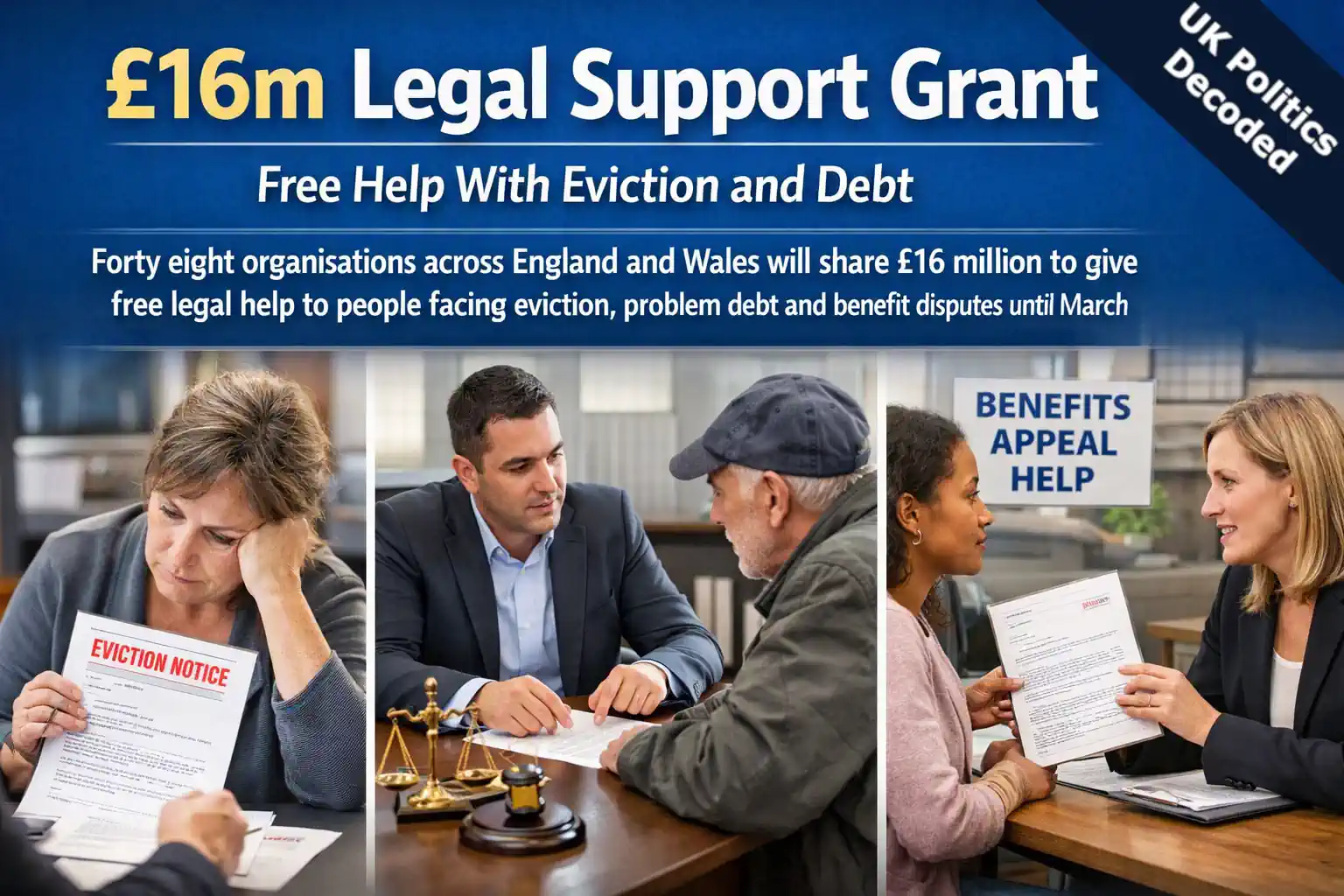
The Government has set up a £16 million Legal Support Grant to put free legal advice in front of people earlier, before an eviction notice, a pile of debt or a benefit dispute turns into a court case.
The Ministry of Justice announced the scheme on 30 September 2026, with the programme due to launch on 1 October. It will run from October 2026 to March 2029 and is administered by the Access to Justice Foundation.
At a Glance
- The Legal Support Grant is a £16 million government fund that will run from October 2026 to March 2029.
- The money will support 48 frontline organisations across England and Wales that give legal advice and practical help.
- The help covers eviction, problem debt, benefit disputes and family breakdown, offered both in person and online.
- The Access to Justice Foundation administers the fund, which forms part of more than £25 million the Government says it has invested in legal support services.
- The grant will also be used to build evidence on which kinds of legal support work best.
What the £16m Legal Support Grant Pays For
The grant is aimed at a familiar pattern. Someone falls behind on rent, a benefit payment is stopped or a debt grows, and by the time they find an adviser the problem has hardened into a legal dispute. The Government says earlier access to free advice is meant to stop that slide.
Over the life of the programme, 48 frontline organisations in England and Wales will receive funding to support thousands of vulnerable people. The Ministry of Justice lists eviction, problem debt, benefit disputes and family breakdown as the main areas of need.
Citizens Advice and Shelter Cymru are named among the charities and advice providers involved. They will expand free legal support in person and online, helping people understand their rights, resolve problems and avoid homelessness, financial hardship and unnecessary court action.
Who Is Delivering the Free Legal Advice?
The Ministry of Justice is the funder, but it is not the body handing the money to advice providers. That job falls to the Access to Justice Foundation, which administers the investment.
The £16 million sits inside a larger commitment. According to the Government, it forms part of more than £25 million invested in legal support services under this administration, with the stated aim of helping people tackle problems early and avoid crisis.
The press release does not break the £16 million down by organisation, region or year, and it does not say how many people each provider is expected to reach. The only headline delivery figures it gives are the 48 funded organisations and the programme dates.
Legal Support Grant, Key Facts
- Total funding: £16 million, administered by the Access to Justice Foundation.
- Programme dates: October 2026 to March 2029.
- Delivery: 48 frontline organisations across England and Wales.
- Support areas: eviction, problem debt, benefit disputes and family breakdown.
Why Ministers Say Early Legal Help Matters
Sarah Sackman KC, the Minister for Courts and Legal Services, framed the grant around timing. "When people face eviction, mounting debts or family breakdown, getting the right help at the right time can make all the difference," she said. She added that the investment will help people access trusted advice earlier, "preventing problems from spiralling into crisis and giving families the breathing space they need to get back on track."
The Government also links the scheme to court capacity. By helping people earlier, it says, the investment should reduce pressure on courts while giving people practical tools to deal with their problems themselves where they can.
What the Government Says It Will Do
- Give people earlier access to free, trusted legal advice.
- Help prevent disputes escalating into poverty and court action.
- Reduce pressure on courts.
- Expand support both in person and online.
What the Announcement Does Not Say
- How the £16 million is split between the 48 organisations.
- How many people are expected to receive help.
- What targets the programme will be measured against.
- How the 48 organisations were selected beyond those named.
Clare Carter, chief executive of the Access to Justice Foundation, said that many people in England and Wales face legal problems that touch every part of their lives, "from keeping a roof over their head to supporting their family or securing the income they rely on." She said investing in the long term strength and resilience of funded organisations would help more people get the support they need.
How the Grant Will Be Evaluated
The grant has a second purpose beyond paying for advice. The Government says it will build a stronger evidence base on what works in legal support, and that this will inform future investment and help make sure help reaches the people who need it most.
Clare Carter made the same point from the delivery side, saying the programme will help build a stronger understanding of what works to improve access to justice. In practice, that suggests the results from the 48 organisations may shape how later funding is directed, though the announcement does not say how the evidence will be collected or published.
Ministers present the grant as part of a wider push to give households what they call greater breathing space on everyday costs. The press release points to capped bus fares and help with household energy bills as other measures in that effort, alongside what it describes as a mission to ensure financial circumstances are never a barrier to getting help.
What Happens Next for People Seeking Help
The programme was due to launch on 1 October 2026, so funded organisations can begin expanding their services from the start of the grant period. The announcement does not list all 48 recipients, and it does not give a single national helpline or application route.
For anyone currently facing eviction, debt or a benefit dispute, the practical route is to contact an advice provider directly. Citizens Advice and Shelter Cymru are two of the organisations the Government names as part of the programme, though it does not say which specific services in which areas will be funded.
The grant is time limited, ending in March 2029. Whether the support continues after that date is not addressed in the announcement, and the Government links any future investment to what the evidence from this programme shows.
Key Takeaways
- The £16 million Legal Support Grant will fund 48 frontline organisations in England and Wales from October 2026 to March 2029.
- The funding is aimed at people facing eviction, problem debt, benefit disputes and family breakdown, with advice offered in person and online.
- The Access to Justice Foundation administers the money, which is part of more than £25 million the Government says it has put into legal support services.
- The Government says earlier advice should stop problems escalating and reduce pressure on courts, but it has not published delivery targets or a funding breakdown.
- The programme will also gather evidence on what works in legal support to guide future investment.