AI Use: AI tools were used to support source discovery and to structure the article for clarity. All research, verification, drafting, and final editorial decisions are fully human led. Learn about our AI policy.
UKPoliticsDecoded is an IMPRESS regulated public interest publisher. Read our editorial standards.
Neurodivergent people can thrive at work when support is built around what they need rather than what their diagnosis says, according to an independent report published on 2 October 2026 by the Expert Academic Panel on Neurodiversity.
The Department for Work and Pensions (DWP) says it is already acting on much of what the panel recommends, through schemes such as Connect to Work and a network of Pathways to Work advisers.
At a Glance
- The Expert Academic Panel on Neurodiversity has published its final report and recommendations, arguing that support should be based on need rather than diagnosis.
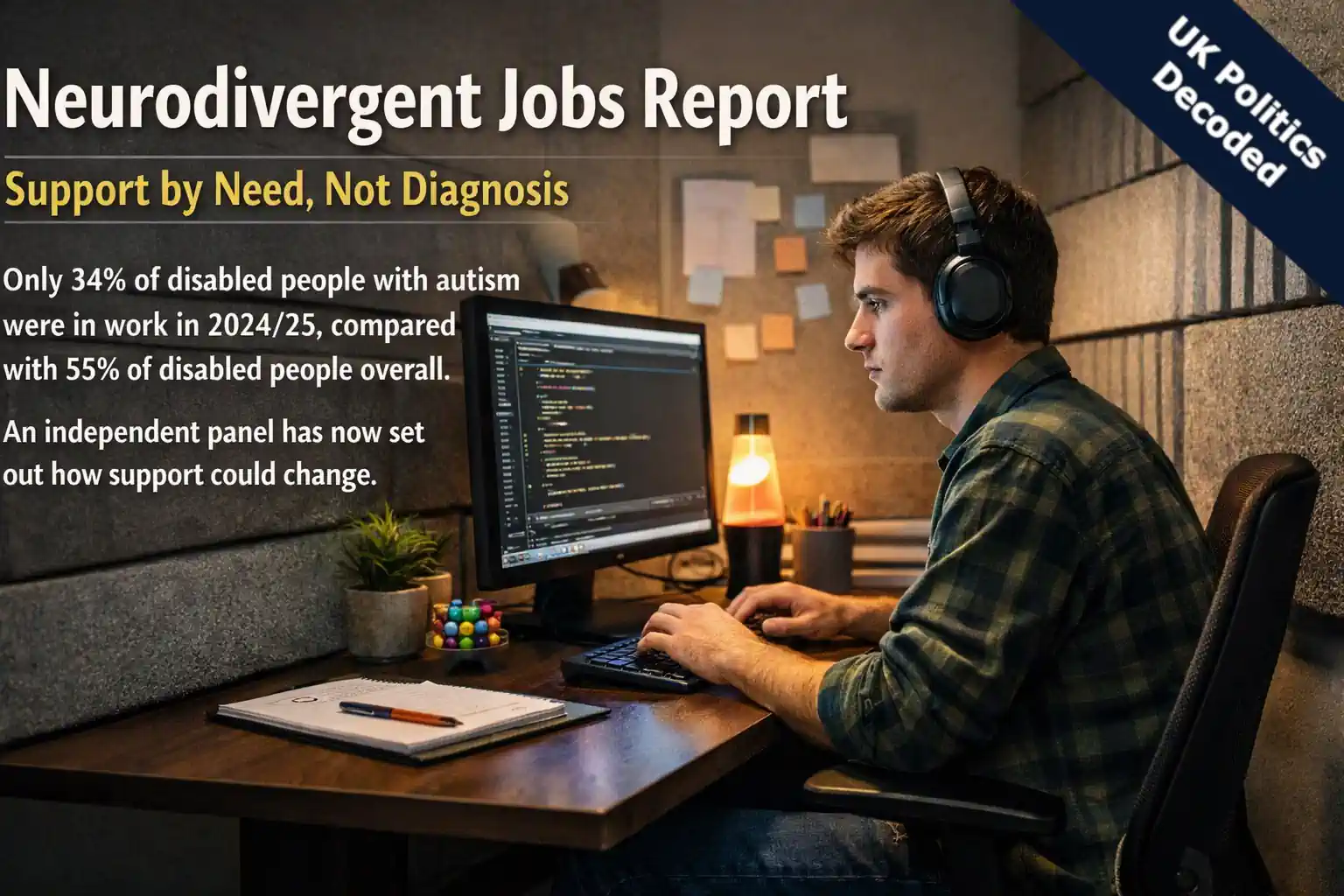
- In 2024/25, only 34% of disabled people with autism were in work, compared with 55% of disabled people overall.
- By the end of June, 1,000 people on the specialist Connect to Work pathway for neurodivergent and learning disabled people had moved into work, 470 of them young people.
- The Government has launched a sixteen week policy discovery exercise on applying Universal Design principles to workplaces.
- The response sits within the Government's £3.5 billion investment in supporting disabled people and people with health conditions into work.
What the Neurodiversity Panel Recommends for Employers
The panel was set up in January 2025 to advise ministers on how to help more neurodivergent people build careers. Its report is chaired by Professor Amanda Kirby, and its central argument is simple, a person's strengths and challenges, not a label, should decide what help they get.
The report also calls for existing disability employment policy to be strengthened and for best practice to be better known. It asks for further research to fill gaps in the evidence base, and for practical, evidence based strategies that help neurodivergent employees succeed once they are in a job. The panel adds that greater employment participation could ease pressure on the health and welfare systems and help economic growth, according to the Government's summary.
One recommendation goes beyond individual support. The panel wants wider adoption of Universal Design principles, so that workplaces are built with everyone in mind from the outset instead of relying on reactive adjustments for one employee at a time. It says neurodivergent people bring valuable skills and perspectives, and that removing barriers in communication and in the working environment lets people do their best work.
Why Only 34% of Autistic Disabled People Are in Work
The numbers explain why the panel exists. DWP figures cited in the announcement show that in 2024/25 only 34% of disabled people with autism were in work. Among disabled people overall, the figure was 55%. The Government describes the difference as stark, and it was the reason the panel was commissioned.
Work and Pensions Secretary Pat McFadden said "When we get the right support in place, neurodivergent people thrive at work. That's good for them, good for business and good for the economy."
Professor Kirby said talent is too often untapped "because support hasn't matched their needs", and that when people get the right support, "everybody benefits".
Connect to Work and the Government's Response So Far
The main vehicle is Connect to Work, which the Government says is available across England and Wales and sits within the £3.5 billion disability employment investment. It includes a specialist pathway for neurodivergent and learning disabled people, which builds support around individual strengths and needs. By the end of June, 1,000 people on that pathway had moved into work. Of those, 470 were young people. The Government says the scheme will help thousands more by the end of the decade.
Ministers say much of the work needed to meet the panel's recommendations is already under way. Disability Confident, the employer accreditation scheme, is being reformed, and employers at the entry level will no longer be able to renew at that level, a change meant to push them up the scheme. Nearly 500 extra staff are being recruited to clear what the Government calls an inherited backlog in Access to Work, the scheme that funds workplace support for disabled people.
WorkWell is being expanded nationally with £259 million, aiming to help up to 250,000 people with health conditions stay in or return to work. The Government also points to 1,000 Pathways to Work advisers, who it says have already helped more than 100,000 people the previous Government wrote off. Alongside those sits the £60 million Pathways to Work Innovation Fund, which we covered in our report on the fund opening for bids. Separately, a £2.5 billion youth employment package is expected to create nearly 500,000 jobs and training opportunities.
What the Panel Wants
- Support based on individual need rather than diagnosis.
- Workplaces designed for everyone from the outset.
- More research and shared best practice.
What the Government Has Committed To
- A sixteen week Universal Design discovery exercise.
- Conversations with employers on low cost changes.
- Continued rollout of Connect to Work.
What Happens Next? Universal Design and Welfare Reform
The Government says it will now speak to employers about practical, low cost changes that help neurodivergent staff thrive. It has also launched the sixteen week policy discovery exercise to look at where Universal Design principles could apply to workplaces in future. The announcement does not say what form any resulting rules or guidance would take.
The response is described as part of a wider effort to support neurodivergent people within and beyond work. Further welfare reform, the Government says, will be guided by the Milburn and Timms reviews, both due to conclude later this year. For earlier coverage of one of those, see our report on the Timms Review call for evidence on PIP.
The full report and the Government response are being published on GOV.UK. This article draws on the Government's announcement, so the panel's detailed findings are not examined here beyond what that summary sets out.
Key Takeaways
- The Expert Academic Panel on Neurodiversity says neurodivergent people succeed at work when support is based on individual need rather than a diagnosis.
- Only 34% of disabled people with autism were in work in 2024/25, against 55% of disabled people overall.
- The Connect to Work specialist pathway had moved 1,000 neurodivergent and learning disabled people into work by the end of June, 470 of them young people.
- The Government has launched a sixteen week discovery exercise on Universal Design in workplaces and plans to talk to employers about low cost changes.
- Further welfare reform will be guided by the Milburn and Timms reviews, which are due to conclude later this year.
Sources & Further Reading
- New report backs government action to help neurodivergent people succeed at work - GOV.UK Archived copy (OGL): archived page
- Expert Academic Panel on Neurodiversity: final report and recommendations (Will be made available when the government published the report) - GOV.UK
- Department for Work and Pensions - GOV.UK